
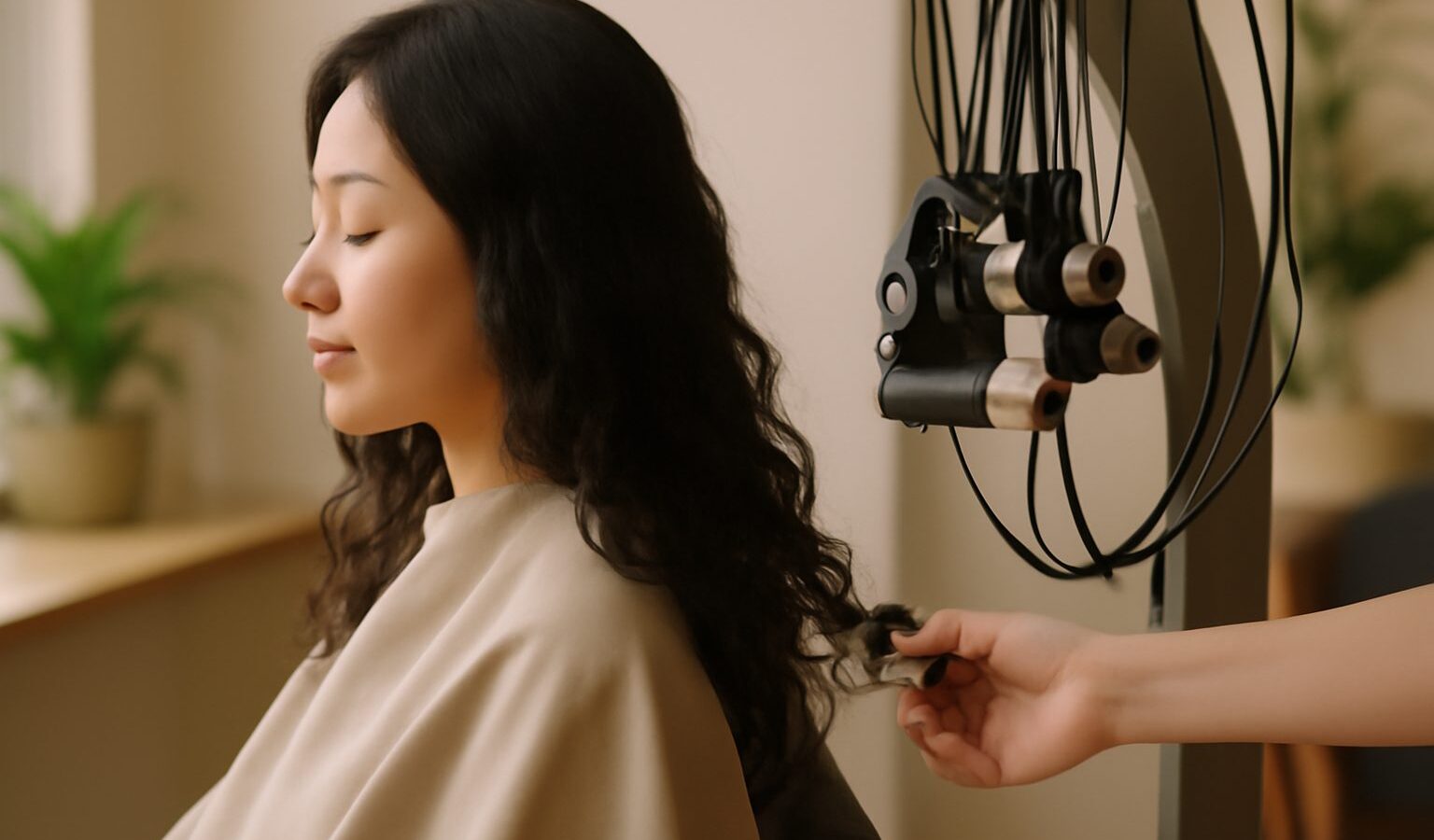
Perms are back, and not the tight, frizzy curls of decades past. Soft waves, loose curls and root volume inspired by Korean and Japanese salons have made perming one of the most requested services in local salons. If you are considering a digital perm in Singapore, or wondering how it differs from a cold or volume perm, this guide explains the main types, who each suits, what to ask before booking, and how to keep a perm looking good in our heat and humidity.
How Perming Works
All perms work on the same basic principle. Hair gets its shape from bonds inside each strand. A perming solution breaks some of these bonds, the hair is set around rods or curlers in the new shape, and a neutraliser then re-forms the bonds so the shape holds. The difference between perm types lies mainly in whether heat is used, the size and placement of the rods, and where on the head the perm is applied.
Because perming is a chemical process, results depend a great deal on your hair’s condition, its history of colouring or bleaching, and the stylist’s skill.
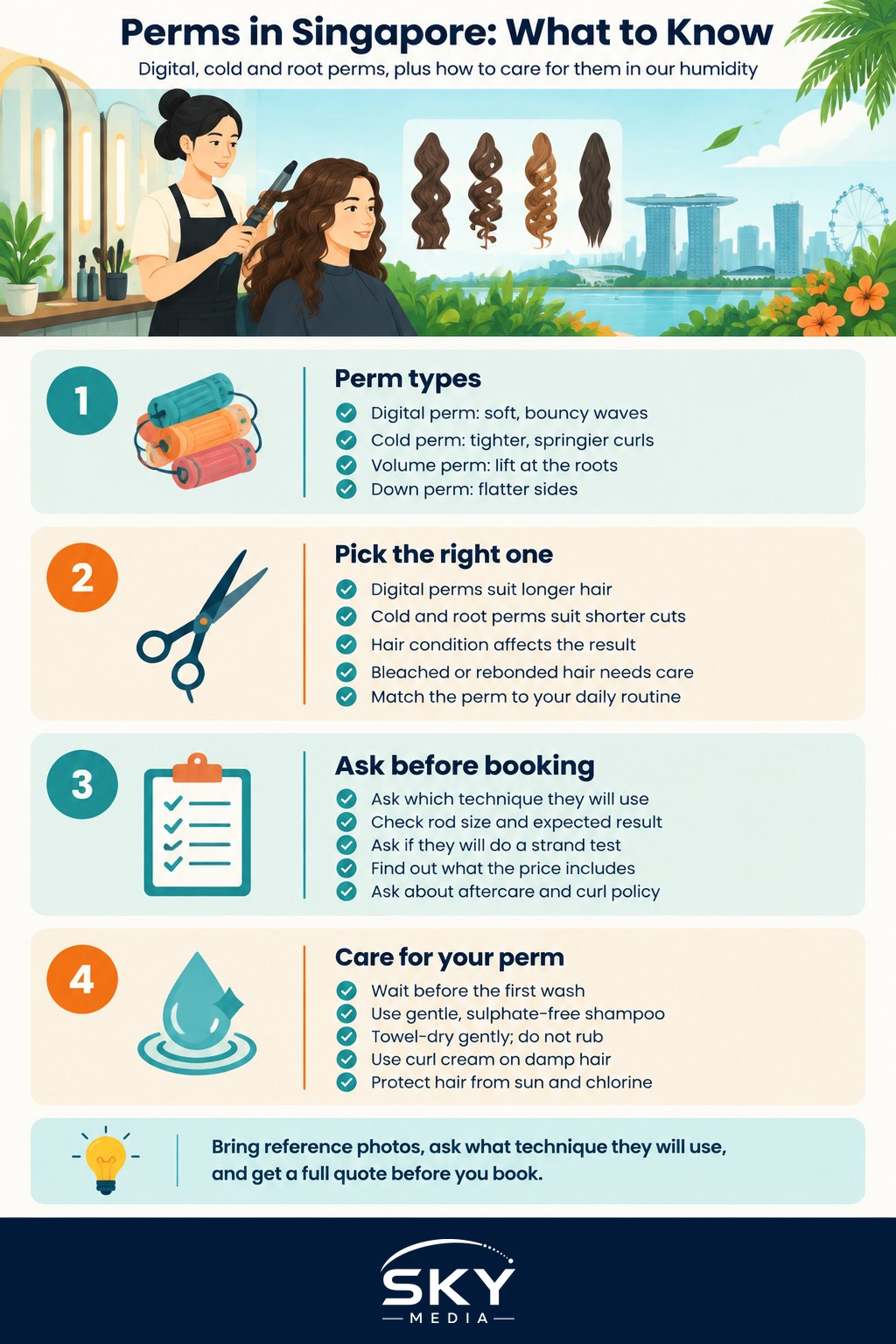
Digital, Cold and Volume Perms Compared
| Perm type | How it is done | Result | Best for | Watch out for |
|---|---|---|---|---|
| Digital perm (hot perm) | Solution applied, then hair wound on heated rods controlled by a machine | Soft, defined waves or curls that look most bouncy when dry | Medium to long hair, people wanting a loose, glamorous wave | Longer appointment, heat can stress damaged hair, less suited to very short hair |
| Cold perm | Solution and neutraliser on rods without heat | Tighter, springier curls that look most defined when damp | Short to medium hair, a curlier look, wash-and-go styling | Curls may look looser or frizzier as they dry |
| Volume or root perm | Perm applied only near the roots, sometimes with special clips or rods | Lift at the crown without visible curl | Fine or flat hair, people wanting body rather than curls | Results are subtle, grows out as roots grow |
| Down perm | A treatment that flattens hair at the sides | Hair lies flatter around the temples and above the ears | Short hairstyles, often popular among men | A finishing service rather than a curl |
Salons may use their own names for these, such as “Korean perm”, “C-curl” or “S-curl”, which usually describe a shape rather than a separate chemical method. Ask the stylist which technique they will actually use.
Choosing the Right Perm for Your Hair
A few factors decide which perm will work for you:
- Hair length: digital perms need enough length to wrap around the heated rods, so they generally suit shoulder-length hair and longer. Cold perms and root perms work on shorter cuts.
- Hair texture: fine hair holds a curl but can look thin if the curl is too tight. Thick, coarse hair may need a stronger formula or larger rods to look natural.
- Previous treatments: bleached, highlighted or recently rebonded hair is more fragile. Some stylists will advise against perming, or recommend a gentler approach or a strength test first.
- Your daily routine: if you want to wash and go, a cold perm that looks best damp may suit. If you are happy to diffuse or style, a digital perm gives more polished waves.
- The look you want: bring photos of the result you like, and photos of what you do not want.
Questions to ask at the consultation
Before booking, ask the salon:
- Which perm technique and rod size do they recommend for your hair, and why?
- Will they do a strand test, especially if your hair is coloured?
- How long is the appointment, and what is included in the quoted price, such as treatment, cut and styling?
- What is their policy if the curl drops quickly or does not match what was agreed?
- What aftercare products do they recommend, and are they required?
Prices vary widely between neighbourhood salons and premium salons, and by hair length. Ask for a full quote upfront and compare a couple of places. Be cautious of hard selling of add-on packages; you can take time to decide.
Perming Safely
Perming is generally safe when done by a trained stylist, but it is still a chemical service.
- Tell your stylist about a sensitive scalp, allergies, skin conditions or any reaction you have had before. Ask for a patch test if you are unsure.
- Avoid perming on irritated or broken scalp skin.
- If you are pregnant, have a medical condition or are on treatment that affects your skin or hair, speak to your doctor before a chemical service.
- Avoid rebonding, bleaching and perming close together. Ask your stylist how long to wait between chemical treatments.
- If your scalp burns, itches severely or swells during or after a perm, rinse it, tell the salon and see a doctor if it does not settle.
Aftercare in Singapore’s Humidity
Humidity is the biggest enemy of a fresh perm here. Moist air makes hair swell and frizz, and sweat can weigh curls down. Good aftercare makes a big difference to how long your perm looks good.
The first few days:
- Follow your stylist’s advice on when to wash for the first time. Many recommend waiting a day or two so the new shape sets.
- Avoid tying hair tightly, clipping it or tucking it behind your ears in a way that bends the curls.
Ongoing care:
- Use a gentle, sulphate-free shampoo and a moisturising conditioner. Permed hair tends to be drier.
- Do not rub hair with a towel. Squeeze out water gently, or use a microfibre towel or cotton T-shirt.
- Apply a curl cream or light leave-in while hair is damp to reduce frizz and define the shape.
- Diffuse or air dry. A diffuser attachment on low heat lifts digital perm waves. Avoid brushing dry curls, which breaks them into frizz; use a wide-tooth comb when wet instead.
- Sleep on a silk or satin pillowcase, or loosely gather hair on top of your head, to reduce flattening and friction.
- Refresh between washes with a light water mist and a little curl cream.
- Protect from sun and chlorine. Wear a hat outdoors, and rinse hair after swimming.
- Book regular trims to remove dry ends and keep the shape.
Gym-goers and anyone commuting in the heat may find a light anti-humidity product helpful. Choose lightweight formulas, as heavy oils can make curls limp in our climate.
How Long a Perm Lasts
A perm permanently changes the hair that is treated, but the curl tends to relax over time, and new growth from the roots will be straight. Many people find a perm looks its best for a few months, depending on hair type, the technique used and aftercare. Root perms grow out sooner because they sit near the scalp. When you want to refresh it, ask your stylist whether to re-perm only the new growth or the whole head, to avoid over-processing the ends.
With the right perm type for your hair, a skilled stylist and a humidity-proof routine, a digital or cold perm can give you easy, natural-looking texture that saves time on styling every morning.
Frequently Asked Questions
How long should I wait to colour my hair after a perm? Give your hair time to recover first, since both services are chemical and stacking them can cause breakage. Many stylists suggest leaving a gap, but the right wait depends on your hair’s condition and the products used. Ask your stylist for a specific timeline, and consider a strand test.
Can men get a digital perm? Yes. Men with enough length on top often choose digital or cold perms for soft waves or texture, and a down perm is a popular finishing service for flatter sides. Bring photos of the style you want, and ask the stylist which technique suits your hair length.
Does perming cause hair loss or permanent damage? A well-done perm dries and stresses hair but does not normally cause hair loss, though aggressive treatment, heat or repeated chemicals can cause breakage. A burned or irritated scalp is a different matter, so see a doctor if it does not settle. Choose a careful stylist and moisturise regularly.
Is a perm better than rebonding in Singapore’s humidity? They do opposite jobs, so it depends on the look you want. Rebonding straightens hair and can keep it smooth in humid weather, while a perm adds curl that needs more care against frizz. Neither suits very damaged hair, so ask a stylist to assess your strands first.
Can I perm my hair at home with a DIY kit? It is better not to. Perming chemicals need correct timing, rod placement and neutralising, and mistakes can cause uneven curls, breakage or scalp burns. A trained stylist can assess your hair and adjust the formula. If you must try, follow the instructions exactly and do a patch test.
Further reading: Balayage vs Highlights: Which Hair Colour Technique Suits You? · The Down Perm and Korean Perms for Men in Singapore · Hair Spa in Singapore: What It Is and Who It Helps