
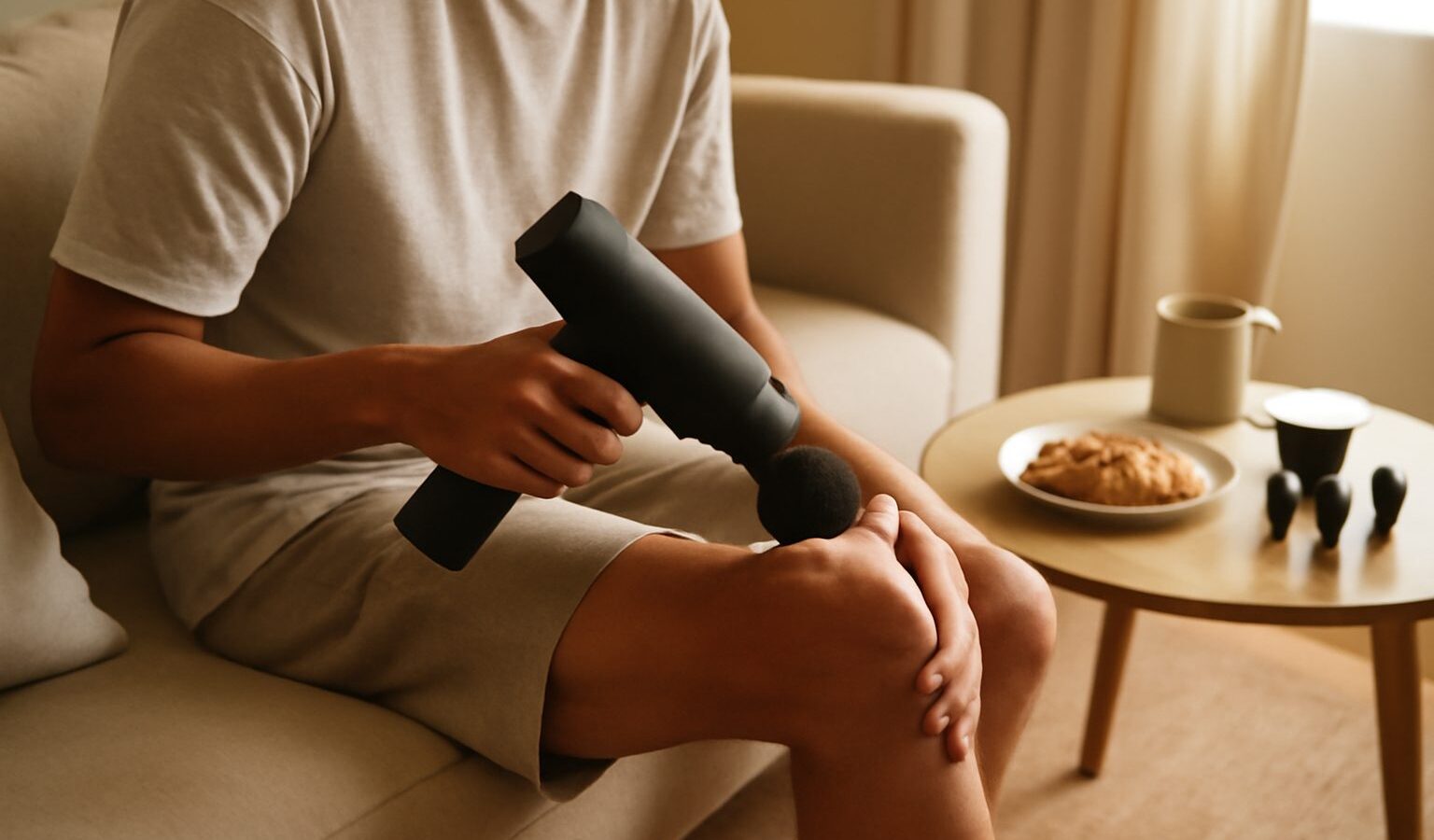
Massage guns are everywhere now, from gym bags to office drawers, promising to buzz away tightness and speed up recovery. These handheld percussion devices tap rapidly into your muscles, and plenty of people swear the relief is real. But do massage guns actually work, or are you paying for an expensive vibration? The honest answer sits in the middle: they can genuinely ease tight, sore muscles and help you feel looser in the short term, but they are a comfort and mobility aid, not a cure for injuries or a shortcut to fitness. This guide separates what the evidence supports from the marketing, and shows you how to use one safely.
This is general wellbeing information, not medical or physiotherapy advice. If you have sharp or severe pain, swelling, a suspected injury, or pain that does not settle, see a doctor or physiotherapist rather than treating it with a device. If you are pregnant, recovering from surgery, or manage a health condition, check with a professional before use.
What a Massage Gun Actually Does
A massage gun, sometimes called a percussion or percussive therapy device, uses a small motor to drive an attachment back and forth quickly against your muscle. The rapid tapping delivers pressure and vibration into the tissue, which is a form of self massage.
The likely reasons it helps are similar to those behind foam rolling. The stimulation appears to work mainly through your nervous system, encouraging tight muscles to relax and briefly dialling down the sensation of soreness. It also increases local blood flow and can temporarily improve how far a joint moves, which is why a short session can leave you feeling looser and readier to move. If you want to compare it with a roller, our guide to foam rolling for recovery covers that alternative in detail.
What a massage gun does not do is break down “knots”, flush out toxins, or heal damaged tissue. Those claims run ahead of the evidence. Treat it as a tool that makes you feel better and move a little more freely, not as therapy for a real injury.
What the Evidence Actually Supports
Being clear about the honest limits helps you get value without expecting miracles.
- Short-term relief and mobility. Research and plenty of everyday experience suggest a few minutes of percussion can reduce the feeling of muscle tightness and temporarily improve range of motion. That makes it handy before a session or as a wind-down after.
- Modest effect on soreness. It may take the edge off the ache of delayed onset muscle soreness while you use it, though the soreness itself still runs its course. For the full picture, see understanding muscle soreness and DOMS.
- Convenience. It is quick, needs no floor space, and targets specific spots easily, which suits a busy schedule or a small flat.
- Not a performance booster. There is little evidence it makes you stronger or fitter. It is a recovery comfort, not a training aid.
In short, the benefits are real but modest and mostly short-lived. That is fine; a tool that helps you feel looser and more relaxed still has a place, as long as you buy realistic expectations along with it.
Massage Gun Versus Other Recovery Options
No single tool wins outright. This comparison helps you decide when a massage gun is the right pick.
| Option | Strengths | Limitations |
|---|---|---|
| Massage gun | Fast, targeted, easy on specific spots, portable | Avoid bones, joints, neck and injuries; modest, short-lived effect |
| Foam roller | Cheap, covers large muscle groups, durable | Needs floor space and slow technique |
| Gentle active recovery | Free, aids circulation and mood, whole-body | Takes more time than a quick buzz |
| Rest and sleep | The strongest recovery tool of all, no cost | Requires patience and discipline |
The most effective recovery is not a gadget at all: it is enough sleep, good hydration and sensible training. A massage gun is a nice extra on top, and it works well alongside an easy active recovery day rather than in place of one.
How to Use a Massage Gun Safely
Used sensibly a massage gun is low risk, but misuse can cause bruising or aggravate a problem. Follow a few clear rules.
- Start on the lowest setting. Begin gently and increase speed only if it feels comfortable. More power is not better.
- Keep it moving. Glide slowly over the muscle rather than pinning it in one spot, spending only a short time, around thirty seconds to two minutes, on each area.
- Stay on muscle. Use it on the fleshy parts of your calves, quads, hamstrings, glutes, back and shoulders.
- Use light pressure. Let the device do the work; do not press hard. It should feel pleasant, not painful.
- Stop if it hurts. Discomfort you can relax through is fine; sharp pain means stop immediately.
Keep sessions short, and clean the device after use, which matters in our humid climate where sweat and equipment do not mix well.
Where Never to Use One, and Who Should Take Care
This is the part that matters most for safety. A massage gun should never go on certain areas.
- Avoid bones and joints. Keep it off the spine, kneecaps, elbows, shins and any bony area.
- Never use it on the neck or throat. These areas are too sensitive and delicate for percussion.
- Stay off injuries and inflammation. Do not use it on a strain, sprain, bruise, swollen area or anything that is already hurt.
- Avoid varicose veins and skin problems. Skip areas with varicose veins, broken skin, wounds or rashes.
- Take extra care with conditions. If you are pregnant, have a bleeding disorder, poor circulation, nerve problems or are on blood thinners, check with a doctor or physiotherapist first.
If a spot is persistently painful rather than just tight, that is a reason to get it assessed, not to buzz it harder. So, do massage guns work? Yes, in a modest, short-term way for easing tightness and improving mobility, and no if you expect them to heal injuries or replace real rest. Buy one from a reputable source, use it gently and within these limits, and treat it as one small helper in a recovery routine built mainly on sleep, hydration and sensible training.