
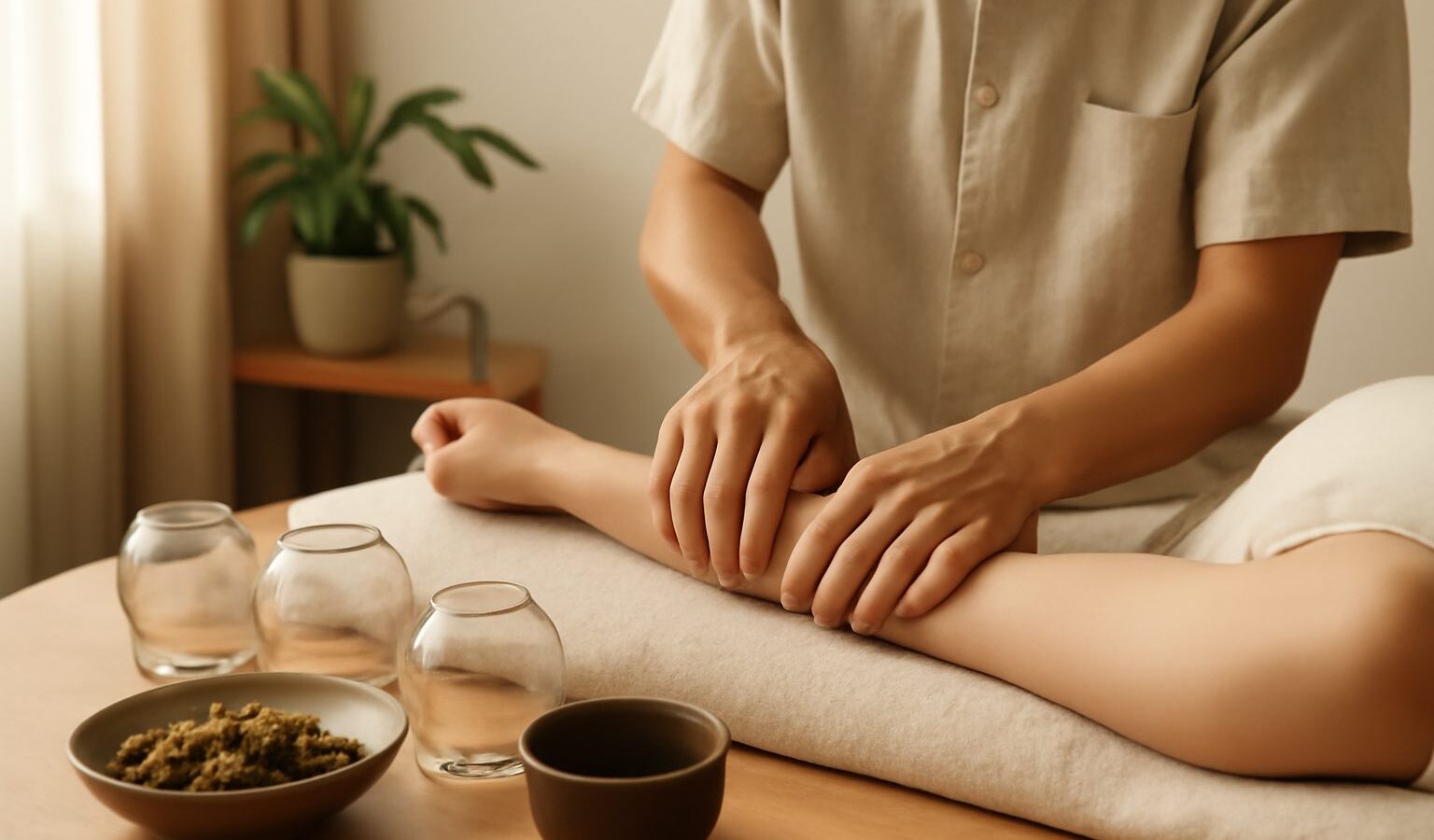
If you grew up on the mainland, treatments like tui na, massage, and cupping may feel like old friends, part of the rhythm of looking after your body. The comforting news is that Traditional Chinese Medicine, or TCM, is well established and respected in Singapore, so you can keep these familiar therapies as part of your life here. This guide offers a warm, general introduction to tuina massage in Singapore, along with therapeutic massage and cupping, what to expect, and how to find a good, properly registered practitioner. It is general wellness information, not medical advice, so please see a doctor for any health condition.
What these therapies are
Tui na, sometimes written tuina, is a form of therapeutic bodywork within TCM. Using pressing, kneading, and rolling movements along the muscles and acupressure points, a practitioner works to ease tension, improve movement, and help the body feel more balanced. Many people turn to tui na for stiff shoulders and necks, back aches, and the general tightness that builds up from long hours at a desk.
Therapeutic massage, more broadly, focuses on relaxing muscles, easing knots, and helping you unwind. Some styles are gentle and soothing, while others are firmer and aimed at deeper tension. The right pressure is the one that feels beneficial without being painful, so it is always fine to ask for softer or firmer work.
Cupping is the practice of placing cups on the skin to create gentle suction, often on the back and shoulders. It is thought within TCM to encourage circulation and relieve tension. Cupping commonly leaves round, temporary marks on the skin that can look dramatic but usually fade over several days. These marks are normal and are not bruises in the painful sense, though it is worth knowing about them before your first session so they do not alarm you.
Here is a quick comparison to help you choose.
| Therapy | What it involves | Often chosen for |
|---|---|---|
| Tui na | Pressing and kneading along muscles and points | Neck, shoulder, and back tension |
| Therapeutic massage | Muscle relaxation with varied pressure | General stress and tight muscles |
| Cupping | Gentle suction cups on the skin | Circulation and muscle relief |
What to expect at a session
Your first visit usually begins with a short chat about how you are feeling, any aches you want addressed, and any health conditions or medicines you should mention. Be open here, as it helps the practitioner work safely and adjust to you. Wear comfortable clothing, and expect to have areas such as your back or shoulders accessible for the treatment.
During tui na or massage, speak up about pressure at any time. Good practitioners welcome feedback, and there is no need to endure discomfort in silence. A little tenderness in a tight muscle can be normal, but sharp pain is a sign to ease off. Afterwards you may feel relaxed and a touch tired, and it is sensible to drink water and take it easy for the rest of the day.
For cupping, remember the marks will appear and then fade. If you have an event where bare shoulders or a low back will show, plan the timing accordingly. Overall, these sessions are meant to leave you feeling looser and calmer, so give yourself a little space to enjoy that afterwards rather than rushing straight back to work. If you are new to a clinic, it is perfectly reasonable to start with a shorter session, see how your body responds, and build up from there once you know you like the practitioner.
Staying safe and choosing well
The most important safety point is simple: in Singapore, TCM practitioners should be registered with the TCM Practitioners Board. Choosing a registered practitioner gives you confidence that they meet the required standards. When you visit a clinic, you can ask about the practitioner’s registration, and reputable places are happy to answer.
There are also times when these therapies may not be suitable, or when you should check with a doctor first. If you are pregnant, have a bleeding or clotting condition, have fragile or broken skin in the area, or have certain chronic illnesses, mention this before any treatment and seek medical advice. Cupping and firm massage are generally avoided over injuries, infections, or areas of skin that are not intact.
Most importantly, think of tui na, massage, and cupping as ways to feel better and ease everyday tension, not as replacements for medical care. If you have a persistent or worrying symptom, such as ongoing pain, numbness, unexplained weight change, fever, or anything that does not settle, please see a doctor. TCM and conventional medicine can sit comfortably alongside each other, and a good practitioner will encourage you to get medical concerns properly checked.
Making it part of your life here
For newcomers, keeping familiar wellness practices can be genuinely grounding. Visiting a TCM clinic, hearing your own language, and receiving a treatment you know from home can be a small, steadying comfort in a new city. Many clinics in Singapore are used to serving people from across the Chinese speaking world, so you should find it easy to explain what you need.
To get the most from it, be clear about your goals, whether that is easing a stiff neck, unwinding after a stressful week, or simply keeping up a habit that makes you feel well. Ask about pricing before you begin so there are no surprises, keep to a comfortable frequency rather than overdoing it, and pair your sessions with the everyday basics of good sleep, movement, and rest.
Above all, listen to your body. Used sensibly, and with a registered practitioner, tui na, massage, and cupping can be a warm and welcome part of caring for yourself in Singapore, alongside the medical care you turn to when you need it.