
It is one of the most common questions people ask as they leave the workforce: once the salary stops, do you still have to deal with the taxman? The honest answer to income tax for retirees singapore is that it depends on your situation. Retirement does not automatically switch tax on or off. What matters is the kind and amount of income you receive, and the reliefs that may apply to you. This article explains the general principles in plain language. It is general information, not tax or financial advice, and the authority for your own case is always IRAS.
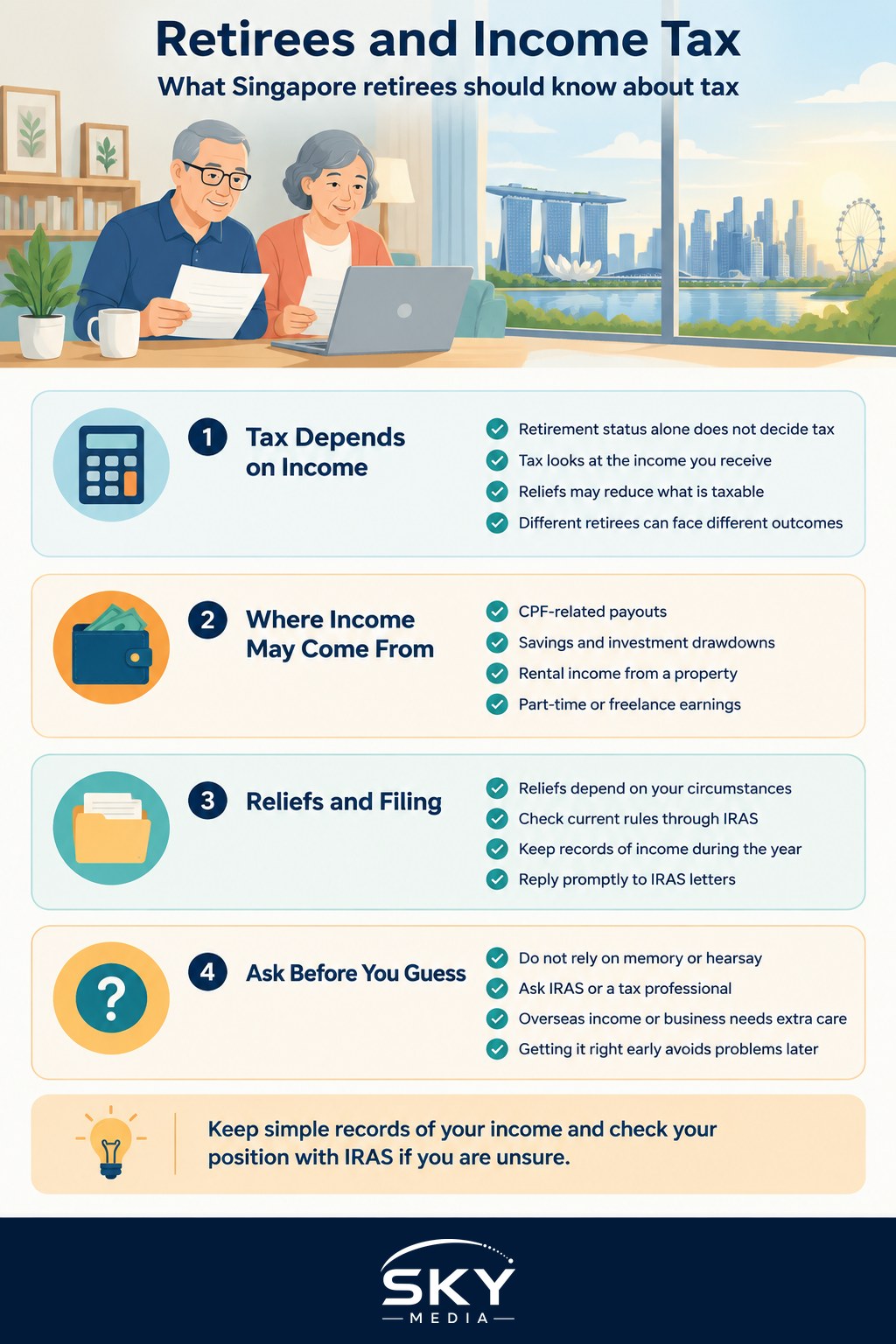
Tax depends on income, not on your job title
The tax system does not look at whether you call yourself retired. It looks at what income you receive and how it is treated. Some sources of money in later life may be counted differently from a monthly salary, and reliefs can reduce what is taxable. Because the rules, rates, and reliefs are set by the authorities and can change, this article deliberately does not quote specific figures. What was true a few years ago may not be true now, and getting outdated numbers stuck in your head can lead you astray.
The practical takeaway is simple. Whether you owe anything, and how much, comes down to your particular mix of income and the reliefs you qualify for in a given year. Two retirees with very different arrangements can end up in very different positions. That is why the only reliable answer is the one you get from IRAS or a qualified tax professional who has looked at your details.
Where retirement income can come from
In retirement, money can flow in from several places, and it helps to see the whole picture before worrying about tax. Common sources for Singaporeans include CPF-related payouts, drawdowns from personal savings and investments, rental if you own a property you let out, and earnings from any part-time or freelance work you continue to do.
Each of these can be treated differently, and some may not be counted the way employment income is. Rather than guess, list out every source of money you expect to receive and then check how each is treated using official IRAS guidance. If your affairs are more involved, for example if you have overseas income or run a small business, that is a good moment to consult a professional.
To think through your income streams in the round, you may find these guides useful:
- Retirement income sources in Singapore for a tour of where money can come from.
- Turning CPF into retirement income for how CPF payouts fit into the mix.
- Working in retirement if you plan to keep earning on the side.
Reliefs, filing, and staying on the right side of the rules
The tax system includes various reliefs that can lower the amount that is taxed, and eligibility depends on your circumstances. Because the specifics change and are easy to get wrong, do not rely on memory or hearsay. Check what currently applies to you through IRAS, and keep any relevant records tidy so filing is straightforward.
A few sensible habits go a long way. Keep simple records of the income you receive during the year. Note any letters or notifications from IRAS and respond to them promptly. If you are unsure whether you need to file, or how a particular source of income is treated, ask, either through IRAS channels or a tax professional. It is far easier to get it right the first time than to unpick a misunderstanding later.
Do not let tax worries paralyse you
Some people delay decisions, or avoid useful income like part-time work, out of a vague fear of tax. That is usually a mistake. Understanding your position calmly, with the real rules in front of you, almost always beats guessing. If tax does apply to some of your income, it is simply part of the arithmetic of a well-planned retirement, not a reason to avoid earning or receiving that income in the first place.
The bottom line
So, do retirees pay income tax in Singapore? Sometimes yes, sometimes no, and often the answer is nuanced. Liability depends entirely on your income and the reliefs you qualify for, which is why no article should tell you a fixed figure as if it were gospel. Treat this piece as a map of the questions to ask, then get your specific answers from IRAS or a qualified professional. With the right information, you can plan your retirement income with confidence and no nasty surprises. For the wider picture of making your money last, see our guide to budgeting on a fixed income in retirement.
Frequently Asked Questions
Do I need to file a tax return if I have stopped working? It depends on whether you still receive income that IRAS expects you to declare, and on any notice you receive from IRAS. Do not assume you are exempt just because you have retired. Check your own position on IRAS’s website or ask them directly.
Is rental income from my flat or property taxable after I retire? Rental income is generally something to declare, with certain expenses potentially deductible, but the treatment and rules can change. Confirm what applies to you on IRAS’s website. A tax professional can help if your arrangements are complicated.
Will part-time work or freelancing in retirement be taxed? Earnings from part-time or freelance work are generally treated as income, though whether you owe tax depends on the total and any reliefs. Keep records of what you earn. Check the latest guidance from IRAS.
Are CPF payouts in retirement taxable? Treatment of CPF-related payouts depends on the type of payout and the prevailing rules, so do not assume either way. Check the current position with IRAS and CPF Board. A qualified tax professional can clarify your own case.
Who can help me understand my tax if I am retired and unsure? IRAS is the official authority and provides guidance, and a qualified tax professional can review your specific mix of income. Gather your income records first. This makes the conversation quicker and more accurate.
Official sources: IRAS