

Renting out a property, whether a spare room or a whole unit, can be a useful source of income. It also comes with tax responsibilities that some new landlords overlook until filing season arrives. Understanding the general principles of rental income tax singapore landlords need to follow helps you stay on the right side of the rules and avoid nasty surprises. This guide explains the broad ideas, without any specific figures.
As always with tax, a clear caveat comes first. This is general information and education, not tax or financial advice, and it is not tailored to your situation. The rules, rates, and what you can deduct are set by the Inland Revenue Authority of Singapore (IRAS) and can change over time, so we have not quoted any numbers. For your specific circumstances, check IRAS directly or speak to a qualified tax professional. IRAS is the authoritative source.
Rental Income Is Generally Taxable
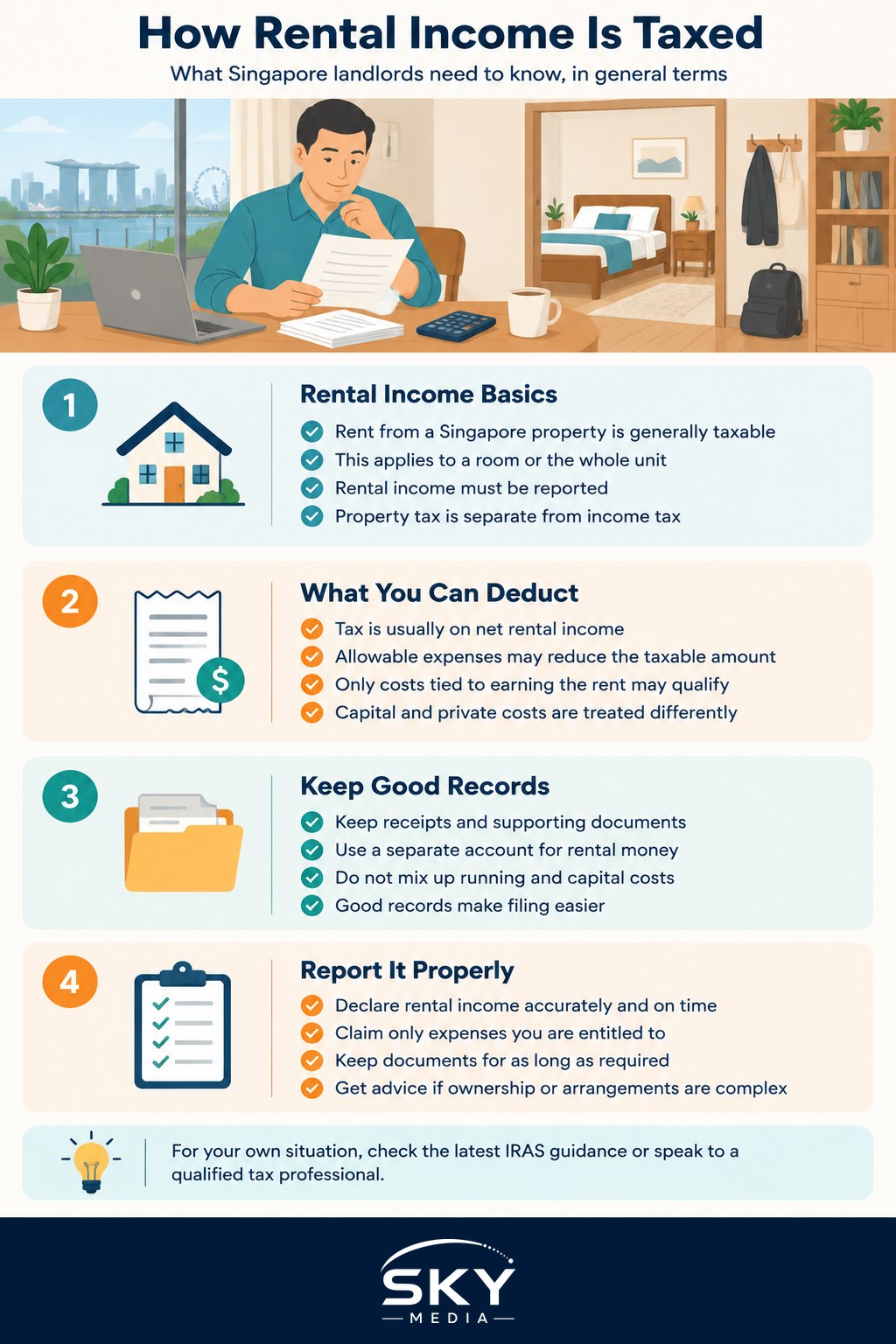
The starting principle is straightforward. Rent you receive from letting out a property in Singapore is generally treated as taxable income and must be reported. This applies whether you rent out an entire property or just a room in the home you live in. Because it is income, it needs to be declared, and IRAS sets out exactly how and when to do this.
It is worth separating this clearly from other property-related taxes so you do not confuse them. Property tax, for instance, is a separate matter with its own basis and rules, and you can read a general overview in property tax in Singapore explained. Income tax on the rent you collect is a different thing again. Keeping the two ideas distinct in your mind avoids a lot of confusion.
The general approach is that you are taxed on your net rental income, broadly the rent you receive after deducting allowable expenses incurred in earning that rent. That makes it important to understand both sides of the equation: what counts as your rental income, and which costs you are allowed to deduct. Both are defined by IRAS rules rather than by guesswork.
Understanding Deductible Expenses
The reason net rental income matters is that legitimate expenses can reduce the amount you are taxed on. The guiding concept is that costs incurred wholly and exclusively in producing the rental income may generally be deductible, while capital or private costs are treated differently. The precise list of what qualifies, and any conditions or methods for working it out, is set by IRAS, so use their guidance as your reference.
To make this concrete without quoting rules that could change, expenses landlords commonly need to understand the treatment of include things connected to running and maintaining the tenancy. Rather than assume any particular item is claimable, check each against current IRAS guidance. Some categories are treated differently from what a first-time landlord might expect, which is exactly why the official source matters.
A few practical habits help enormously here:
- Keep every receipt and record. If you want to claim an expense, you generally need to be able to support it. Organised records make filing straightforward and give you the evidence you might need.
- Separate the property’s finances where you can. A dedicated account for rental income and outgoings makes the picture much clearer at tax time.
- Do not mix up capital and running costs. These are treated differently, and getting the distinction wrong is a common error. When unsure, ask.
If your rental venture is part of a bigger step into property investment, it helps to see the tax angle in context. Understanding the broader responsibilities of being a landlord, from the tenancy agreement to your ongoing obligations, sits alongside the tax rules, and a landlord’s guide to renting out your property in Singapore covers that wider picture.
Reporting, Records, and Getting It Right
Because rental income is reported as part of your overall income, it folds into the way personal tax works generally. If you would like a refresher on the underlying system, how income tax works in Singapore gives helpful background before you add rental specifics on top.
The core responsibilities for a landlord are simple to state:
- Declare your rental income accurately and on time, following IRAS instructions for how and where to report it.
- Claim only the expenses you are genuinely entitled to, supported by proper records.
- Keep your documents for as long as required, so you can answer any questions if they arise.
If you own the property with someone else, or your arrangement is more complicated, the treatment can differ, and this is a good moment to get professional advice. A qualified tax professional can look at your specific setup and make sure you are reporting correctly and not missing anything. This tends to pay for itself in peace of mind, especially in the first year when everything is new.
One more reminder. Do not rely on figures or rules a fellow landlord mentions in passing, because their situation may differ and the rules can change. Always verify against current IRAS guidance.
A Practical Wrap-Up
Renting out property can be rewarding, but the income comes with a duty to report it and pay tax on the net amount. The essentials are to treat your rent as taxable income, understand which expenses you may deduct, keep thorough records, and file accurately and on time.
For the specifics, the amounts, what qualifies as a deductible expense, and how to report, go straight to IRAS or a qualified tax professional. This article sets out the general principles only, tax rules change, and nothing here is tax or financial advice tailored to your circumstances. When in doubt, the official IRAS guidance is always the final word.
Official sources: IRAS