
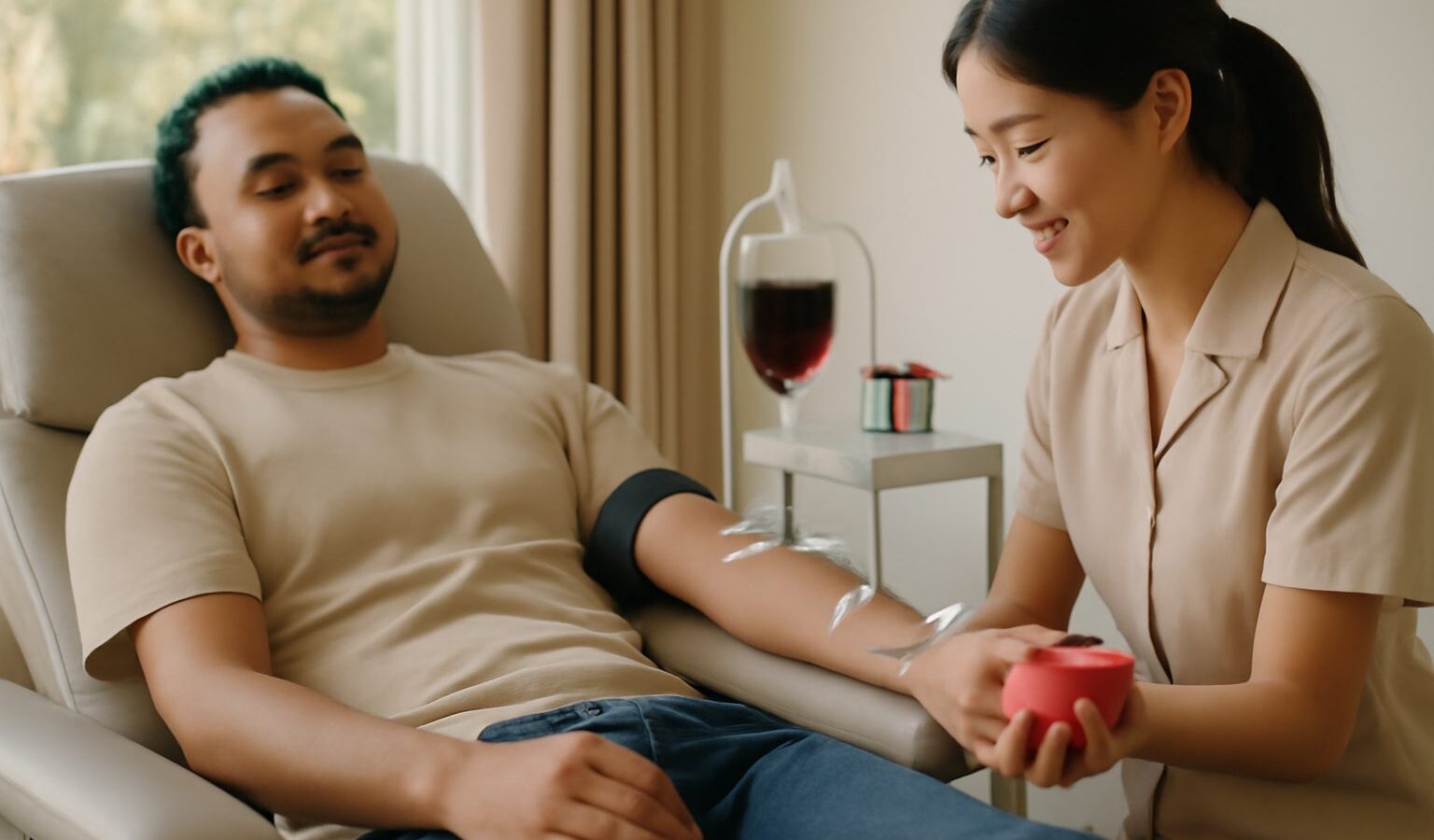
Giving blood is one of the most direct ways to contribute to the community you have joined. It costs you nothing but a little time, it is safe, and it genuinely helps patients who need transfusions after surgery, accidents or during treatment for illnesses. Donating blood in Singapore is well organised and welcoming to newcomers, including permanent residents and pass holders, so you do not need to be a citizen to roll up your sleeve. If you gave blood back in the mainland, the process here will feel familiar, with a few local specifics worth knowing.
This guide covers who can donate, how the system is run, how to book and what happens on the day, and the simple aftercare that keeps your donation a positive experience. It is general information, not medical advice, so defer to the health authorities and the on-site staff for anything specific to you.
Who Can Donate and Basic Eligibility
Blood donation in Singapore is coordinated by the Health Sciences Authority (HSA), which runs the national blood bank, in partnership with the Singapore Red Cross, which helps recruit and organise donors. Together they keep the national blood supply stocked.
General eligibility usually covers healthy adults within a certain age and weight range who meet health criteria on the day. Rather than list numbers that can change, it is best to check the current eligibility details on HSA’s official channels before you go. A few principles hold true, though:
- You must feel well on the day. A cold, infection or feeling under the weather means postponing.
- Some conditions and medications require a waiting period or a check with staff.
- Recent travel to certain places, recent tattoos or piercings, and some medical procedures can mean a temporary deferral.
- Newcomers are welcome. Residency status does not by itself disqualify you, though you will need identification.
If you are ever unsure whether you are eligible, the screening staff will assess you, and being deferred once does not mean you can never donate. It simply protects both you and the patient who receives the blood.
How the System Works and How to Book
The national blood bank operates donation centres, and mobile blood drives pop up at community venues, workplaces and campuses throughout the year. Here is the typical path:
- Register or log in. First-time donors can register their interest through HSA’s donor channels, and Singpass makes identifying yourself straightforward for residents and pass holders.
- Book an appointment. Booking a slot at a blood bank or a mobile drive reduces waiting. Walk-ins may be possible but appointments are smoother.
- Do a quick self-check. Before your visit, make sure you are well, hydrated and have eaten. Bring your identity document.
- Turn up on time. Arrive at your slot, and allow around an hour in total for registration, screening, the donation and a short rest.
Because the blood supply needs constant replenishing, regular donors are especially valued. Many people set a rhythm, donating a few times a year once they know the interval that applies to them, which staff will advise.
It also helps to know that there is more than one kind of donation. Most first-timers give whole blood, the standard donation that takes only a few minutes on the chair. Over time, staff may tell you about apheresis donations, where a machine collects a specific component such as platelets or plasma and returns the rest to you. These take longer and have their own eligibility rules, so they are usually suggested once you are an established donor. You do not need to decide any of this in advance; simply turn up to give whole blood and let the team guide you if you become a regular. Blood does not keep indefinitely, which is why steady, repeat donors matter so much more than a one-off rush of volunteers after a public appeal.
What to Expect on the Day
The process is designed to be calm and safe. Here is the usual sequence:
- Registration. You confirm your identity and details.
- Health screening. You answer a confidential health and lifestyle questionnaire, and staff check basics such as your haemoglobin level to make sure donating is safe for you that day.
- The donation. The donation itself is quick, often around ten minutes for a standard whole-blood donation, though total time at the centre is longer.
- Rest and refreshment. Afterwards you rest briefly and have a drink and a snack before leaving.
This table sums up how to prepare and what helps:
| Stage | What to do | Why it helps |
|---|---|---|
| Before | Eat, hydrate, sleep well | Reduces dizziness and eases the draw |
| Screening | Answer honestly | Keeps you and the recipient safe |
| Donation | Relax, breathe steadily | Makes the process quicker |
| After | Rest, drink fluids, avoid heavy lifting | Helps you recover comfortably |
Most donors feel completely fine and go about their day. If you feel light-headed, tell the staff, sit or lie down, and take your time.
Aftercare, Safety and Getting Help
Good aftercare is simple. Keep hydrated, avoid strenuous exercise or heavy lifting for the rest of the day, keep the bandage on for a few hours, and eat normally. If you feel unwell later, contact the blood bank for advice. Your body replaces the fluid quickly, and staff will tell you when you are next eligible to donate.
Donating is also a small health touchpoint in itself, because the basic screening can occasionally flag something worth following up with your own doctor. If it does, it is a good reason to make sure you are set up with primary care, such as registering with a polyclinic, and to keep your results together by using HealthHub to manage your health records.
For anything specific about your eligibility, upcoming blood drives or the current requirements, the authoritative sources are HSA’s blood bank and the Singapore Red Cross. Because criteria, intervals and details can change, confirm the current position with them rather than relying on this general guide. Whichever way you contribute, turning up to donate is a quietly generous act that ties you into the wider community, and if you are also thinking about staying healthy yourself, our guide to adult vaccinations and boosters is a natural next read.