
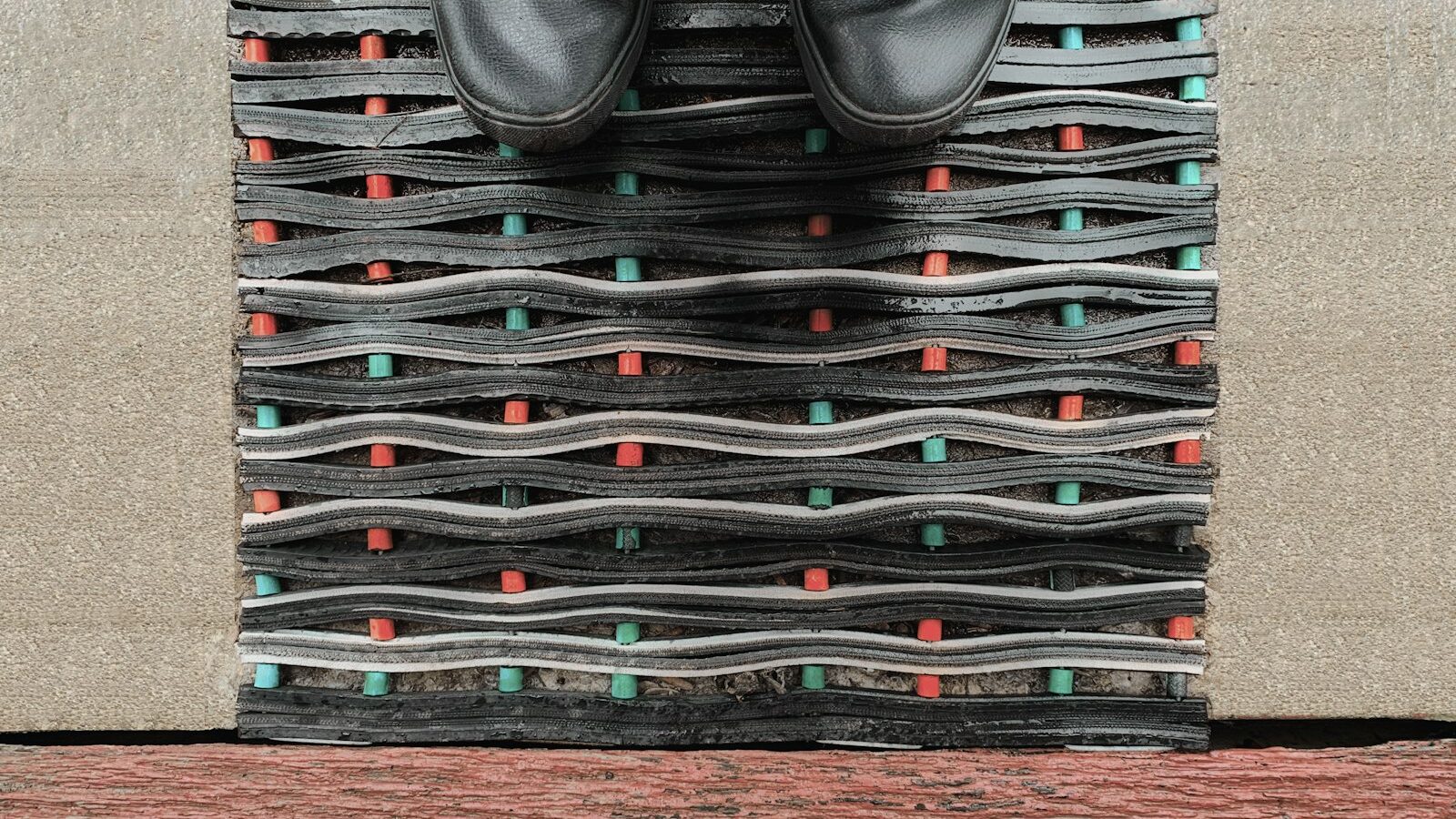
A doormat seems like the simplest thing in the house, until yours starts smelling musty, curling at the edges or sliding every time someone kicks off their shoes. Picking a doormat Singapore weather does not ruin comes down to material, backing and where the mat sits. This guide compares coir, rubber and quick-dry mats for HDB and condo doors, and how to keep them fresh in constant humidity.

Why Humidity Is Hard on Doormats
Most of the year, the air here is warm and moist. Add afternoon storms, wet shoes, umbrellas and mopping, and doormats rarely dry out completely. That leads to familiar problems:
- Mould and mildew growing in thick pile or under rubber backing
- Musty smells that drift into the living room
- Slippery floors when a soggy mat traps water against tiles
- Stains on the floor where dyes or rubber backing react with damp tiles
- Fraying and shedding in natural fibres that stay wet
The goal is a mat that scrapes grit off shoes, dries fast and lets air move underneath.
Outdoor Mat vs Indoor Mat
Many HDB homes use two mats: one outside the door or gate, and one just inside. They do different jobs.
- Outside mat: tough, scraping texture, handles rain blown into the corridor, should not hold water. Coir, rubber or open-loop vinyl suit this spot.
- Inside mat: softer, absorbs the last bit of moisture, sits on the floor where you take off shoes. Quick-dry microfibre or low-pile cotton with a breathable backing works well here.
If you only have space for one, choose a quick-drying scraper mat and wipe your floor more often.
Comparing Doormat Materials
| Material | Strengths | Weaknesses in humid homes | Best placement |
|---|---|---|---|
| Coir (coconut fibre) | Excellent at scraping dirt, natural look, affordable | Sheds fibres, can grow mould if constantly wet, sags over time | Outside, in a sheltered corridor |
| Solid rubber | Durable, waterproof, easy to hose down | Can trap water underneath, heavy, plain look | Outside, especially near rain-exposed doors |
| Rubber with drainage holes or ridges | Water drains away, good grip, dries quickly | Small grit falls through to the floor below | Outside or at service yard doors |
| PVC coil (“spaghetti” vinyl) | Traps dirt in loops, rinses clean, dries fast | Dirt hides in the coils, looks utilitarian | Outside, high-traffic entrances |
| Microfibre quick-dry | Very absorbent, soft, machine washable | Needs frequent washing, can slide without good backing | Inside the door |
| Cotton or woven fabric | Soft, pretty designs, washable | Slow to dry, prone to smells in damp weather | Inside, in a well-ventilated spot |
Backing Matters as Much as the Top
Two mats with the same surface can behave very differently because of the backing.
- Rubber or TPR anti-slip backing grips tiles and stops the mat sliding, which is important for elderly family members and young children. Check it is labelled safe for your floor type, since some backings can mark or discolour certain tiles and vinyl over time.
- Latex backing is common on cheaper fabric mats. It can crack and crumble after repeated washing and heat.
- Breathable or open backing lets moisture escape, so the mat and the floor beneath both dry faster.
- No backing on coir mats means they can slide on smooth tiles. Add a thin, breathable rubber grip underlay if needed.
Lift your mat every few days, especially after rainy spells, and let both the mat and floor dry.
Fitting Your HDB Doorway
Before buying, measure the space. Many HDB flats have a metal gate in front of the main door, which limits mat thickness.
- Clearance: check the gap under your door and gate swing. A thick coir mat can block a door that opens outward or drag on the gate.
- Size: a mat roughly the width of the door frame looks neat and lets people step fully onto it.
- Thickness: slim mats are easier for wheelchairs, walking frames and prams, and less of a trip hazard.
Corridor rules. HDB and SCDF (the Singapore Civil Defence Force) require common corridors to be kept clear as escape routes, and Town Councils manage day-to-day enforcement. A flat doormat at your doorstep is commonly seen, but avoid oversized mats, stacked items or anything that spreads into the walkway. Check your Town Council’s guidance if you are unsure. Condo residents should check MCST (the management corporation that runs the estate) by-laws, which may also set rules for corridor items.
Keeping a Doormat Fresh
A good routine stops most mould and smell problems.
- Shake or vacuum weekly to remove grit and sand that hold moisture.
- Rinse outdoor mats (rubber, PVC coil) with water and a mild detergent, then stand them upright to drain and dry fully before putting them back.
- Machine wash indoor fabric mats following the care label. Air dry completely; a damp mat put back on the floor is where smells start.
- Dry coir gently. Brush it out rather than soaking it. If it gets wet, let it dry in a shaded, airy spot, since harsh sun can make it brittle.
- Wipe the floor underneath. Mould often grows on the tile under the mat, not on the mat itself.
- Rotate two mats. Swapping between a pair means one is always fully dry.
If your home feels damp generally, improving airflow helps the whole entryway. See Dehumidifiers for Humid Homes in Singapore and DIY Fixes for a Humid Tropical Home for broader ideas.
When to Replace Your Mat
Replace a doormat when:
- Smells return within a day of washing
- Black spots or mould stay after cleaning
- The backing cracks, crumbles or leaves residue on the floor
- Coir is bald in the middle and no longer scrapes dirt
- Edges curl up and become a tripping hazard
Quick Buying Checklist
- Outside or inside the door?
- Material that suits rain exposure and foot traffic
- Anti-slip, breathable backing that is safe for your floor
- Thin enough to clear the door and gate
- Easy to wash and dry at home
- Fits neatly in front of your door without spilling into the corridor
Choose well and your doormat will quietly do its job: trapping dirt, staying dry and making coming home feel a little cleaner.
Explore more: How to Choose a Laundry Hamper That Works in Humid Homes
Frequently Asked Questions
Can I put a doormat outside my HDB flat’s front door? A flat doormat at the doorstep is commonly seen, but common corridors must stay clear as escape routes. Avoid oversized mats or items spreading into the walkway, and check your Town Council’s guidance if unsure. Condo residents should check MCST by-laws.
Why does my doormat smell musty even after I wash it? It probably is not drying fully. Damp mats trap moisture and mould can also grow on the tile underneath, so wipe the floor too. Air dry the mat completely, rotate between two mats and replace it if smells return within a day.
Will a rubber-backed doormat stain my floor tiles? It can, since some backings react with damp tiles or discolour certain tiles and vinyl over time. Check that the mat is labelled safe for your floor type, and lift it every few days after rainy spells to let both dry.
How often should I wash or replace a doormat? Shake or vacuum weekly, and wash according to the material rather than a fixed schedule. Replace it when smells return soon after washing, mould spots stay, the backing crumbles or the edges curl up and become a trip hazard.
What doormat is safest for elderly family members and prams? A thin, flat mat with a firm anti-slip, breathable backing. Slim mats are easier for wheelchairs, walking frames and prams, and curled edges are a tripping risk, so replace a mat once its edges lift.