
Anyone who has hung a thick, fluffy towel in a Singapore bathroom knows what happens next. It is still damp the next morning, and within a week it starts to smell musty. In a climate where humidity stays high all year, the towel you buy matters as much as how you wash it. Choosing quick dry towels in Singapore comes down to three things: the fabric, the weight (GSM) and the weave.
This guide explains each one in plain terms so you can pick towels that feel good, dry quickly and stay fresh between washes.
Why Towels Turn Musty in Singapore
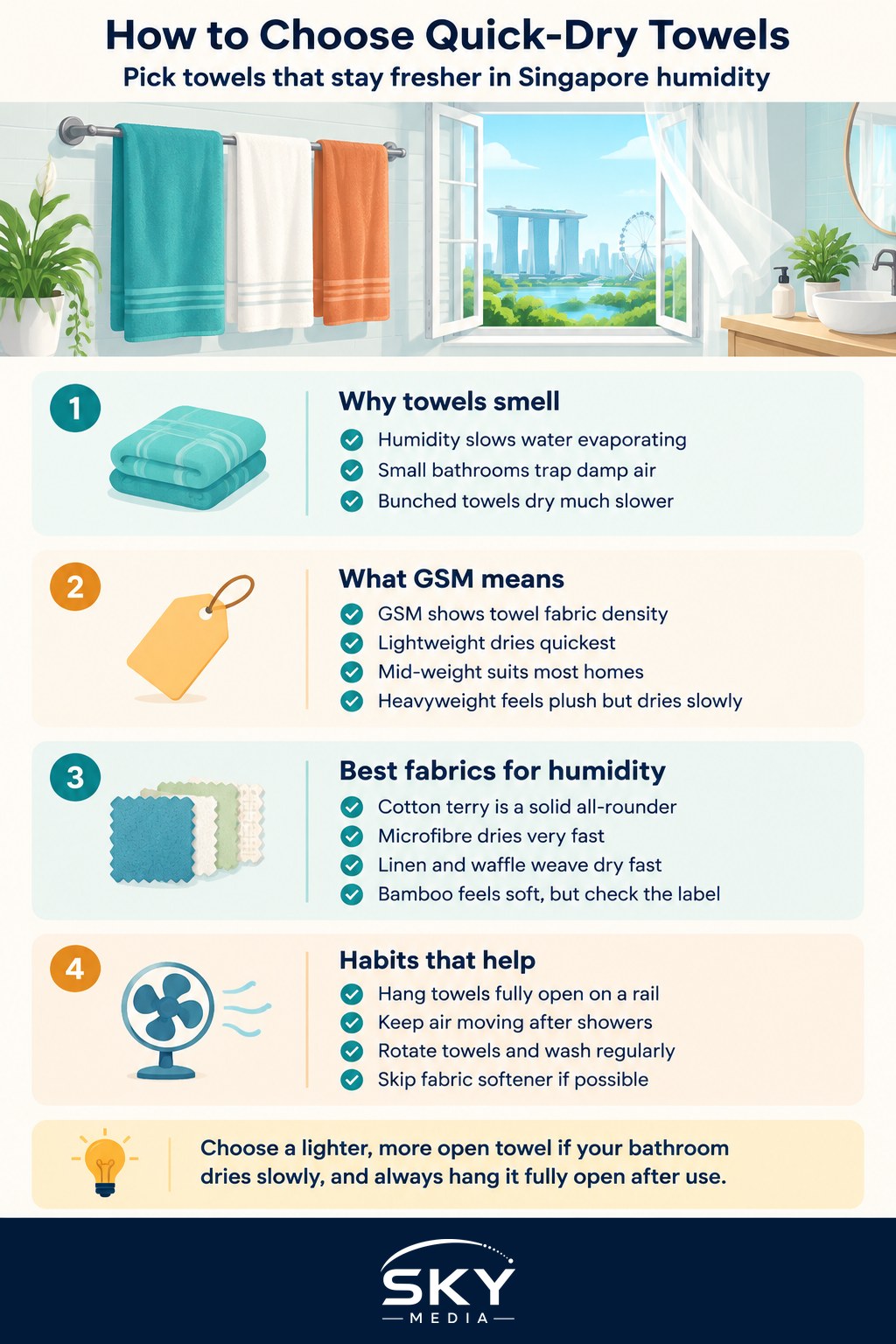
A towel smells musty when it stays damp long enough for bacteria and mould to grow in the fibres. Three local factors make this more likely:
- Humid air. When the air is already holding a lot of moisture, water evaporates from fabric slowly.
- Small, enclosed bathrooms. Many HDB and condo bathrooms have a small window or only an exhaust fan, so damp air lingers after a hot shower.
- Towels hung bunched up. A towel folded over a narrow hook has thick, overlapping layers that trap water in the middle.
The towel itself can either fight this or make it worse. A dense, heavy towel holds a lot of water and gives it up slowly. A lighter or more open towel absorbs less but dries far faster, which often makes it the better choice here.
What GSM Means and Which Weight to Pick
GSM stands for grams per square metre. It tells you how dense and heavy the towel fabric is, and it is often printed on the label or product listing.
- Lightweight (roughly 300 to 400 GSM): thinner, dries quickly, less plush. Good for humid homes, gym bags and travel.
- Mid-weight (roughly 400 to 600 GSM): a balance of softness, absorbency and drying time. A sensible everyday choice for most Singapore households.
- Heavyweight (roughly 600 GSM and above): thick, hotel-style and very absorbent, but slow to dry. Best if you have a well-ventilated bathroom, a balcony to dry them on, or a dryer.
These ranges are general and brands use the figures differently, so treat them as a guide rather than a strict rule. If a listing does not state the GSM, look at the weight of the towel relative to its size and how thick it feels when folded.
Cotton vs Microfibre vs Bamboo vs Linen
Fabric is the biggest factor in both feel and drying speed. Here is how the common options compare.
| Fabric | How it feels | Drying speed | Watch out for |
|---|---|---|---|
| Cotton terry (regular or long-staple) | Soft, familiar, absorbent | Slow to moderate, depends on GSM | Heavy versions stay damp for a long time in humid bathrooms |
| Microfibre | Thin, light, slightly grippy | Very fast | Some people dislike the texture; can cling to hair and pick up lint |
| Bamboo-derived viscose or blends | Very soft, silky, drapes well | Moderate | Can be slower to dry than expected; check care labels and fibre content |
| Linen or cotton-linen blend | Crisp at first, softens with washes | Fast | Feels less plush, a bit rough when new |
| Cotton waffle weave | Light, textured, airy | Fast | Less fluffy than terry, so feels different on the skin |
A few notes on each:
- Cotton is the default for good reason. It is absorbent, durable and easy to care for. Long-staple varieties (such as those labelled Egyptian, Pima or Supima) tend to feel softer and last longer, but a heavy long-staple towel can still be slow to dry. For humid homes, a mid-weight cotton terry is a solid all-rounder.
- Microfibre is made from very fine synthetic fibres. It absorbs quickly for its weight and dries remarkably fast, which is why it is popular for sports and travel. It is a practical choice for a second set of towels or for anyone who swims or goes to the gym often.
- Bamboo towels are usually made from bamboo processed into a viscose or rayon fibre, often blended with cotton. They feel lovely, but they are not automatically quicker to dry. Check the fibre percentage on the label.
- Linen and waffle towels are thinner and more open. They are increasingly common because they dry fast and take up less space on a rail, which suits smaller homes.
Weave and Construction Details That Help
Beyond fabric and GSM, small construction choices make a difference:
- Loop length. Long, plush loops hold more water. Shorter, tighter loops dry faster.
- Zero-twist or low-twist yarns feel extra soft but can be slower to dry and shed more lint. Regular twisted yarns are often more practical in humidity.
- Waffle or honeycomb weaves create small pockets that increase surface area and let air through.
- Hanging loops. A small loop sewn into the corner lets you hang the towel from a hook in a single layer rather than bunching it.
- Size. A bath sheet is luxurious but takes far longer to dry than a standard bath towel. If drying space is tight, choose a smaller size and have more of them.
Habits That Keep Towels Fresh Between Washes
Even the best quick dry towel will turn musty if it never gets a chance to dry. These habits help:
- Spread towels flat. Hang them fully open on a rail, not bunched on a hook. A rail outside the bathroom, in a bedroom or near a window, is often better than one inside.
- Keep air moving. Leave the bathroom door open after showers and run the exhaust fan. A fan in the room where towels hang speeds things up a lot.
- Have enough towels to rotate. Two or three per person lets each towel dry fully between uses.
- Wash regularly. Many households wash bath towels every few uses. Wash them sooner if they are damp for long or start to smell.
- Dry them fully after washing. Sun on a balcony or corridor-facing window is ideal when the weather allows. On rainy days, a dryer or dehumidifier helps. Our guide to drying clothes in humid weather covers indoor options in detail.
- Go easy on fabric softener. It can coat fibres, reducing absorbency and making towels hold moisture. Use it sparingly or skip it for towels, and follow the care label.
If your towels already smell, they may need a deeper wash. That is a separate job from choosing new ones, and the same principles of thorough drying apply to bedding in humid weather.
A Simple Buying Checklist
When shopping in a store or online, run through these questions:
- What is the fabric content, and does the label give a percentage for blends?
- Is the GSM listed, and is it in the lightweight or mid-weight range if you want fast drying?
- Is the weave terry, waffle or flat? Thinner, more open weaves dry faster.
- Does it have a hanging loop?
- What do the care instructions say about water temperature, tumble drying and softener?
- Does the size suit your drying space?
A practical setup for many Singapore homes is a mix: a mid-weight cotton towel for everyday comfort, plus a lighter waffle, linen or microfibre towel for the gym, swimming and days when nothing seems to dry. Pick based on how well your home ventilates, not only on how a towel feels in the shop.
Explore more: Surviving Singapore’s Heat and Humidity: A Newcomer’s Guide.
Frequently Asked Questions
How often should I wash bath towels in a humid home? Many households wash bath towels every few uses. Wash them sooner if they stay damp for long or start to smell, since bacteria and mould grow in damp fibres. Dry them fully afterwards, in the sun if you can.
Is microfibre or cotton better for a small HDB bathroom? Microfibre dries remarkably fast, so it suits a cramped bathroom with poor airflow, though some people dislike its texture. A mid-weight cotton terry is the all-rounder for daily comfort. Many homes do well with one of each.
Do bamboo towels dry faster than cotton ones? Not automatically. Bamboo towels are usually viscose or rayon made from bamboo, often blended with cotton, and they can dry more slowly than expected. Check the fibre percentage and care label before you buy.
Does fabric softener make towels less absorbent? It can. Softener coats the fibres, which reduces absorbency and lets towels hold moisture. Use it sparingly or skip it for towels, and follow the care label.
Is a bath sheet practical in Singapore? Only if you have good drying space. A bath sheet feels luxurious but takes far longer to dry than a standard bath towel. If space is tight, choose a smaller size and keep more of them so each can dry fully between uses.