
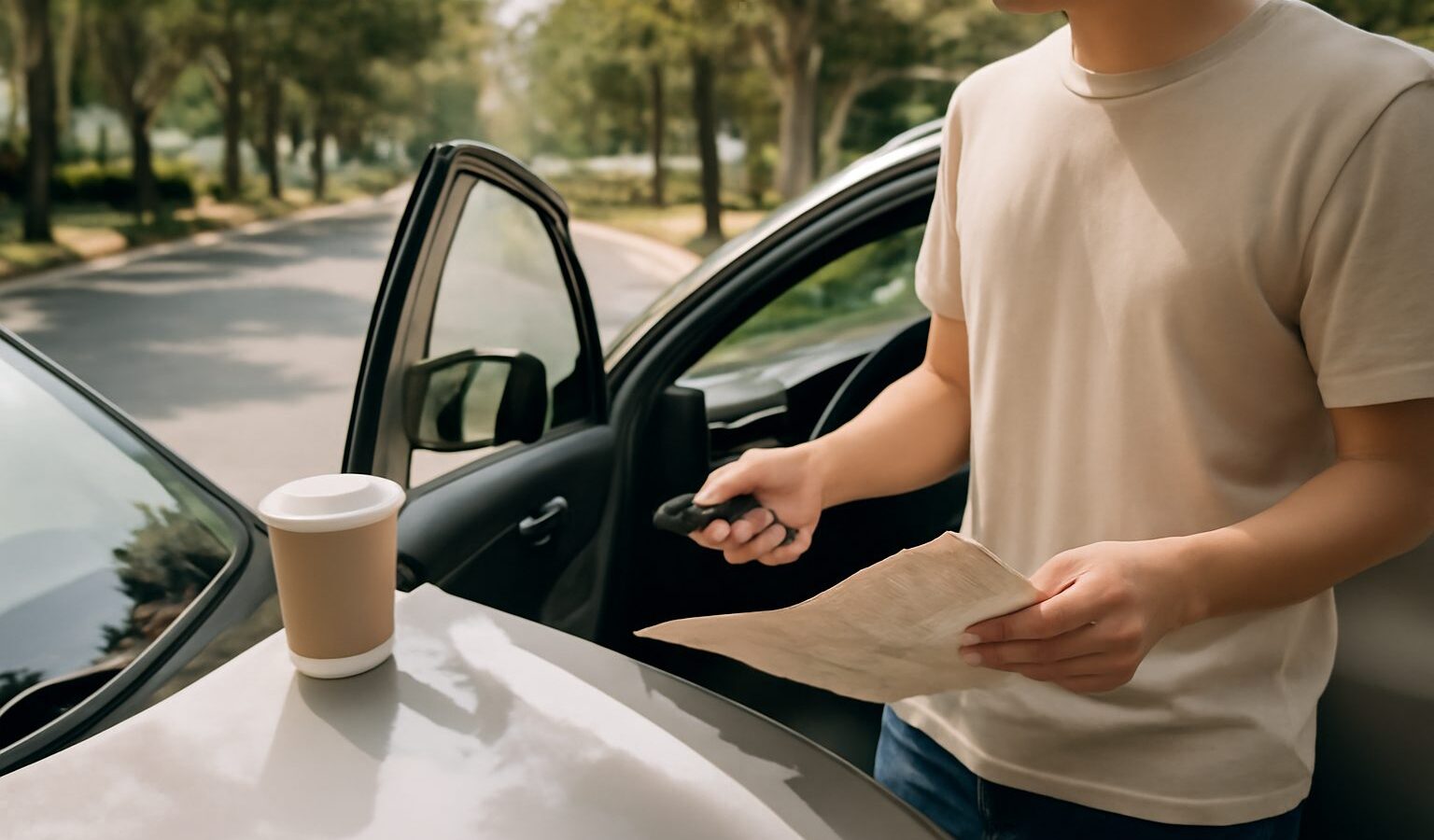
Slipping behind the wheel of a car you have never driven is a small leap of faith. The pedals sit in slightly different places, the indicator stalk may be on the opposite side, and the boot is a mystery until you need it. Whether you are collecting a hire car for a Malaysia road trip, borrowing a friend’s vehicle, or trying a courtesy car while yours is in the workshop, driving a rental car safely comes down to a few unhurried minutes before you move off. This is general guidance to help you settle in, not a substitute for the rental company’s own briefing or your own good judgement.
Set Up the Seat, Wheel and Mirrors First
Never drive off in the position the last person left. Start with the seat. Slide it so your right foot can press the brake fully with a slight bend in the knee, then set the backrest so your wrist rests on top of the wheel with your shoulders still against the seat. Raise the seat height, if the car has it, until you can see the bonnet edge and the road clearly.
Next, the steering wheel. Most cars let you adjust it for reach and height, usually with a lever under the column. Bring it close enough that your arms stay comfortably bent, but keep it clear of your thighs.
Then the mirrors, which matter most for the blind spots you cannot see over your shoulder:
- Set the interior mirror to frame the whole rear windscreen.
- Angle each door mirror so you can just glimpse the side of the car at the inner edge, with most of the glass showing the lane beside you.
- Adjust the head restraint so its centre is level with the top of your ears.
Buckle up, and only then start the engine.
Find the Controls Before You Move Off
Fumbling for the wiper switch during a sudden monsoon downpour is the wrong time to learn where it is. With the car stationary and the handbrake on, hunt down the essentials while you can give them your full attention:
- Headlights, high beam and front and rear fog lights
- Wipers and the windscreen washer, front and rear
- The indicator and horn
- The handbrake, whether a lever, a foot pedal or an electronic button
- The demister and aircon controls, which you will want the moment the glass fogs up
- Hazard lights and the petrol filler release
Note the gear layout too. An automatic may have a conventional lever, a rotary dial or buttons, and many now need your foot on the brake before they will shift out of Park. If it is a manual, find the biting point gently in a quiet spot before you join traffic. Check the fuel gauge and fuel type, and glance at the dashboard for any warning lights that stay lit after start-up.
Know the Car’s Size and Blind Spots
A larger or higher car than you are used to changes everything about parking and lane discipline. An MPV or SUV is longer, wider and taller than a typical hatchback, so it eats more of the lane and needs more room to turn. Before your first tight HDB or mall carpark, get a feel for where the corners are.
If the car has a reversing camera or parking sensors, use them, but do not trust them blindly. They can miss a low bollard or a child, so still turn and look. Take your first few junctions and lane changes slowly, checking your mirrors and doing a proper shoulder check each time until the car’s blind spots feel familiar. On the expressway, leave a bigger gap than usual while you learn how strongly the car brakes and accelerates.
Height matters if you are in anything tall. Note the clearance signs at multi-storey and basement carparks, and be wary of low barriers, especially with a roof rack fitted.
Check the Car and Insurance at Handover
The handover is your chance to protect yourself from being blamed for damage that was already there. Do not rush it, even if the counter is busy. Walk around the car in good light and photograph or film every panel, the wheels, the windscreen and the interior, with a timestamp. Note existing scratches and dents on the rental company’s damage form and make sure both of you sign it.
Understand what you are actually covered for. Insurance terms vary widely, so read the agreement rather than assuming.
| At handover, check | Why it matters |
|---|---|
| The excess or liability amount | This is what you pay out of pocket for damage, and it can be substantial |
| What voids the cover | Off-road use, unlisted drivers or crossing into Malaysia may not be covered |
| Fuel and mileage policy | Some expect the tank returned full; charges apply if not |
| Existing damage logged | Anything unrecorded may be charged to you on return |
| Who may legally drive | Only named, correctly licensed drivers are usually insured |
If you plan to drive into Malaysia, confirm in writing that the car is permitted across the border and that the insurance extends there, and ask about the vehicle entry permit and any autopass or toll arrangements. This is general information, so treat the rental contract and the insurer’s wording as the final say.
Ease Into the First Few Kilometres
The safest way to get comfortable is to drive gently at first. Pull away smoothly and use the first quiet stretch of road to test the brakes, the steering feel and how the car responds. Keep the radio off and your phone away so you can concentrate on the unfamiliar controls.
A few habits make the early minutes safer:
- Signal early and clearly, since the stalk may be where you least expect it.
- Brake sooner and more gently than usual until you learn the pedal’s bite.
- Give yourself extra following distance on the expressway.
- Avoid tight parking manoeuvres until you have a feel for the car’s size.
If the car pulls to one side, the brakes feel spongy, a warning light comes on, or anything sounds wrong, do not press on and hope. Pull over somewhere safe and call the rental company or owner. It is their vehicle and their responsibility to sort out a fault, and no trip is worth driving a car you do not trust.
Driving Someone Else’s Car With Care
Borrowing a friend or family member’s car carries the same logic without the counter paperwork. Confirm you are covered on their motor insurance before you drive, because many policies only cover named drivers, and an accident in an uninsured car is a serious and expensive problem. Ask about any quirks, from a temperamental handbrake to a heavy clutch, and treat the car more carefully than your own.
Whether it is a hire car or a borrowed one, the principle is the same. Spend a few calm minutes setting up, learning the controls and understanding your cover, and an unfamiliar car quickly stops feeling unfamiliar. For anything beyond the basics, or if a car does not feel roadworthy, defer to the rental company, the owner or a qualified workshop rather than taking a risk on the road.