
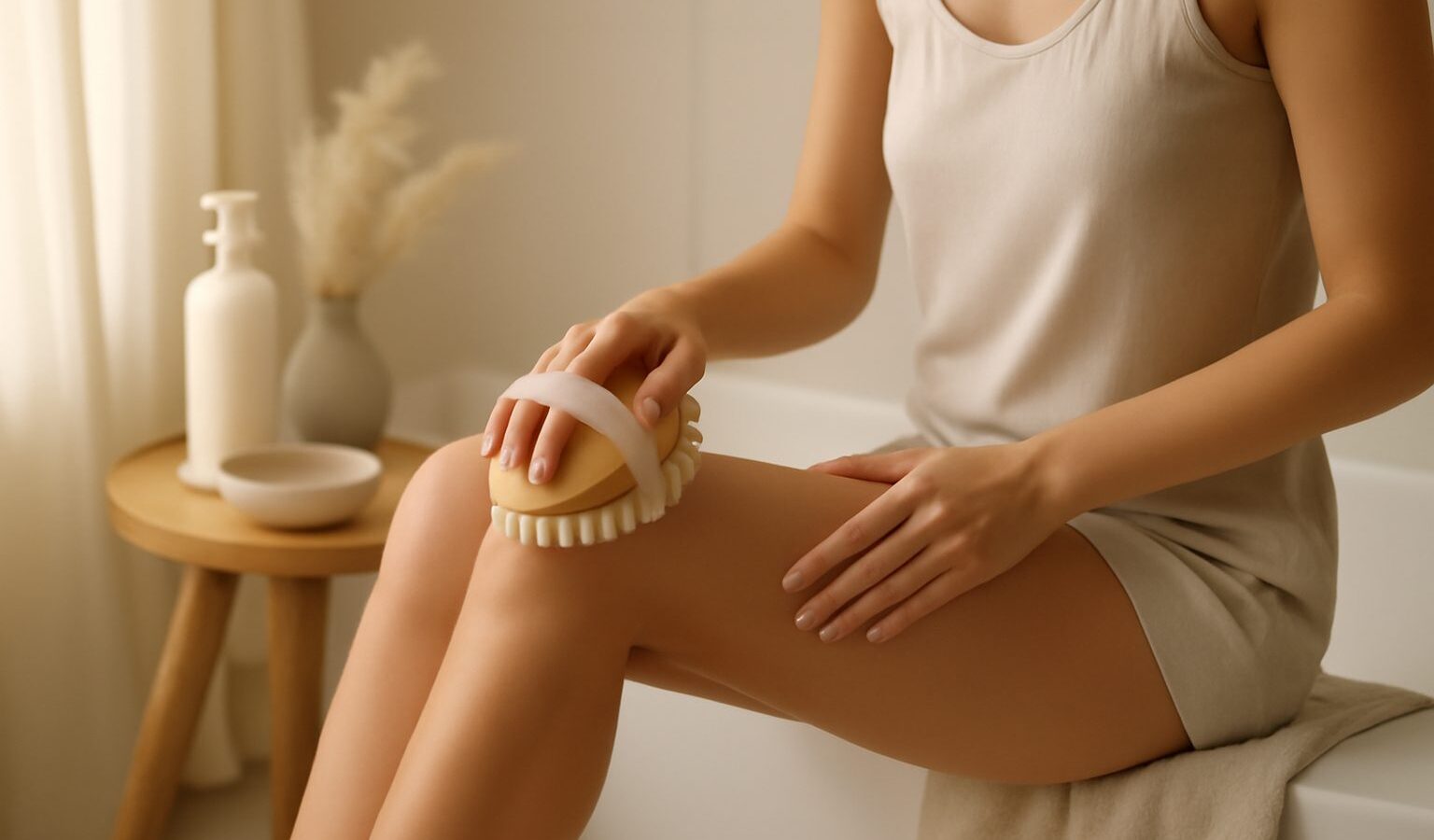
Dry brushing is exactly what it sounds like: brushing your dry skin with a firm, natural-bristle body brush before you shower. It has become a popular self-care ritual, promising smoother skin, less puffiness and a wide list of wellness benefits. Some of those claims are fair and some are wishful thinking. This guide gives you the honest version: what dry brushing genuinely does, what it does not, how to do it gently and safely, and how to make it work for sensitive skin in Singapore’s hot, humid climate.
First, the important honest note. Dry brushing is a general body-care and wellbeing habit, not a medical treatment. It does not “detox” your body, your organs do that, and it will not cure cellulite or any medical condition. This article is general information, not medical advice. If you have a skin condition, are pregnant, or have any health concern, check with a doctor or dermatologist before starting, and always patch-test on a small area first.
What Dry Brushing Actually Does
Strip away the marketing and dry brushing is a form of physical exfoliation plus a light massage. Done gently and regularly, it can offer a few real, modest benefits:
- Smoother-feeling skin. Brushing sweeps away loose surface dead skin cells, so skin can feel softer and look a little brighter. This can also help body moisturiser absorb more evenly afterwards.
- A pleasant, stimulating ritual. The brisk strokes and warmth on the skin feel invigorating, which is a nice way to wake up.
- Gentle circulation boost. Brushing brings a temporary flush of blood to the surface, which is why skin can look rosier straight after.
Now the honest limits. Dry brushing does not remove toxins; that is a myth. It does not permanently reduce cellulite, though a temporary plumping and flush can make dimpling look slightly smoother for a short while. It will not slim you or drain fat. Any talk of “detox” or dramatic body reshaping is overblown. Think of it as a nice exfoliating habit, nothing more.
How to Dry Brush, Step by Step
The technique matters far more than the tool. The goal is light, gentle strokes, never scrubbing hard enough to redden or scratch the skin.
- Start dry, before showering. Skin and brush should both be dry. Begin at the feet.
- Brush upward, toward the heart. Use long, light strokes up the legs and arms, moving toward the centre of the body. Sweep in the direction of the heart on the limbs.
- Use gentle circles on the torso. On the stomach and lower back, soft circular motions are comfortable.
- Go lighter on delicate areas. The chest and inner arms are more sensitive, so ease off the pressure.
- Keep each session short. Two to four minutes is plenty. This is not a scrub-down.
- Shower and moisturise. Rinse off the loosened skin cells, then apply a lightweight body moisturiser while skin is still slightly damp to lock in hydration.
Aim for a couple of times a week to start, not daily, and see how your skin responds. If your skin turns red, stings or feels raw, you are pressing too hard or brushing too often. Gentle wins.
Choosing and Caring for a Body Brush
A good brush makes the habit easier and safer. Look for firm but not sharp natural bristles, and a handle or strap if you want to reach your back. Softer bristles suit sensitive skin; firmer ones suit tougher areas like the soles and heels.
- Keep it clean. Wash the brush with a little gentle soap every week or two and let it dry fully, bristles down, in a ventilated spot. In our humidity, a damp brush left in the bathroom can grow mould or bacteria, so store it somewhere airy rather than in the shower.
- Do not share brushes. Like a razor or towel, a body brush is personal.
- Replace worn brushes. When bristles splay or soften, it is time for a new one.
Dry Brushing Compared With Other Exfoliation
Dry brushing is just one way to exfoliate the body. Here is how it stacks up against other common options, so you can pick what suits your skin.
| Method | How it works | Best for | Watch out for |
|---|---|---|---|
| Dry brushing | Physical exfoliation on dry skin before showering | Feeling smoother, a stimulating ritual | Too much pressure scratches or irritates |
| Physical scrub | Sugar or salt grains rubbed on wet skin | An occasional deeper polish | Harsh grains can cause micro-tears |
| Chemical exfoliant | Acids such as PHA or AHA dissolve dead cells | Bumpy skin, keratosis pilaris, sensitive skin | Introduce slowly, use sunscreen, patch-test |
| Exfoliating cloth or mitt | Textured fabric used with body wash | A mild, low-cost everyday option | Keep it clean and replace often |
You do not need all of these. Many people pair gentle dry brushing with a lightweight moisturiser and leave stronger acids for specific concerns. If you use chemical exfoliants, do not also brush the same area hard on the same day; over-exfoliating damages the skin barrier.
Making It Work in Singapore’s Climate
Our heat and humidity change the calculation. A few local tips:
- Do not over-exfoliate. Sweat, sunscreen and frequent showering already keep skin busy. Brushing too often on top of that can leave the skin barrier dry and irritated, which shows up as flakiness or sensitivity.
- Moisturise after, always. Exfoliating without rehydrating is a common mistake. A light, fast-absorbing lotion suits the humidity better than a heavy balm.
- Mind sun-exposed skin. Freshly exfoliated skin can be a touch more sensitive to the sun, so keep up daily sunscreen on areas that see daylight.
- Storage matters. As above, dry the brush fully in an airy spot to avoid mould in the humid air.
- Pair it with calm. Dry brushing makes a nice bookend to a gentle face routine such as facial yoga, turning a few minutes of body care into a proper reset.
Who Should Skip or Be Careful
Dry brushing is not for everyone, and the bristles are firmer than they look. Avoid brushing over broken, sunburnt or inflamed skin, cuts, rashes, active eczema or psoriasis, varicose veins, or any area with a skin condition. If you have very sensitive skin, use the softest bristles and the lightest touch, or choose a gentler chemical exfoliant instead.
If you are pregnant, have a circulatory condition, diabetes, or any medical concern, check with your doctor before starting. And if a skin problem is persistent, itchy or changing, see a dermatologist rather than trying to exfoliate it away.
Used sensibly, dry brushing is a low-cost, pleasant habit that leaves skin feeling smooth and helps your moisturiser sink in. Keep the strokes light, do it a couple of times a week, moisturise afterwards, and enjoy it for what it honestly is: a nice bit of self-care, not a detox or a cure.