
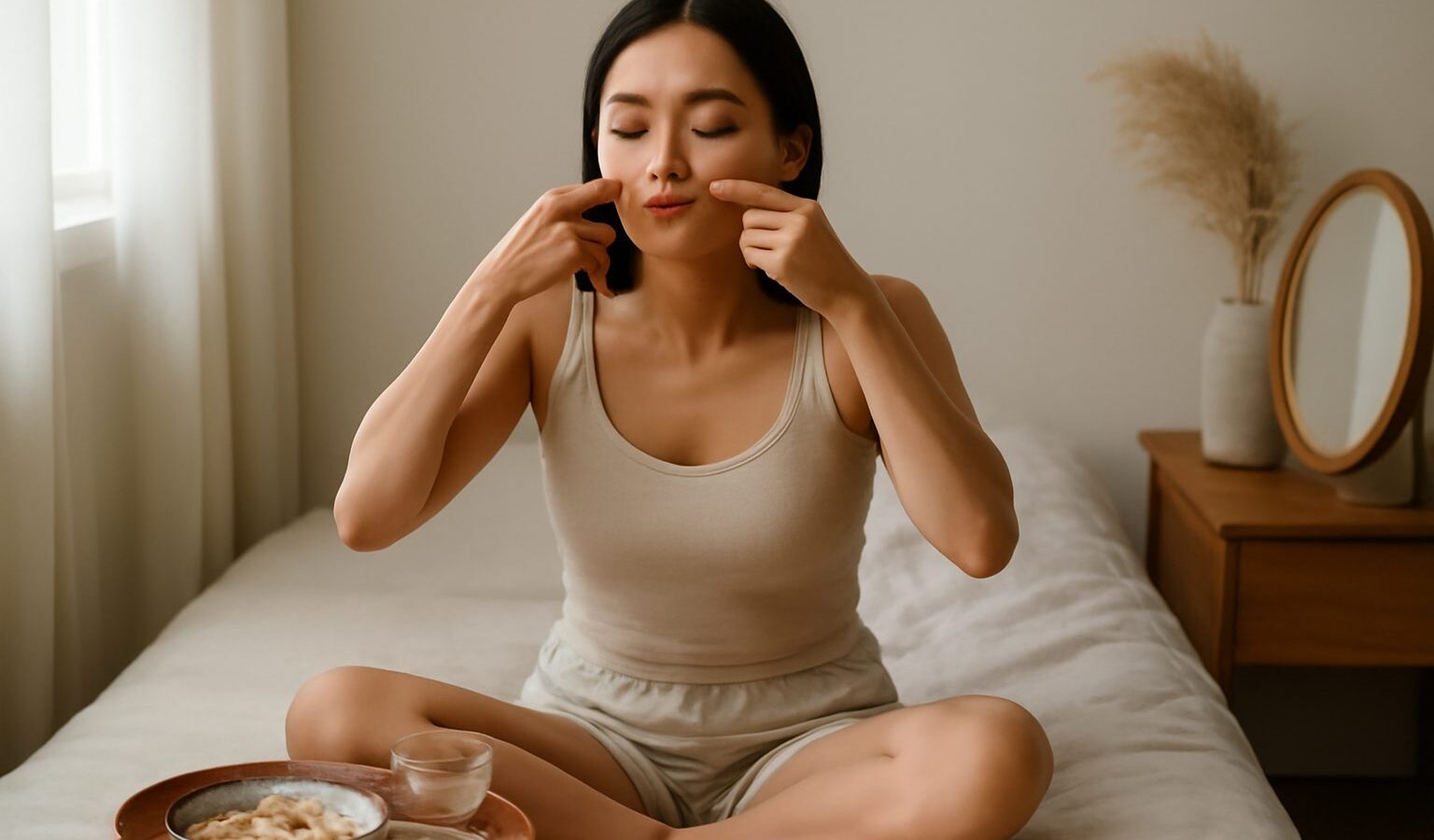
Facial yoga is a set of gentle facial exercises and massage moves you do with your fingers to work the muscles under the skin. The idea is simple: your face has more than 40 small muscles, and, like any muscle, they can be tensed, released and gently trained. Fans say a regular practice leaves the face feeling more relaxed, looking a little more lifted and less puffy. It is free, needs no tools and takes only a few minutes, which is why it keeps trending. This guide explains what facial yoga can and cannot do, how to do it safely, and how to fit it into a routine that suits Singapore’s hot, humid weather.
Before we start, one honest note. This is general wellbeing information, not medical or dermatological advice. Facial yoga will not treat a skin condition, replace a clinical treatment or change your bone structure. If you have persistent concerns such as sagging, deep lines, acne or pigmentation, or any skin condition, see a doctor or dermatologist.
What Facial Yoga Actually Is
Facial yoga blends two things. The first is resistance-style exercises, where you hold a muscle against light pressure from your fingers, a bit like a mini workout for the cheeks, jaw, brow or neck. The second is facial massage, where you use smooth, sweeping strokes to relax tension and encourage circulation and gentle lymphatic movement, which can help a puffy morning face feel less swollen.
You will often see it grouped with tools such as a gua sha stone (a flat stone stroked along the face) or a jade roller. These are just aids for the same massage moves. You do not need them to start; clean hands and a little facial oil or moisturiser to help your fingers glide are enough. What matters is that the movements are slow, light and never drag the skin.
Does Facial Yoga Work? An Honest Look
Here is the realistic picture. Strong scientific evidence for facial yoga is limited, and most claims of a dramatic “facelift without surgery” are overblown. What a regular practice can genuinely offer is more modest and still worthwhile:
- Relaxation. Many of us clench the jaw and furrow the brow without noticing, especially during long screen days. Massaging these areas releases tension and simply feels good.
- A temporary fresher look. Gentle massage boosts circulation and helps move fluid, so a puffy face can look a little more awake, particularly in the morning.
- Body awareness. Over time you may catch yourself frowning or clenching and learn to soften those habits, which can ease tension lines caused by expression.
What it will not do is burn facial fat, tighten loose skin from significant weight or age changes, or reverse sun damage. Results, where they come, are subtle and build slowly over weeks or months of near-daily practice. If someone promises fast, visible transformation, be sceptical.
A Gentle Beginner’s Routine
Start clean. Wash your hands and face, then apply a light layer of moisturiser or a few drops of facial oil so your fingers slide rather than tug. Keep every move slow and feather-light. Two to five minutes, most days, is plenty to begin.
- Warm up the neck. With flat fingers, stroke gently upward from the collarbone to the jaw, a few times on each side. This encourages fluid to drain.
- Smooth the jaw and cheeks. Using the backs of your fingers or a gua sha stone at a low angle, sweep from the centre of the face outward toward the ears, then down the neck.
- Release the brow. Place fingertips between the brows and stroke outward toward the temples to ease frown tension. Do not press hard.
- Cheek lift. Smile gently with lips closed, place fingertips lightly on the tops of the cheeks, and hold for a few seconds to feel the muscle engage, then relax. Repeat a few times.
- Eye area, very gently. The skin around the eyes is thin and delicate, so use only your ring finger and the lightest touch, tapping softly around the orbital bone.
- Finish and breathe. End with slow strokes down the neck and a few deep breaths. The relaxation is part of the benefit.
Stop if anything stings, reddens or feels sore. More pressure is not better, and over-doing it can irritate skin or, in theory, encourage the very lines you are trying to soften.
Facial Yoga Compared With Other Approaches
Facial yoga sits at the gentle, low-cost end of the spectrum. It helps to see where it fits against other popular options so you can set fair expectations.
| Approach | What it involves | Realistic outcome | Cost and effort |
|---|---|---|---|
| Facial yoga and face exercises | Finger massage and light resistance moves at home | Relaxation, temporary de-puffing, subtle toning over time | Free, a few minutes most days |
| Gua sha or roller massage | Same massage moves aided by a stone or roller | Similar to facial yoga, a nice cooling ritual | Low one-off tool cost |
| Facials at a salon | Professional cleansing, massage and masks | Relaxing, skin feels fresh short term | Moderate, occasional visits |
| In-clinic aesthetic treatments | Doctor-led procedures for lifting or lines | Can address concerns facial yoga cannot | Higher cost, must be MOH-registered doctor |
If your goal is genuine lifting or treating deeper lines, in-clinic options are a different category. Those are medical or regulated aesthetic procedures and, in Singapore, should be done only by a qualified, MOH-registered doctor at a proper clinic after a consultation. Facial yoga is a wellbeing habit, not a substitute.
Staying Safe in Singapore’s Climate
Our heat and humidity change how this feels in practice. A few local pointers:
- Clean hands and clean face, always. Sweat, sunscreen and pollution build up quickly here, and massaging grime into the skin can trigger breakouts. Cleanse first.
- Go light on product. Heavy oils can feel suffocating in humidity. A small amount of a lightweight moisturiser or a fast-absorbing oil is enough for slip.
- Mind your actives. If you use exfoliating acids or retinol-adjacent products, your skin barrier may be more sensitive, so massage even more gently and consider doing facial yoga on off-days. Always patch-test any new product.
- Skip it during flare-ups. Avoid massaging over active acne, sunburn, eczema, cold sores or a rosacea flare, as friction can worsen them.
- Sunscreen still rules. No amount of facial exercise protects against ageing from UV. Daily broad-spectrum sunscreen, reapplied when you are out and sweating, does far more for how your skin ages. Pairing a calm morning massage with a self-care body ritual such as dry brushing can make the whole routine feel intentional without adding cost.
When to See a Professional
Facial yoga is safe for most people as a gentle daily habit, but it is not a medical tool. See a doctor or dermatologist if you notice sudden facial drooping or weakness on one side, which needs urgent attention, or if you have persistent skin conditions, unexplained swelling, or concerns about sagging and lines that a home routine clearly will not fix. If you are considering any aesthetic treatment, book a consultation with a qualified, licensed practitioner and ask about risks and downtime.
Treat facial yoga for what it is: a low-cost, relaxing ritual that can leave your face feeling calmer and looking a touch fresher. Keep the touch gentle, keep expectations realistic, and let it be a few pleasant minutes in your day rather than a promise of a new face.