
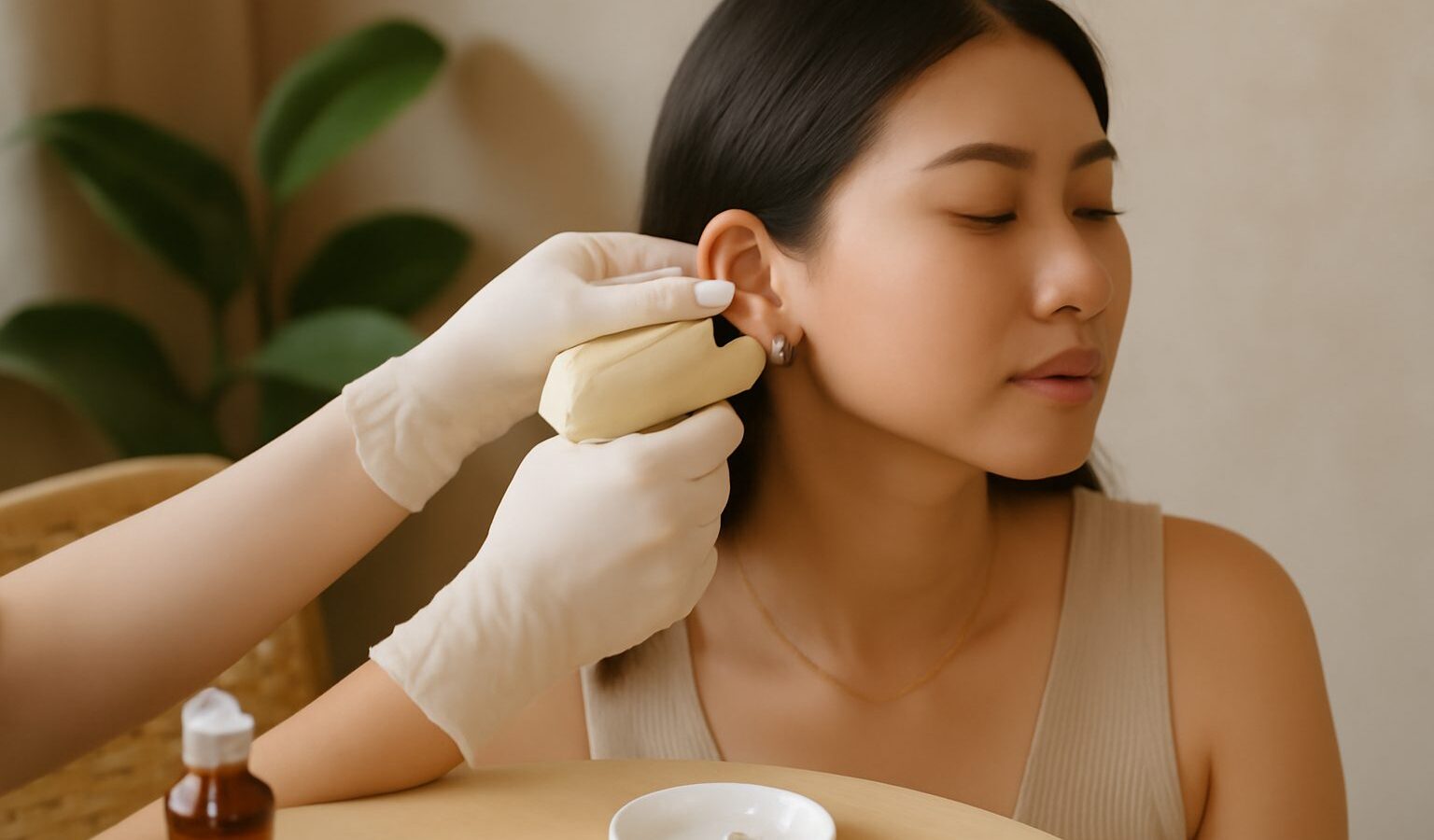
Getting your ears pierced is one of the most common body modifications, but a little planning makes the difference between a piercing that settles quietly and one that stays sore for months. In Singapore, the heat, sweat and humidity add an extra challenge to healing. This guide to ear piercing in Singapore covers the choice between a piercing gun and a needle, what to know about cartilage piercings, which jewellery metals to look for, and an aftercare routine suited to our climate.
This is general information, not medical advice. If you have a health condition, a history of keloids (raised scars that grow beyond the wound) or allergies, speak to a doctor before getting pierced.
Piercing Gun or Needle: What Is the Difference?
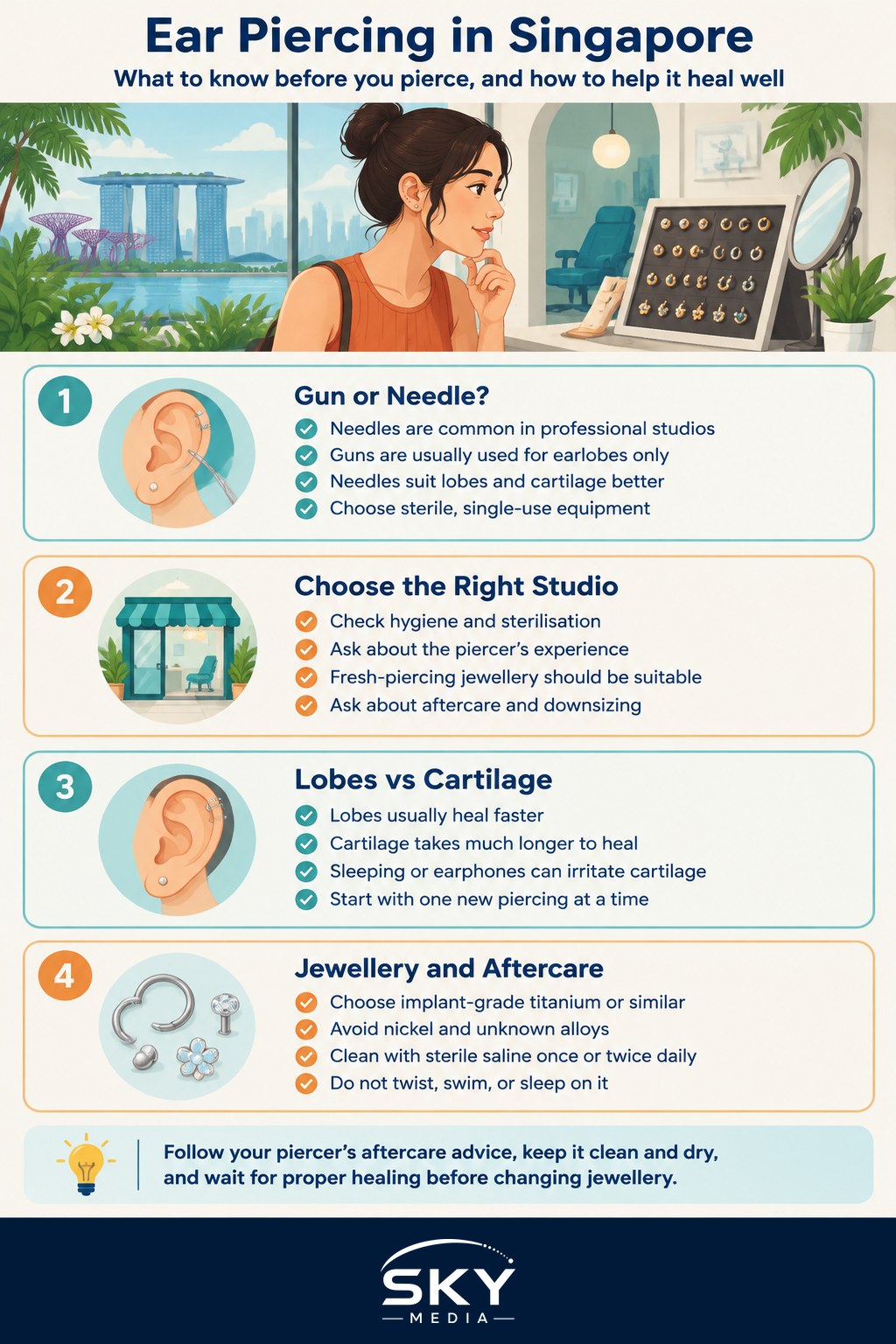
You will generally find two methods in Singapore. Some jewellery counters, accessory shops and beauty outlets use a piercing gun, a spring-loaded device that pushes a blunt-ended stud through the earlobe. Professional piercing studios usually use a hollow, single-use needle, then insert the jewellery straight after.
| Aspect | Piercing gun | Needle |
|---|---|---|
| How it works | Pushes a stud through the skin by force | A sharp hollow needle cuts a clean channel, then jewellery is inserted |
| Suitable areas | Generally earlobes only | Earlobes and cartilage, such as helix, tragus, conch and rook |
| Jewellery | Standard short studs, often with a butterfly back | Choice of implant-grade metals and lengths suited to swelling |
| Hygiene | Depends on the setup; some parts may not be single-use | Single-use, sterile needles in a reputable studio |
| Typical experience | Quick and widely available | Usually smoother healing, especially for cartilage |
Many professional piercers advise against using a gun on cartilage, because the blunt force can damage the tissue and lead to prolonged swelling and bumps. For earlobes, either method is common, but a needle piercing with good jewellery often heals more comfortably.
Choosing Where to Get Pierced
Whichever method you pick, the place matters more than the price. Before booking, check:
- Hygiene practices. Ask whether needles and jewellery are single-use and sterilised, whether the piercer wears fresh gloves, and how equipment is cleaned between clients.
- Experience with your chosen spot. Cartilage piercings require more skill and anatomy knowledge than lobes.
- Jewellery quality. Ask what metal is used and whether it is suitable for fresh piercings.
- Clear aftercare advice. A good piercer will explain how to clean the piercing and when to come back for a downsize (switching to shorter jewellery once swelling settles).
- Age rules. Many studios have minimum ages or require parental consent for minors, so check their policy before visiting with a child.
Prices vary widely depending on the method, the area pierced and the jewellery, so compare a few options and read reviews rather than going for the cheapest.
Lobe and Cartilage Piercings Compared
Earlobes are soft, fleshy tissue with good blood supply, so they typically heal faster. Cartilage piercings go through the firmer upper ear and take much longer to heal, often many months. Common cartilage spots include:
- Helix: the outer rim of the upper ear.
- Forward helix: the front rim near the face.
- Tragus: the small flap in front of the ear canal.
- Conch: the inner bowl of the ear.
- Rook and daith: folds of cartilage inside the ear.
Cartilage piercings are more likely to get irritated by sleeping on them, earphones, helmets or hair snagging. If you wear in-ear earphones daily, a tragus or conch piercing may be uncomfortable for a while. Consider your daily habits before choosing a spot, and start with one new piercing at a time rather than several on the same side.
Picking Jewellery for a Fresh Piercing
The first piece of jewellery should stay in until the piercing has healed, so choose well. Materials often recommended for fresh piercings include implant-grade titanium, niobium and solid gold of a suitable karat. Avoid jewellery with nickel or unknown alloys, because nickel allergy is a common cause of itching and redness.
Other things to note:
- Flat backs and threadless studs are less likely to snag than butterfly backs, and easier to clean.
- Length matters. The initial jewellery is usually slightly longer to allow for swelling, then downsized later by the piercer.
- Hoops are usually avoided at first in cartilage, because they move more and can irritate healing tissue.
Aftercare in Singapore’s Heat and Humidity
Humidity and sweat can keep a fresh piercing damp, which may slow healing. Follow your piercer’s instructions first; a typical routine looks like this:
- Clean gently once or twice a day with sterile saline wound wash, rinsing away crust. Many piercers advise against harsh products such as alcohol or hydrogen peroxide, which can dry and irritate the skin.
- Dry the area carefully with clean, disposable paper towel or gauze. Cloth towels can harbour bacteria and snag jewellery.
- Do not twist or turn the jewellery. This old advice can irritate the channel.
- Wash hands before touching the piercing, and try not to touch it at all otherwise.
- Keep hair products, makeup and sunscreen away from the piercing.
- Change pillowcases often, and use a travel pillow with a hole so you do not sleep on a new cartilage piercing.
- Wipe phone screens and helmets that touch the ear.
- Rinse after sweating. After a workout or a long walk outdoors, rinse with saline and pat dry.
- Avoid swimming in pools, the sea and hot tubs until the piercing has healed, as water can carry bacteria.
Lobes often feel settled in a couple of months, while cartilage can take much longer. A piercing can look healed on the outside before the inside is ready, so do not remove or change jewellery early unless your piercer or doctor advises it.
Signs of Trouble and When to Seek Help
Some redness, tenderness and clear or pale crust in the first days are normal. Irritation bumps can appear on cartilage piercings, often caused by pressure, movement or poor jewellery, and usually settle once the cause is removed.
See a doctor or visit a polyclinic or GP clinic if you notice:
- Increasing pain, heat or swelling after the first few days.
- Thick yellow or green discharge, or a bad smell.
- Red streaks spreading from the piercing.
- Fever or feeling unwell.
- The jewellery sinking into swollen skin.
- A firm, growing lump that may be a keloid.
Do not remove jewellery from a possibly infected piercing on your own, as this can trap infection. Let a doctor advise you.
Practical Tips Before Your Appointment
- Eat a meal beforehand so you do not feel faint.
- Tie your hair back and wear a top that does not need to be pulled over your head.
- Avoid getting pierced right before a holiday involving swimming or a long flight.
- Plan around exams, sports seasons or work events where helmets, headsets or earphones are required.
- Bring your own saline if the studio does not supply it.
A well-placed piercing with good jewellery and simple, consistent aftercare usually heals without fuss, even in Singapore’s humid weather. Be patient, keep it clean and dry, and give it the time it needs.