

Eating disorders are serious medical and mental health conditions, not phases, fads or simple vanity. They often begin in the teenage years, and early help makes a real difference to recovery. If you are worried about a teen eating disorder, Singapore has specialist services that can assess and treat young people, and the first step is usually a conversation with your child’s doctor.
This guide is for parents. It explains the main types of eating disorder, the warning signs to watch for, how to raise your concerns, and where to get help. It is general information, not medical advice. Only a doctor can assess and diagnose your child.
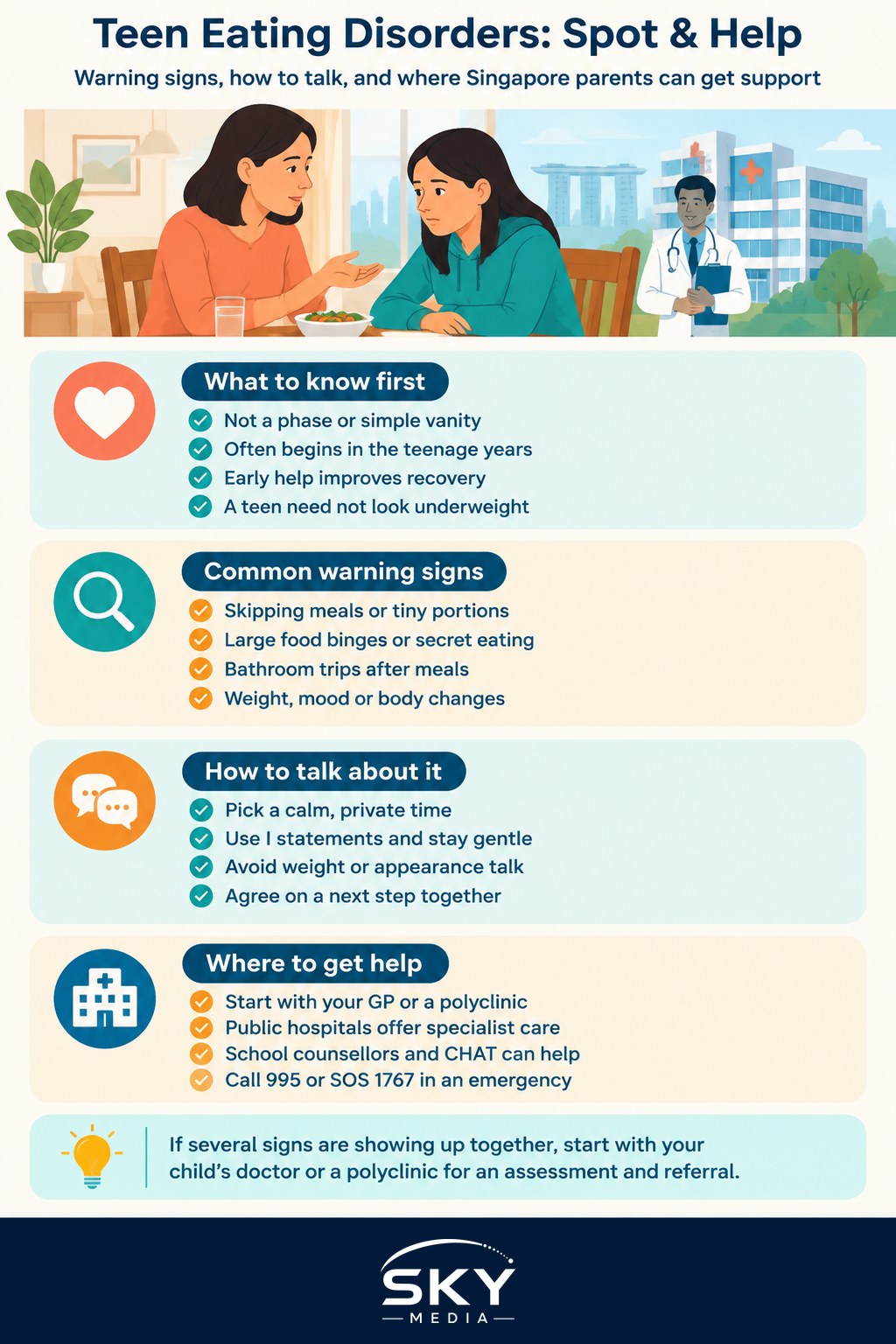
The Main Types of Eating Disorder in Teens
Eating disorders affect boys as well as girls, and young people of every body size. A teen does not need to look underweight to be seriously unwell.
- Anorexia nervosa involves restricting food intake, an intense fear of gaining weight and a distorted view of one’s own body. It can lead to dangerous weight loss, or in growing teens, a failure to gain expected weight.
- Bulimia nervosa involves repeated episodes of eating large amounts of food with a sense of loss of control, followed by behaviours to compensate, such as vomiting, misusing laxatives, fasting or excessive exercise. Weight is often in the normal range, which makes it easy to miss.
- Binge eating disorder involves recurring binges with a loss of control, without regular compensating behaviours. Teens often feel deep shame and eat in secret.
- Avoidant/restrictive food intake disorder (ARFID) involves restricting food because of fear of choking or vomiting, sensory issues or lack of interest, rather than concerns about weight or shape. It is often seen in younger children too.
Some young people do not fit neatly into one category but still need help. Doctors may use other diagnoses for these situations, and they are just as worth taking seriously.
Warning Signs Parents Can Look Out For
No single sign confirms an eating disorder, but a pattern of changes is worth acting on. The table below groups common signs by type.
| Area | Anorexia | Bulimia | Binge eating |
|---|---|---|---|
| Eating | Skips meals, cuts out food groups, eats tiny portions | Large amounts of food disappear, eats normally in front of others | Eats large amounts quickly, often alone or at night |
| After meals | May exercise intensely or seem restless | Goes to the toilet straight after eating | Feels guilty, ashamed or upset |
| Body | Noticeable weight loss or not growing as expected, feeling cold | Weight may stay stable, swollen cheeks, damaged teeth | Weight may change, but not always |
| Mood | Anxious around meals, irritable, withdrawn | Secretive, mood swings | Low mood, hides food wrappers |
Other signs that apply across eating disorders include:
- Constant talk about calories, “clean” eating, weight or body shape
- Frequent body checking in mirrors or weighing
- Wearing baggy clothes to hide their body
- Avoiding family meals, hawker outings with friends or celebrations involving food
- New rigid rules, such as only eating certain foods or at fixed times
- Dizziness, fainting, missed or stopped periods in girls, or ongoing tiredness
- Dropping grades or withdrawing from friends
Teens are often very good at hiding these behaviours, especially in a busy household where meals are eaten at different times or bought outside. Trust your instincts if something feels off.
How to Raise Your Concerns With Your Teen
Many parents fear saying the wrong thing. There is no perfect script, but these principles help:
- Choose a calm, private moment, not during or right after a meal or an argument.
- Talk about what you have noticed and how you feel, using “I” statements, such as “I have noticed you have been skipping dinner, and I am worried about you.”
- Avoid comments about weight or appearance, including praise for weight loss.
- Expect denial or anger. This is common and does not mean you are wrong. Stay calm and come back to the topic.
- Focus on health and getting a check-up, rather than demanding that they eat more or less.
- Agree on a next step, such as seeing the family doctor together.
Examine your own household habits too. Teens notice when adults diet, skip meals or criticise their own bodies. Similar warning-sign thinking applies to other behaviours parents worry about, as our guide to gaming addiction warning signs shows: notice patterns, stay connected and seek help early.
Where to Get Help in Singapore
Start with a doctor
Your family GP or a polyclinic is a good first stop. The doctor can check your child’s weight, heart rate, blood pressure and blood tests, and refer them to specialist services if needed. Eating disorders can affect the heart and other organs, so a physical check matters even if your teen seems well.
Specialist hospital services
Singapore’s public hospitals run specialist services for eating disorders:
- KK Women’s and Children’s Hospital (KKH) sees children and adolescents with eating disorders through its paediatric and adolescent medicine services.
- Singapore General Hospital (SGH) runs a dedicated eating disorders programme within its psychiatry department, which sees adolescents and adults.
- Other public hospitals and the Institute of Mental Health (IMH) also provide mental health support for young people.
Referral routes, age criteria and subsidies can change, so ask your GP or polyclinic which service fits your child, and check the hospital’s own website for current details. Treatment is usually provided by a team that may include doctors, psychiatrists, psychologists and dietitians, and often involves the family directly in helping the teen recover.
School and community support
School counsellors can support your child day to day and help coordinate with teachers during treatment. Youth mental health services, such as the Community Health Assessment Team (CHAT), offer confidential help for young people.
In an emergency
Seek urgent medical care at a hospital emergency department or call 995 if your child faints, has chest pain, is very weak or confused, or talks about harming themselves. Samaritans of Singapore (SOS) runs a 24-hour helpline at 1767 for anyone in emotional crisis.
Supporting Recovery at Home
Recovery takes time, often months or longer, and setbacks are part of the process. Parents can help by:
- Following the treatment team’s guidance on meals, rather than negotiating food on your own
- Keeping mealtimes calm and regular, with conversation away from food and weight
- Removing scales or diet content from the home if advised
- Looking after your own wellbeing, as caring for a teen with an eating disorder is demanding
Avoid blaming yourself or your child. Eating disorders have many causes, including genetics, personality, stress and social pressures. What matters most now is getting help and staying alongside your teen.
Explore more: Eating Well as You Get Older
Official sources: HealthHub
Further reading: Supporting Your Teen With Body Image Worries