
For most people, gaming is a healthy, enjoyable hobby that fits alongside work, study, family and rest. But for a small number of players it can start to take over, and knowing the warning signs early makes a real difference. This is a general, supportive guide to gaming addiction singapore readers can use to reflect on their own habits or those of someone they care about. It is not a diagnosis, and reading a list of signs is not the same as being assessed by a professional. If anything here worries you, that is a reason to talk to a doctor, not to panic.
What “Gaming Disorder” Actually Means
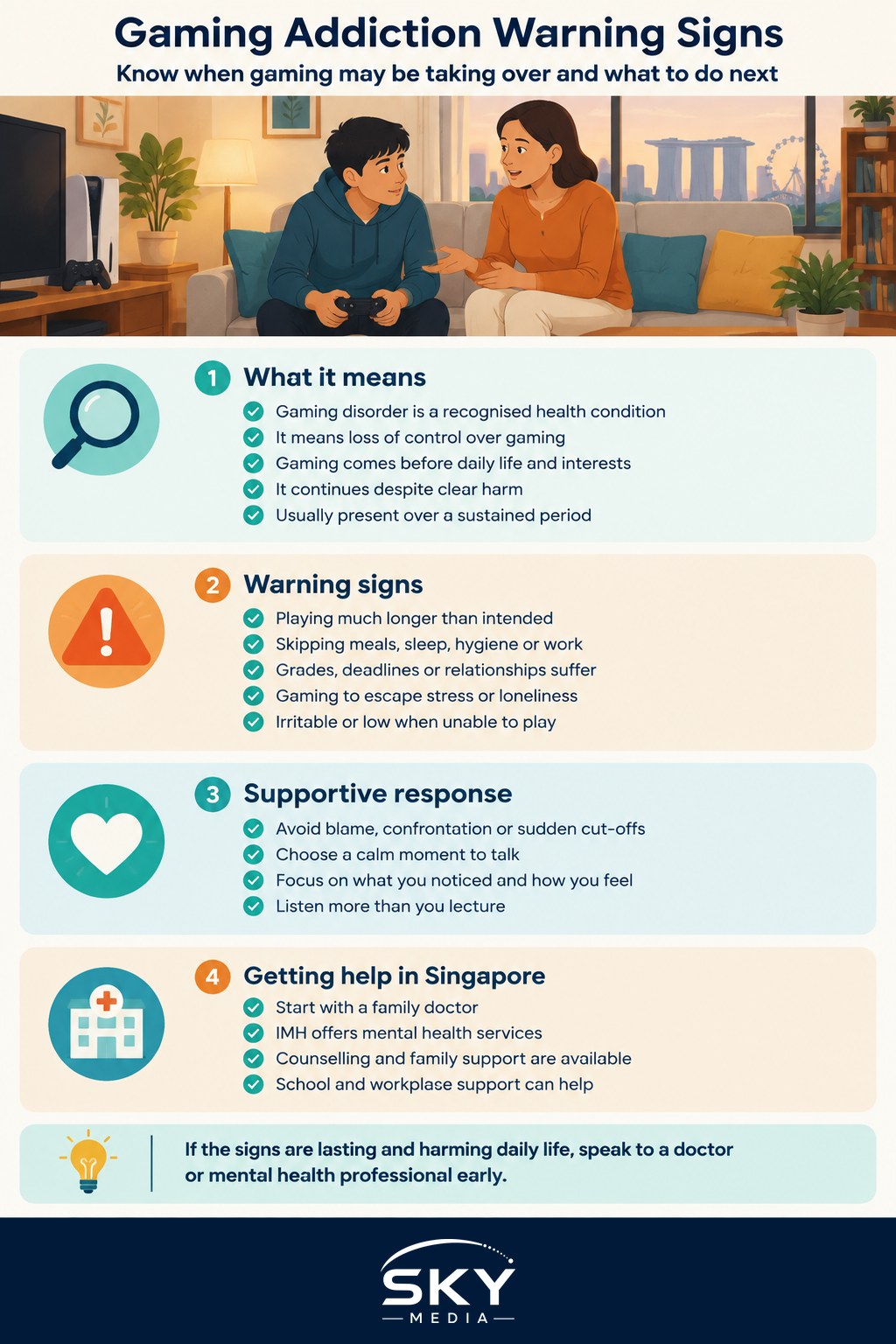
You may have seen the term gaming disorder in the news. The World Health Organization recognises it as a health condition, but it is important to understand what that means and what it does not. It refers to a pattern of gaming behaviour that a person struggles to control, that is given increasing priority over other interests and daily activities, and that continues or gets worse despite clear negative consequences. Crucially, this pattern usually needs to be present for a sustained period, often around a year, and to cause real harm to a person’s life before a professional would consider it.
In other words, playing a lot, or loving games, is not the same as having a disorder. Plenty of dedicated players put in long hours and are perfectly healthy. The concern is not the number of hours by itself, but whether gaming is crowding out and damaging the rest of someone’s life while they feel unable to stop.
Warning Signs Worth Noticing
Rather than treating any single behaviour as proof of a problem, it helps to look at patterns over time. Some signs that are worth gentle attention include:
- Loss of control, meaning repeatedly playing much longer than intended or failing at genuine attempts to cut back.
- Gaming taking clear priority over things that used to matter, such as friends, sleep, meals, hygiene, studies or work.
- Continuing despite harm, for example falling grades, missed deadlines, strained relationships or health issues, without being able to change.
- Using games mainly to escape or numb difficult feelings like stress, sadness or loneliness, rather than for enjoyment.
- Strong irritability, restlessness or low mood when unable to play.
- Being dishonest with family or friends about how much time or money is going into gaming.
Spending is worth watching too, since loot boxes and similar systems can encourage repeated purchases. If money is becoming an issue, it is worth reading about avoiding scams and in-game spending and setting firm limits.
Notice that these signs are about impact and control, not raw hours. A university student gaming four hours a day who is still sleeping, eating and doing well is in a very different position from someone gaming two hours a day who is skipping meals and hiding it.
Keep It Supportive, Not Alarmist
If you are worried about a friend or family member, the worst approach is usually confrontation, blame or suddenly pulling the plug, which tends to create conflict and shut down honest conversation. A calmer, more caring approach works better. Pick a good moment, focus on what you have noticed and how you feel rather than accusations, and listen more than you lecture. Often gaming is a symptom of something else, such as stress, anxiety or difficulty at school or work, and that underlying issue deserves attention too.
Building healthier structure around gaming can also help before things reach a crisis. Simple changes like scheduled breaks, protecting sleep and keeping other hobbies alive make a real difference, and our guides on healthy gaming habits and balancing screen time and gaming offer practical starting points.
Where to Get Help in Singapore
If you or someone you love shows a lasting pattern of these signs and it is genuinely harming daily life, please speak to a professional. A good first step is talking to a family doctor, who can listen without judgement and refer you onward if needed. In Singapore, the Institute of Mental Health (IMH) provides mental health services, and there are various counselling and family support services available through community agencies and social service organisations. School counsellors and workplace support schemes can help younger players and working adults too. A trained professional can properly assess the situation, rule out or address related issues, and suggest support that actually fits.
A Balanced Takeaway
Games are a wonderful part of life for millions of people, and this article is not meant to make anyone feel guilty for enjoying them. The point of understanding gaming addiction singapore families should know is simply to catch genuine problems early, kindly and without drama. Watch for loss of control and real harm rather than counting hours, keep the conversation warm and supportive, and reach out to a doctor or mental health professional if you are concerned. Getting help early is a sign of strength, not failure, and most people who seek support go on to enjoy gaming in a much healthier way.