
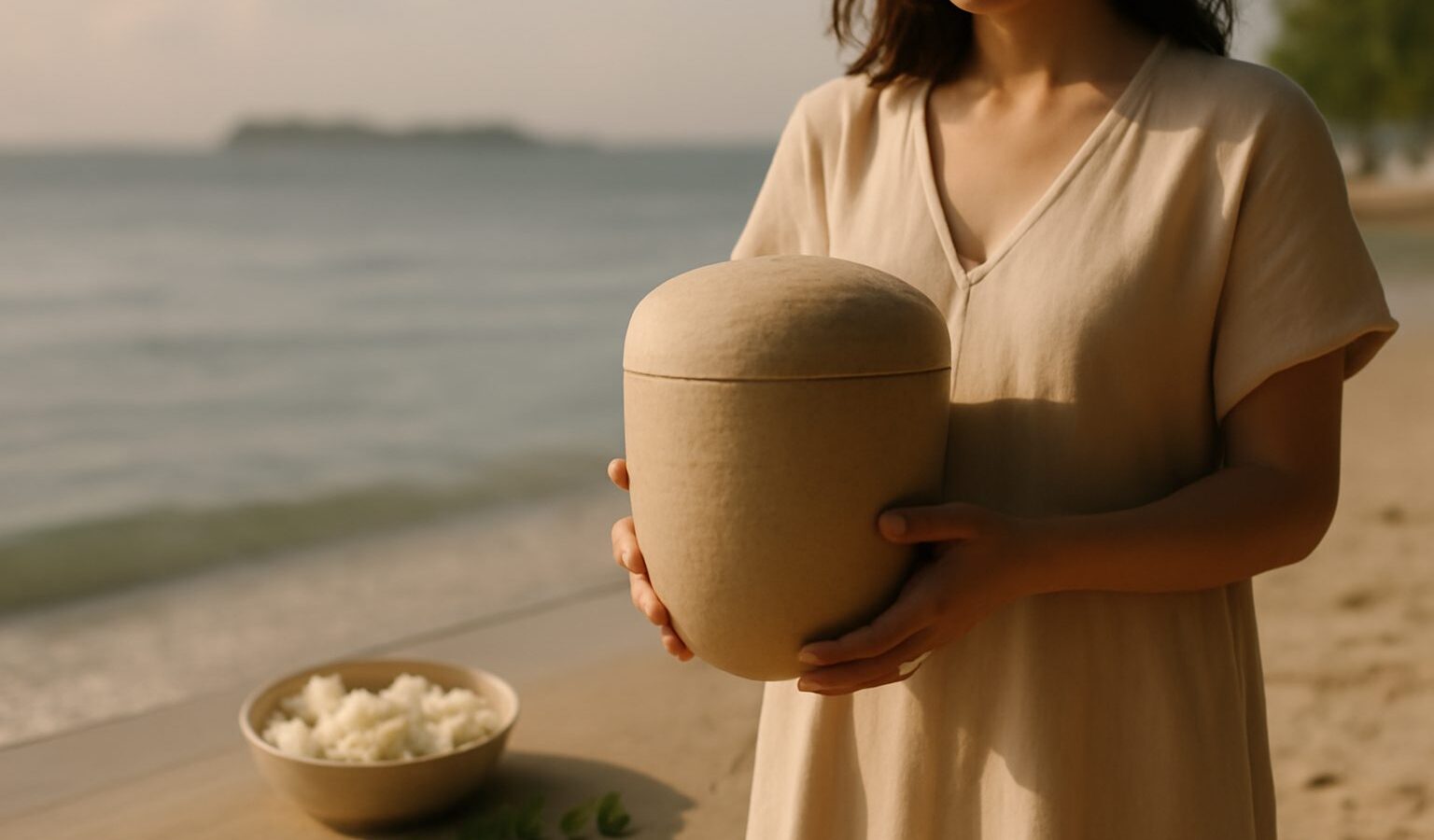
More families in Singapore are asking how to say goodbye in a way that is gentle on the environment as well as meaningful. In a land-scarce city, the options are shaped by space, regulation and religious practice, but there are real choices. Sea burial in Singapore, which here means scattering cremated ashes at sea, is one of the best-known, alongside inland ash scattering, biodegradable urns and simpler, lower-waste funeral rites.
This guide looks specifically at these greener end-of-life choices: how they work, what to consider and who to contact. It does not cover general funeral planning. Rules and procedures can change, so check current details with the National Environment Agency (NEA), which oversees after-death facilities, and with your funeral director.
Why Greener Farewells Are Growing in Singapore
Singapore’s land constraints have long shaped how people are laid to rest. Cremation is already the norm for most families, and burial plots in government cemeteries are generally leased for a limited period, after which remains may be exhumed. Columbarium niches are another common choice.
Against this background, some families prefer options that leave no physical footprint at all, or that return ashes to nature. Others are influenced by personal values, such as a loved one who cared deeply about the sea or gardens. Occasions of remembrance, such as Qing Ming visits or quiet reflection on Vesak Day, also prompt families to think about what kind of memorial matters most to them.
Sea Burial: Scattering Ashes at Sea
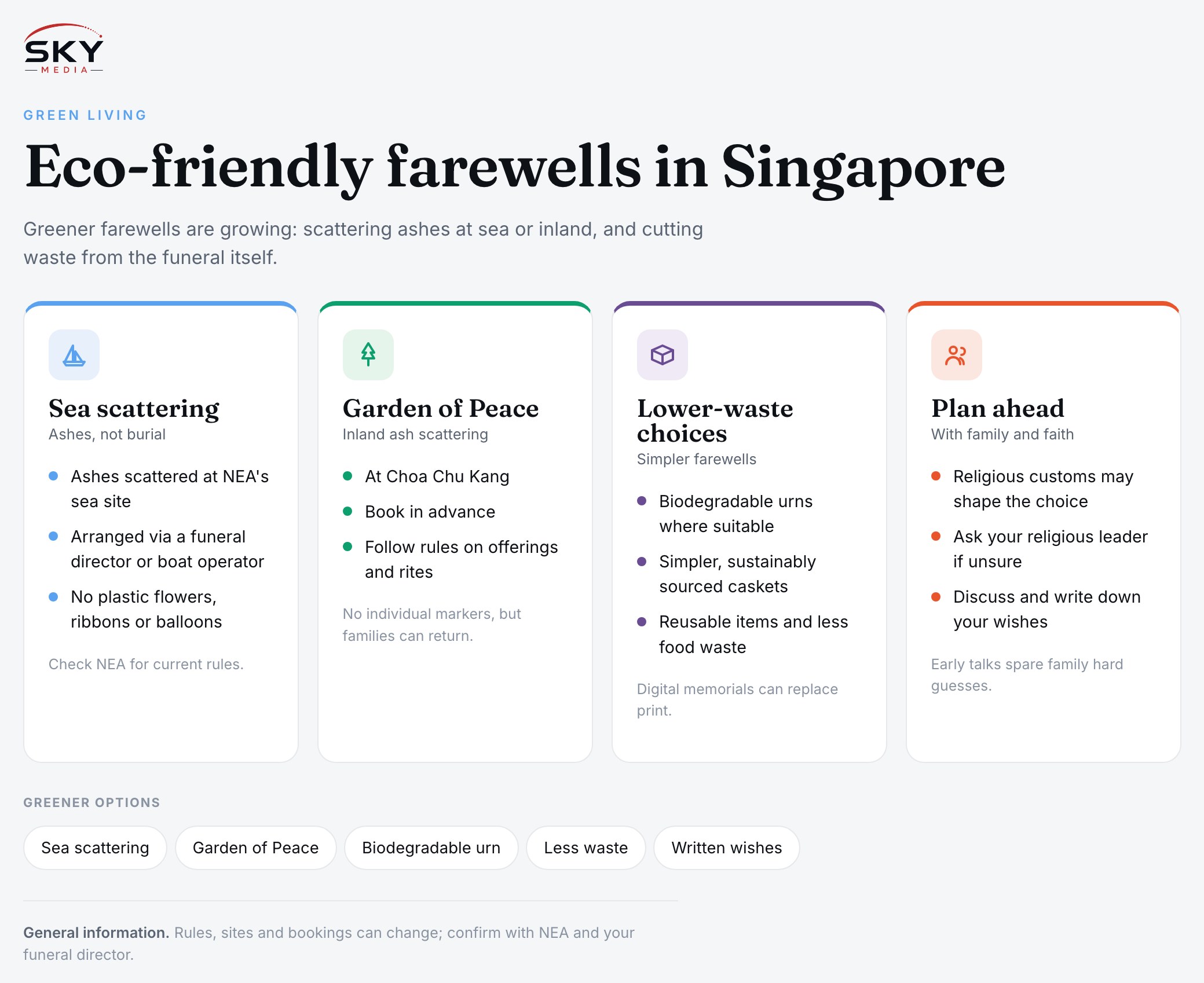
In Singapore, sea burial refers to scattering cremated ashes, not burying a body at sea. NEA has designated an area at sea, located south of Pulau Semakau, for this purpose. Ashes must be scattered only at the designated site, not from beaches or at random points along the coast.
How it usually works:
- Cremation first. The body is cremated at a crematorium, and the family collects the ashes.
- Arrange a boat. Families typically go through a funeral director or a boat operator familiar with sea-scattering services. Ask what is included, such as the boat trip, ceremony time and the number of passengers allowed.
- The ceremony. At the designated site, the family scatters the ashes into the water. Some add petals or say prayers. Avoid releasing anything that does not break down naturally, such as plastic flowers, ribbons or balloons.
- Weather and sea conditions. Trips can be rescheduled in bad weather, and some relatives may feel seasick, so plan for elderly or young family members.
Sea scattering suits families who like the idea of a loved one becoming part of the ocean, and it frees them from ongoing niche or plot arrangements. On the other hand, there is no fixed spot to visit later, which some families find hard.
Inland Ash Scattering at the Garden of Peace
For families who prefer to stay on land, Singapore has a dedicated inland ash-scattering garden, the Garden of Peace, located within Choa Chu Kang Cemetery Complex. It was designed as a quiet, landscaped space where families can scatter ashes in a dignified setting, with sheltered areas for short rites.
Key points to know:
- Bookings are required. Families book a slot in advance. Check NEA’s website for the current booking channel, opening times and any fees.
- Respect the rules. The garden has guidelines on offerings, the burning of joss paper or incense, and what may be left behind. These help keep the space peaceful for everyone.
- A place to return to. Unlike sea scattering, families can revisit the garden for remembrance, although there is no individual marker.
Scattering ashes in other public places, such as parks or nature reserves, is not permitted. Use only the designated sites.
Comparing Greener End-of-Life Options
| Option | How it works | Things to consider |
|---|---|---|
| Sea scattering | Ashes scattered at the NEA-designated site at sea | No fixed place to visit; weather can affect plans |
| Inland ash scattering | Ashes scattered at the Garden of Peace | Booking needed; rules on offerings and rites |
| Biodegradable urn | Urn made from natural materials that break down | Must still be used at a permitted site or kept at home |
| Columbarium niche | Ashes placed in a niche at a public or private columbarium | Uses space but gives a permanent place to remember |
Biodegradable Urns and Other Low-Impact Choices
Even if you choose a niche or scattering, there are many small ways to reduce the environmental footprint of a funeral.
- Biodegradable urns. Made from materials such as paper, plant fibres, salt or clay, they are designed to break down over time. Some are made to dissolve in water and can be lowered at the designated sea site. Confirm with your funeral director or boat operator that the urn you choose is suitable and allowed.
- Simpler caskets. Ask about caskets made from sustainably sourced or lighter materials, especially when cremation follows.
- Fewer disposables. At the wake, choose reusable cups and cutlery, avoid excess plastic bottles, and arrange food portions to cut waste.
- Thoughtful flowers. Use local, seasonal blooms, or invite guests to donate to a cause the deceased cared about instead of sending wreaths.
- Mindful offerings. For families who follow Chinese customs involving joss paper, some choose to burn fewer items or use designated burners to reduce smoke and ash. Practices vary widely by family and faith, so follow what feels right for yours.
- Digital memorials. Online tribute pages and photo collections can replace printed materials and reach relatives overseas.
Respecting Faith and Family Wishes
Every religion and family has its own views on death rites. Some traditions have clear requirements, such as burial within a set time, which may not fit scattering. Others are open to cremation and scattering. Speak to your religious leader if you are unsure, and involve family members early so decisions do not feel rushed during a difficult time.
It also helps to talk about wishes while everyone is well. Writing down a preference for sea scattering or the Garden of Peace, perhaps alongside other planning documents, can spare relatives from guessing later.
Planning Ahead
If greener options appeal to you, a few steps make things easier for loved ones:
- Discuss your wishes openly with family.
- Ask funeral directors whether they offer sea scattering, inland scattering and eco-friendly products.
- Check NEA’s after-death facilities pages for current rules, bookings and fees.
- Record your preferences in writing and tell someone where to find them.
Choosing an eco-friendly farewell is a personal decision. For more ways to live with a lighter footprint, see our guides on eco-friendly celebrations in Singapore, teaching your family eco-friendly habits and, for families with pets, pet burial options and rules.
Official sources: National Environment Agency (NEA)