
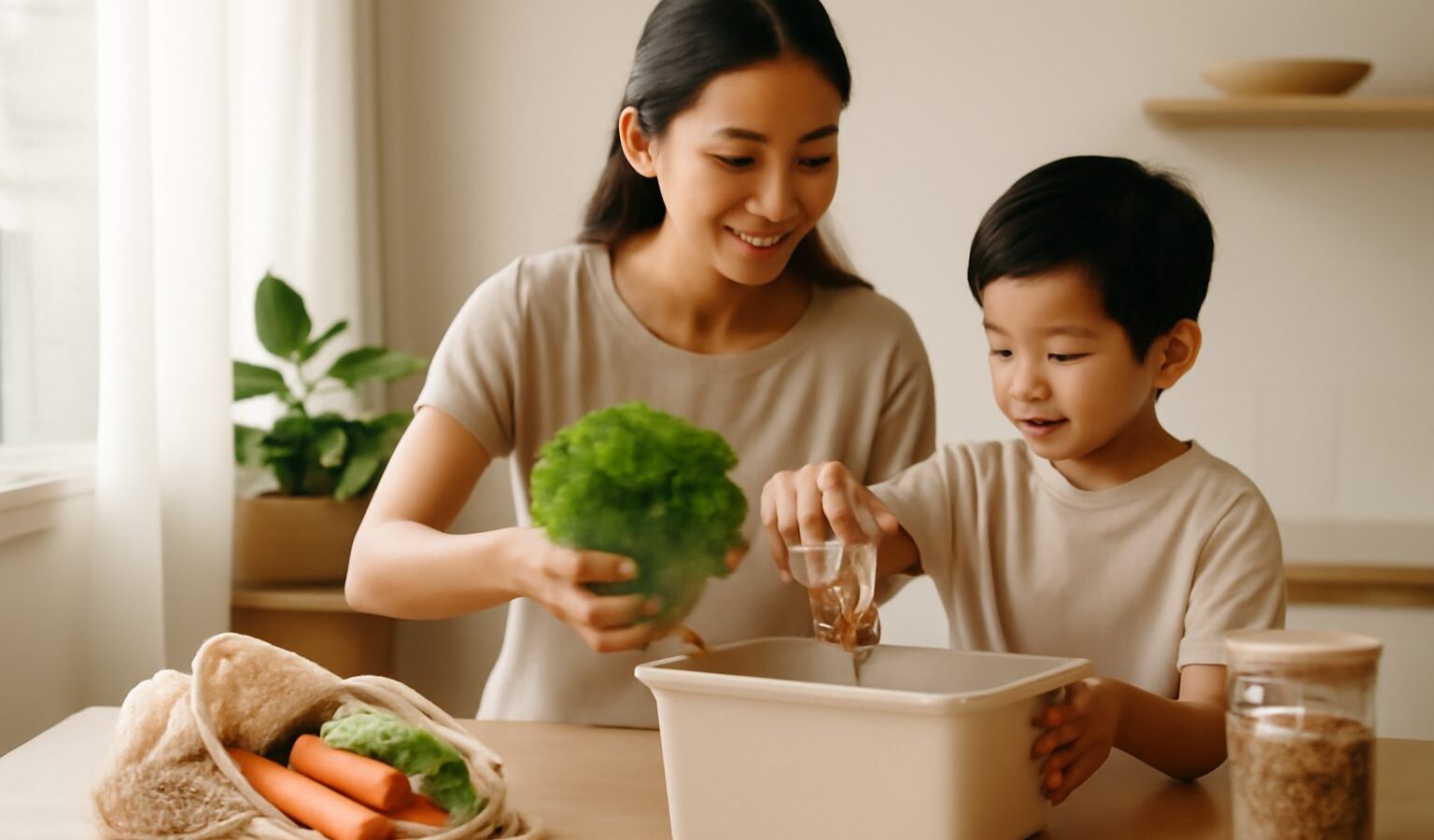
Raising an eco friendly family in Singapore does not mean turning your home into a zero-waste showpiece overnight. It means building small, steady habits that children can understand and carry with them for life. When care for the planet is woven into everyday routines, it stops feeling like a chore and starts feeling like the way your family simply does things. The good news is that Singapore makes many of these habits easy, from a solid recycling system to plenty of green spaces on your doorstep.
Children learn far more from what they see than from what they are told. If they watch you switch off the fan when you leave a room, bring a reusable bag to the wet market, or sort out recyclables, they absorb it as normal. The aim is not perfection or guilt. It is progress, curiosity, and a sense that everyone in the household plays a part.
Start With Everyday Habits at Home
The kitchen and the bathroom are where most household waste and energy use hide, so they are a great place to begin. Keep a few reusable bags near the door so nobody forgets them on the way out. Swap cling film for containers, and give each child a refillable water bottle they actually like using. These small changes add up quickly and cost very little.
Food waste is one of the biggest issues in many homes. Involve your children in planning meals, storing leftovers, and understanding that food is precious. Let them help you check what is already in the fridge before you shop, and turn slightly older fruit into smoothies rather than throwing it out. Cooking together is a natural way to teach this, and it builds practical skills at the same time. If your child enjoys being in the kitchen, you can build on that with teaching your child kitchen and cooking skills.
In our hot, humid climate, energy for cooling is a real cost. Turn air-conditioning up a degree or two, use fans, and close doors to keep cool air in one room. Make a game of it: ask your child to be the family light monitor who checks that lights and plugs are switched off when a room is empty. Small responsibilities like this give children a sense of ownership.
Recycling the Right Way
Singapore’s blue recycling bins are widely available in HDB estates and condominiums, but many items are put in wrongly, which can spoil a whole batch. Teach your family a simple rule: recyclables should be empty, clean, and dry. Rinse out that milk carton, flatten the cardboard box, and keep food and liquids out of the bin. Sorting together at home makes the idea concrete for young children. When rules or accepted items change, check the current official guidance from the National Environment Agency rather than relying on memory.
Get Children To Care About Nature
Habits stick better when children feel a genuine connection to the outdoors. Singapore is full of parks, park connectors, nature reserves, and community gardens that make this easy and free. A regular walk to spot birds, count different leaves, or watch for otters gives children a reason to care about the environment they are helping to protect.
Growing something is powerful, even in a small HDB flat. A pot of herbs on the kitchen window or a few plants along the corridor teaches patience, responsibility, and where food comes from. Many neighbourhoods also have community gardens where families can get involved. These outdoor moments double as screen-free time and gentle exercise, which is good for the whole family. For more inspiration, see keeping your kids active in Singapore.
Talk about why these habits matter in words your child understands. For a preschooler, it might be as simple as keeping the sea clean so turtles have a home. For an older child, you can discuss where rubbish goes and why reducing it helps. Keep the tone hopeful rather than frightening, because children act best when they feel able to make a difference, not overwhelmed by problems too big for them.
Make It Age-Appropriate and Fun
Match the task to the child. Toddlers can put fruit peels in a compost caddy or carry a light reusable bag. Primary-age children can sort recycling, water plants, and remember to bring their own bottle. Teenagers can take on bigger projects, such as researching a low-waste swap for the family or leading a declutter-and-donate day. Passing on unwanted clothes and toys in good condition, rather than binning them, is a lesson in both generosity and reducing waste.
Celebrate effort and keep things playful. A family challenge to skip single-use plastics for a week, or to see how little rubbish you can produce on an outing, turns good habits into shared fun. Reward with experiences rather than more stuff, like a trip to the beach or a picnic in the park. These traditions can become part of your family identity, much like the ideas in creating family traditions and rituals in Singapore.
An eco friendly family is built one small habit at a time. Choose one or two changes to start with, let them become second nature, then add more. Lead by example, keep it positive, and let your children take real ownership of their part. Over time, these everyday choices shape not just a greener home, but children who grow up thoughtful about the world they share.