
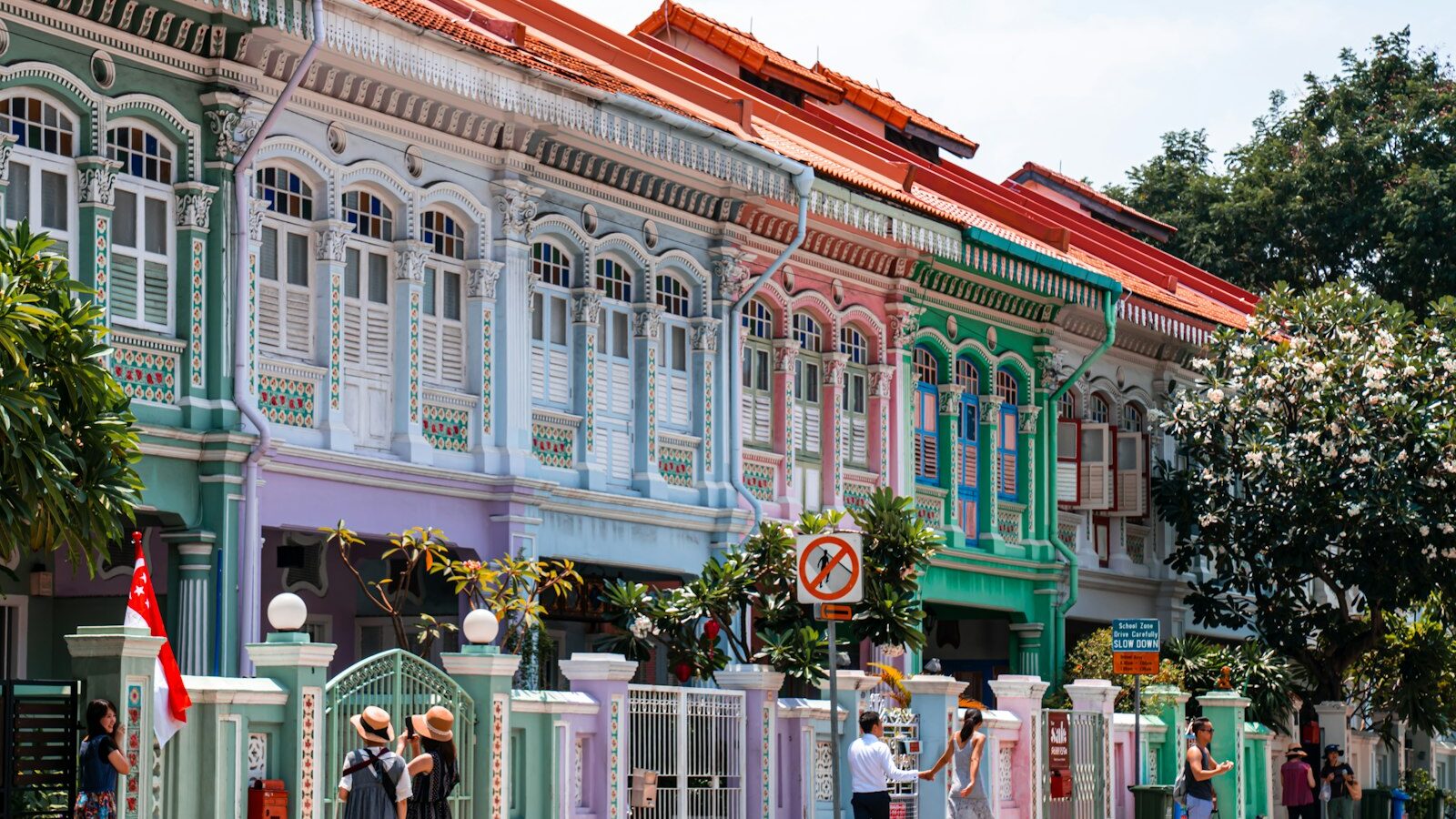
Emerald Hill Singapore is one of the most graceful surprises in the city centre, a quiet lane of ornate terrace houses that begins just steps from the din of Orchard Road. Turn off the main shopping belt and the noise softens almost at once, replaced by tiled facades, timber shutters and the slow rhythm of an older Singapore. This guide walks you through the character, history and living heritage of the enclave.
Where Emerald Hill Sits
The hill rises gently behind the busy stretch of Orchard Road, near the Somerset area. What was once a nutmeg and fruit plantation was subdivided into residential plots as the town spread outward. Over the decades the slope filled with rows of terrace houses built for well-to-do families, many of them Straits Chinese, or Peranakan, households.
Today the enclave is easy to reach on foot. From the mouth of Emerald Hill Road you can follow the lane uphill, passing a run of restored bars and eateries at the lower end before the street settles into a purely residential calm. Because the homes are still lived in, the enclave rewards a slow, respectful stroll rather than a loud tour.
The Peranakan Character
The houses here carry the unmistakable stamp of Peranakan taste, a blend of Chinese, Malay and European influences that flowered among the Straits-born community. You will notice it in the details.
- Facades dressed in glazed tiles, moulded plaster motifs and painted timber.
- Pintu pagar, the low swing doors set in front of the main entrance, allowing air to pass while keeping the threshold private.
- Fanlights and transoms carved with auspicious symbols such as bats, peonies and phoenixes.
- Pilasters and cornices borrowed from European classical design, then reworked with local colour.
This magpie spirit is the heart of Peranakan style. Rather than copying any single tradition, households drew from many, producing an aesthetic that feels both grand and playful. The result on Emerald Hill is a streetscape where almost no two houses are exactly alike, yet the whole row hangs together.
A Living Conservation Area
Emerald Hill is a gazetted conservation area, which means the outward form of the houses is protected. Owners may restore and adapt the interiors, but the streetfront character, the roof lines, the five-foot ways and the ornamental details must be preserved. This is why the enclave still reads as a coherent historic street rather than a scatter of individual renovations.
Conservation here follows the familiar principle of retaining the envelope while allowing sensitive change within. It is a balance that keeps the houses useful for modern living without erasing what makes them special. Walking the lane, you can see the payoff, a heritage street that is genuinely inhabited rather than frozen as a museum piece.
What Conservation Protects
| Element | What it means for the street |
|---|---|
| Facade and ornament | Tiles, plasterwork and carved timber stay in place |
| Roof form and party walls | The terrace rhythm of the row is kept intact |
| Five-foot way | The sheltered walkway along the front is preserved |
| Overall height and scale | New work must respect the low-rise streetscape |
| Interior layout | Owners have freedom to modernise living spaces |
Reading the Street
Part of the pleasure of Emerald Hill is learning to read its architecture. The terrace house is a deceptively clever form, narrow at the front and deep behind, often arranged around one or more internal air wells that draw light and breeze into the middle of the plan. In a tropical climate this passive design keeps the interior cooler and brighter without machinery.
Look up and you will see decorative gable ends and, on some houses, a datestone or a family motif worked into the plaster. Look down and the five-foot way runs continuously along the front, a shaded public walkway that is a defining feature of the shophouse and terrace tradition across Singapore. The colours matter too. Many owners have restored the pastel and jewel tones that suit the Peranakan palette, so the street shifts from soft greens to deep blues and warm ochres as you move along it.
A Note On Manners
Because these are private homes, treat the lane as you would any residential street. Admire the facades from the public way, keep your voice down, and avoid photographing directly into windows or doorways. The enclave survives because residents value it, and quiet respect is what keeps it welcoming.
Why It Matters
Singapore has lost many of its early residential streets to redevelopment, so an intact enclave like this is precious. Emerald Hill shows what the town looked like when prosperous families built for comfort and display, and it preserves a specific chapter of Peranakan life close to the modern heart of the city. The contrast is the point. On one side, the glass and steel of Orchard Road, on the other, a hushed lane of terrace houses that has held its ground.
For visitors and locals alike, the enclave offers a short lesson in how heritage and city life can coexist. You do not need a ticket or a guide. You simply need to notice the doors, the tiles, the shaded walkway and the way the street rises quietly above the shopping crowds.
Making The Most Of A Visit
- Come in the softer light of morning or late afternoon, when the facades glow.
- Start at the lower end and walk uphill, watching the street grow quieter.
- Pair the stroll with a wider Orchard Road heritage walk to see the contrast.
- Look for recurring motifs across the houses, then spot where owners have added their own touches.
A Quiet Landmark
Emerald Hill endures because enough people, owners, residents and planners, decided its character was worth keeping. The reward is a street that still feels like a home rather than an exhibit. Walk it slowly, read its details, and let the enclave do what it does best, offering a moment of calm and craft a few paces from the busiest road in the country.
Explore more: Peranakan culture in Singapore · Conserving heritage buildings · The story of Orchard Road