

If you have bought a phone in the last few years, chances are it supports eSIM, and understanding how eSIM Singapore users can benefit from it changes how you stay connected both at home and overseas. An eSIM is a digital SIM built into the phone rather than a plastic card you slot in. That small shift makes switching lines, adding a travel plan, or running two numbers at once far easier than it used to be. This guide explains how eSIMs work, how they compare with the old options, and how to keep data flowing when you travel without a nasty roaming bill.
What an eSIM Actually Is
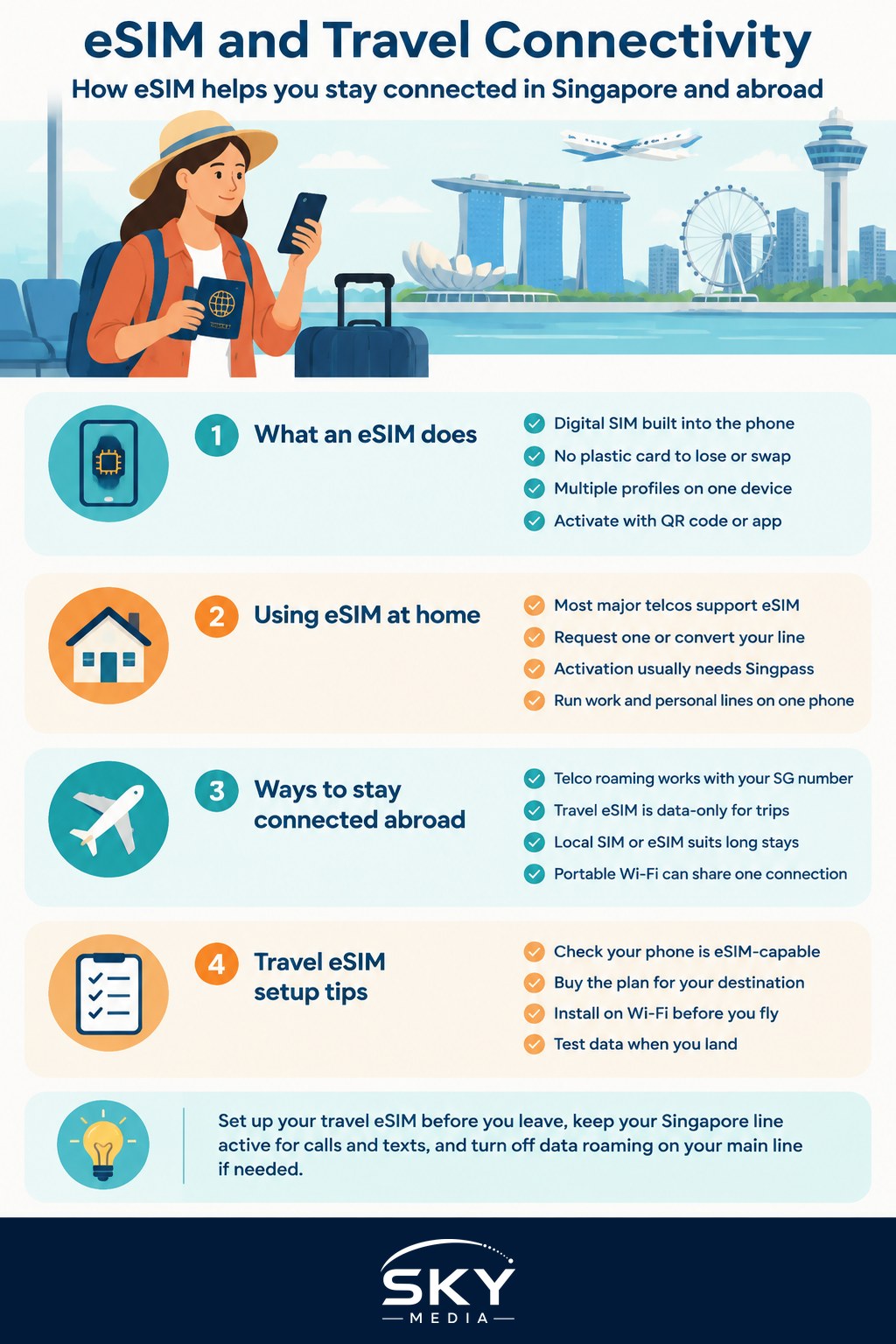
A traditional SIM is a removable chip that stores your line details and identifies you to the network. An eSIM does the same job, but the chip is soldered into the phone and reprogrammed with a profile you download. Instead of collecting a card from a shop, you scan a QR code or tap through an app and the line activates in minutes.
The practical upshots are worth spelling out:
- No physical card to lose, swap or damage. Your line lives in software.
- Multiple profiles on one phone. Many phones store several eSIM profiles and let you switch between them, though usually only one or two are active at a time.
- Instant provisioning. You can buy and activate a plan from your sofa, or from an airport, without visiting a store.
- Easier device changes. Moving a line to a new phone can be done through your telco’s app, as covered in our guide to setting up a new phone in Singapore.
The main catch is that an eSIM is tied to a specific phone. You cannot pop it out and lend it to a friend the way you can a physical card, and moving it to another device means reissuing the profile.
eSIM at Home in Singapore
Locally, most major telcos support eSIM for their plans, and you can request one when you sign up or convert an existing physical line. Activation typically needs identity verification, often through Singpass, plus a QR code or activation details the telco provides. Once set up, the line behaves exactly like a normal one for calls, texts and data.
An eSIM makes a few everyday situations much smoother. If you carry a work line and a personal line, you can run both on one phone using dual SIM, keeping them separate without juggling two handsets. If you upgrade phones often, moving your line across is a few taps rather than a shop trip. And if you use a low-cost data plan alongside a main line, an eSIM lets you keep both active. For choosing the underlying plan, our guide to the best mobile plans in Singapore is the place to start.
Staying Connected When You Travel
Travel is where eSIMs shine, because you no longer have to hunt for a local SIM card on arrival or gamble on airport kiosks. You have three broad ways to get data abroad, and the right one depends on how long you are away and how much you use.
The first is roaming through your Singapore telco, where your existing line simply works overseas on a daily or data-pack basis. It is the most convenient because your number stays reachable, but per-day charges add up on longer trips.
The second is a travel eSIM, a data plan for a specific country or region that you buy from a specialist provider and install before you fly. You keep your Singapore line for calls and texts and use the travel eSIM for data, which is usually the cheapest way to get a lot of data abroad.
The third is a local SIM or eSIM bought in your destination, which can be economical for long stays but means a different number and, for a physical card, a shop visit.
Here is how the main options compare for a typical overseas trip.
| Option | Best for | Keeps your SG number | Cost profile |
|---|---|---|---|
| Telco roaming | Short trips, staying reachable | Yes | Higher per day, simplest |
| Travel eSIM | Data-heavy or longer trips | Yes, for calls and texts | Usually lowest for data |
| Local SIM or eSIM abroad | Extended stays in one country | No, new number | Low, but less convenient |
| Portable Wi-Fi device | Groups sharing one connection | Yes | Fixed daily rental |
Whichever you choose, set it up before you leave home while you still have reliable Wi-Fi and can sort out any activation issues.
Setting Up a Travel eSIM Step by Step
The process is quick once you have done it once, but a little planning avoids stress at the gate.
- Check your phone is eSIM-capable and unlocked. Most recent models are, but confirm in your settings before buying a plan.
- Buy the plan for your destination. Pick the country or region and a data amount that matches your trip length and habits.
- Install the profile. Scan the QR code or use the provider’s app while on Wi-Fi. Do this at home, not on landing.
- Set your line preferences. Choose the travel eSIM for data and keep your Singapore line for calls and texts. Turn off data roaming on your main line to avoid accidental charges.
- Test on arrival. Toggle the travel eSIM on when you land and confirm data works before you rely on it for maps or ride-hailing.
Manage your data as you go by watching usage in settings, downloading offline maps in advance, and connecting to trusted Wi-Fi where sensible. On public networks, be cautious with sensitive logins, and our guide to cybersecurity basics in Singapore covers safe habits abroad.
Avoiding Bill Shock and Common Pitfalls
The classic travel horror story is a huge roaming bill from a line that quietly used data in the background. A few habits prevent it:
- Disable data roaming on your main line if you are using a travel eSIM, so only the plan you paid for carries data.
- Watch background app refresh and automatic backups, which can burn through a data pack without you noticing.
- Buy a little more data than you think you need, since maps, translation and ride apps use more than expected.
- Keep your main line reachable for one-time passwords from banks and government services, which usually arrive by SMS.
That last point matters here. Many local services send verification codes by text, so losing access to your Singapore number abroad can lock you out at the worst moment. Keeping your home line active for calls and texts while a travel eSIM handles data gives you the best of both.
Explore more
An eSIM fits into the wider picture of getting a phone working well, so pair this with our guide to setting up a new phone in Singapore and compare underlying plans in our best mobile plans in Singapore roundup. If you travel with sensitive apps, our cybersecurity basics guide will help you stay safe on unfamiliar networks.