
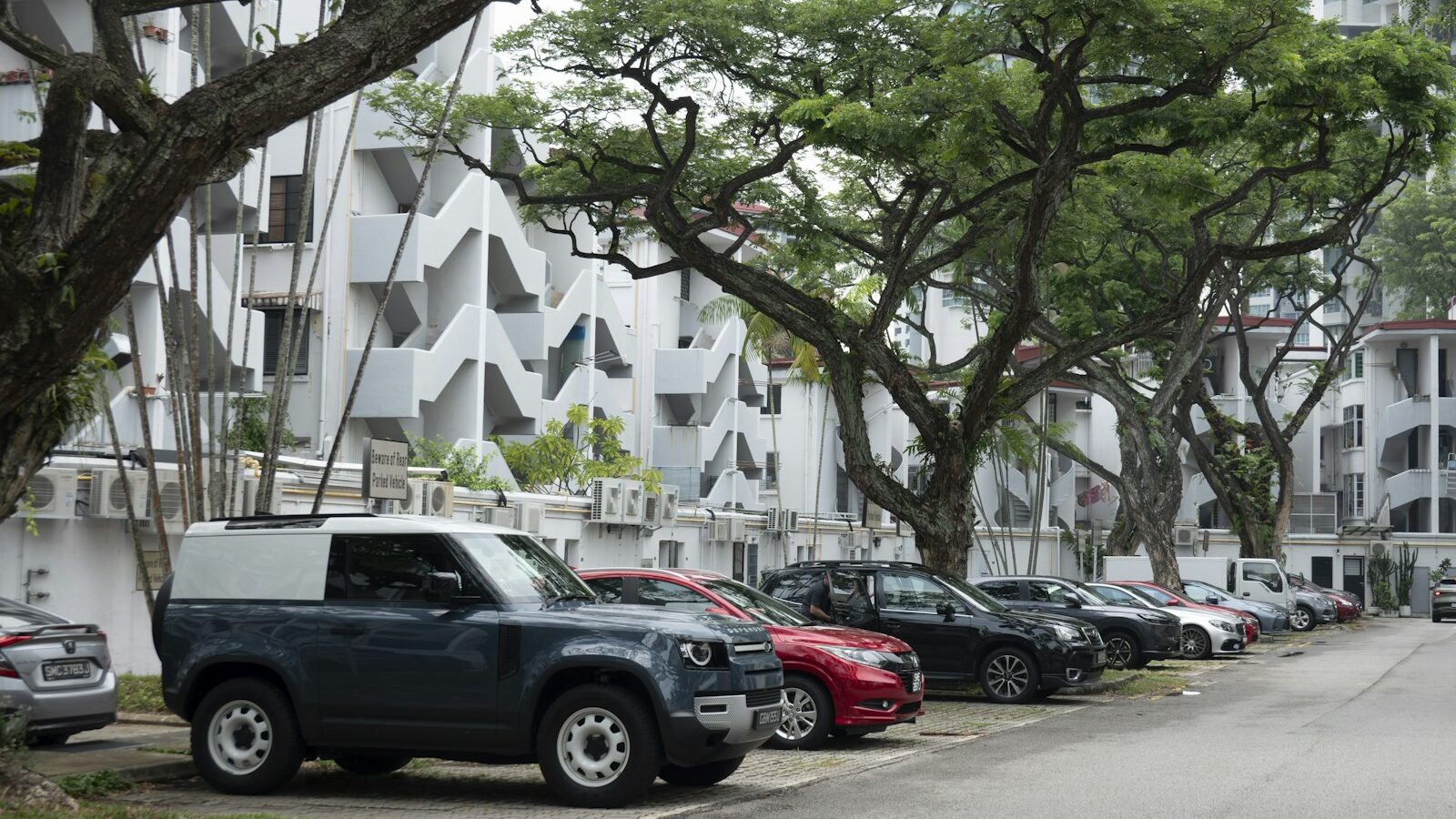
Owning an electric car in a landed house is simple: you plug in at your own wall and wake up to a full battery. For the many Singaporeans who live in a condominium, EV charging at condos is a more involved question. The carpark is shared, the electrical supply is managed by the estate, and any change to the common property has to go through the management. That does not mean condo living and an EV are incompatible. It means a little groundwork pays off. This guide walks through getting your management on board, the realities of shared chargers, installing a private point, and the public networks that keep you moving in the meantime.
This is general information, not legal, electrical or financial advice. Charging rules, incentives and estate by-laws change, so confirm the current position with your MCST, your electrician and the relevant authorities before you commit.
Start With Your MCST and the Management
In a condominium, the carpark and the electrical infrastructure are common property, so nothing gets installed without approval. The body that governs this is the MCST, the Management Corporation Strata Title, run by an elected council with a managing agent handling day-to-day matters. If you want a charger, or if you want the estate to provide shared ones, the MCST is your first stop.
Approach it early and in writing. A typical path looks like this:
- Ask the managing agent what already exists. Some estates have installed shared chargers or have a policy in place. You may not need to reinvent anything.
- Submit a formal request to install a private charger at your lot, or to have the estate consider shared points. Put it to the managing agent so it reaches the council.
- Expect questions about the electrical load. The estate has a finite supply, and the council will want to know that adding chargers will not overload the system. This often means a licensed electrical worker assessing the switchboard and available capacity.
- Understand the by-laws and any cost-sharing. The MCST may pass a by-law governing EV charging, covering who pays for the supply, metering, and maintenance.
- Get the approval in writing before any work starts, and keep it. It protects you and the next owner of your unit.
Councils are often cautious at first, especially in older estates where spare electrical capacity is limited. Patience and a clear, safety-focused proposal go a long way. If several residents want charging, a joint request carries more weight than one owner acting alone.
Shared Chargers: How They Work in an Estate
Many condominiums are moving towards shared chargers rather than dozens of private points, because it is easier on the electrical supply and fairer to residents. A shared charger sits in a common bay, and anyone can use it, usually through an app or an access card that bills each session to the user.
The advantages are real. The estate installs a managed system once, load is balanced across the supply, and you are not paying for a private installation. The trade-offs are just as real, and worth thinking through:
- You do not have a guaranteed bay. If someone is charging when you arrive, you wait or come back later, much like a petrol queue that lasts an hour.
- Etiquette matters. Move your car once it is charged so others can use the point. Some systems charge an idle fee to discourage cars sitting on a full battery.
- Billing is per session, so the running cost depends on the operator’s tariff, which can differ from home electricity rates.
- AC or DC changes the wait. Most shared condo chargers are slower AC units meant for a long overnight top-up, not a fast splash-and-dash.
If your estate is weighing shared points, encourage the council to install enough of them and to choose a system with clear billing and idle fees. A single charger for a large development quickly becomes a source of neighbourly friction.
Installing Your Own Private Charger
If the estate allows private installations and you have a fixed bay, a dedicated home charger is the most convenient option. It is also the one that needs the most care to do safely and legally.
The essentials:
- Use a Licensed Electrical Worker. Wiring a charger into the estate supply is not a DIY job. In Singapore, this work must be done by a Licensed Electrical Worker, and the installation should follow the prevailing standards and the estate’s requirements.
- Sort out metering. Because you are drawing from common or a shared supply, the estate will want your consumption metered and billed to you, not to the general account. Agree this before installation.
- Never rely on a normal wall socket. A standard three-pin socket is not designed for the sustained high current an EV draws for hours. Trailing an extension lead across a carpark is unsafe and usually against the by-laws. A proper wall-mounted charger with the right protection is the safe route.
- Plan for the load. The electrician may recommend a lower charging speed or a load-management setting so your charger does not strain the estate’s supply, especially in the evening peak.
Here is how the main options compare for a condo dweller.
| Option | Convenience | Main consideration |
|---|---|---|
| Private charger at your own bay | Highest, charge overnight anytime | Needs MCST approval, an LEW and metering |
| Estate shared charger | Good if enough units exist | No guaranteed bay, per-session billing |
| Public charging network | Flexible, no home install | Requires trips and planning around locations |
| Normal wall socket | Never recommended | Unsafe for sustained EV charging, often barred |
Get a written quote that spells out the charger, the wiring, the protection devices and the metering, and make sure the work matches what the MCST approved.
Public Networks While You Sort Charging Out
You do not need home charging in place before you buy an EV. Singapore’s public charging network has grown across malls, carparks, petrol stations and public housing estates, and for many condo residents it is a practical backbone, either as a stopgap or a permanent plan.
A few habits make public charging painless:
- Use the operators’ apps to find nearby chargers, check whether they are free, and start a session. Keep two or three apps, since networks differ.
- Mix AC and DC to suit the trip. A faster DC charger suits a quick top-up while you run errands; a slower AC point suits a long stay at the office or a mall.
- Charge opportunistically. Plug in while you shop, dine or work, and you rarely need a dedicated charging trip.
- Mind the etiquette and any idle fees, the same as you would at a shared condo point.
For up-to-date locations, tariffs and any incentives, check the charging operators and the guidance from LTA and EMA rather than relying on figures that date quickly.
Making It Work Long Term
Living in a condo does not rule out EV ownership; it just asks for a plan. Start the conversation with your MCST early, decide honestly whether you need a private charger or can live comfortably on shared and public points, and insist on safe, properly certified installation work. If your estate is behind on this, you are unlikely to be the only resident thinking about it, and a shared, well-run charging setup benefits everyone and lifts the value of the development. Talk to your neighbours, put a sensible proposal to the council, and let the public network cover you while the estate catches up.