
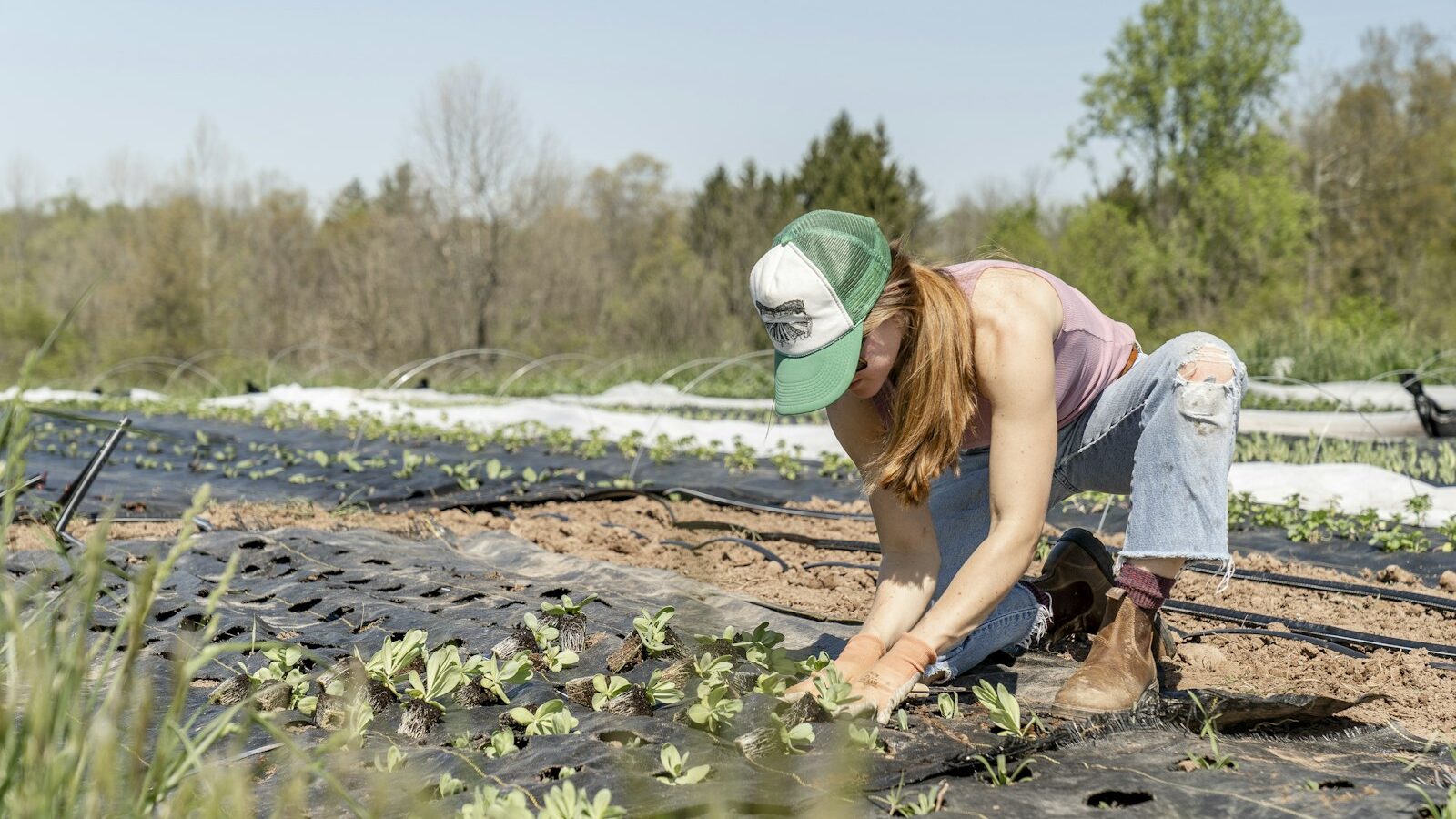
Singapore imports most of its food, and that simple fact has quietly created a whole field of work. From vertical farms in industrial buildings to labs formulating new products, an agritech career in Singapore now spans science, engineering, and business. If you like the idea of solving a real problem, growing more food on less land, cutting waste, and making what we eat safer, this can be a meaningful place to build a working life. It is still a young sector here, so this guide keeps things honest about what the roles actually involve and how to get in.
What Agritech and Food Science Actually Cover
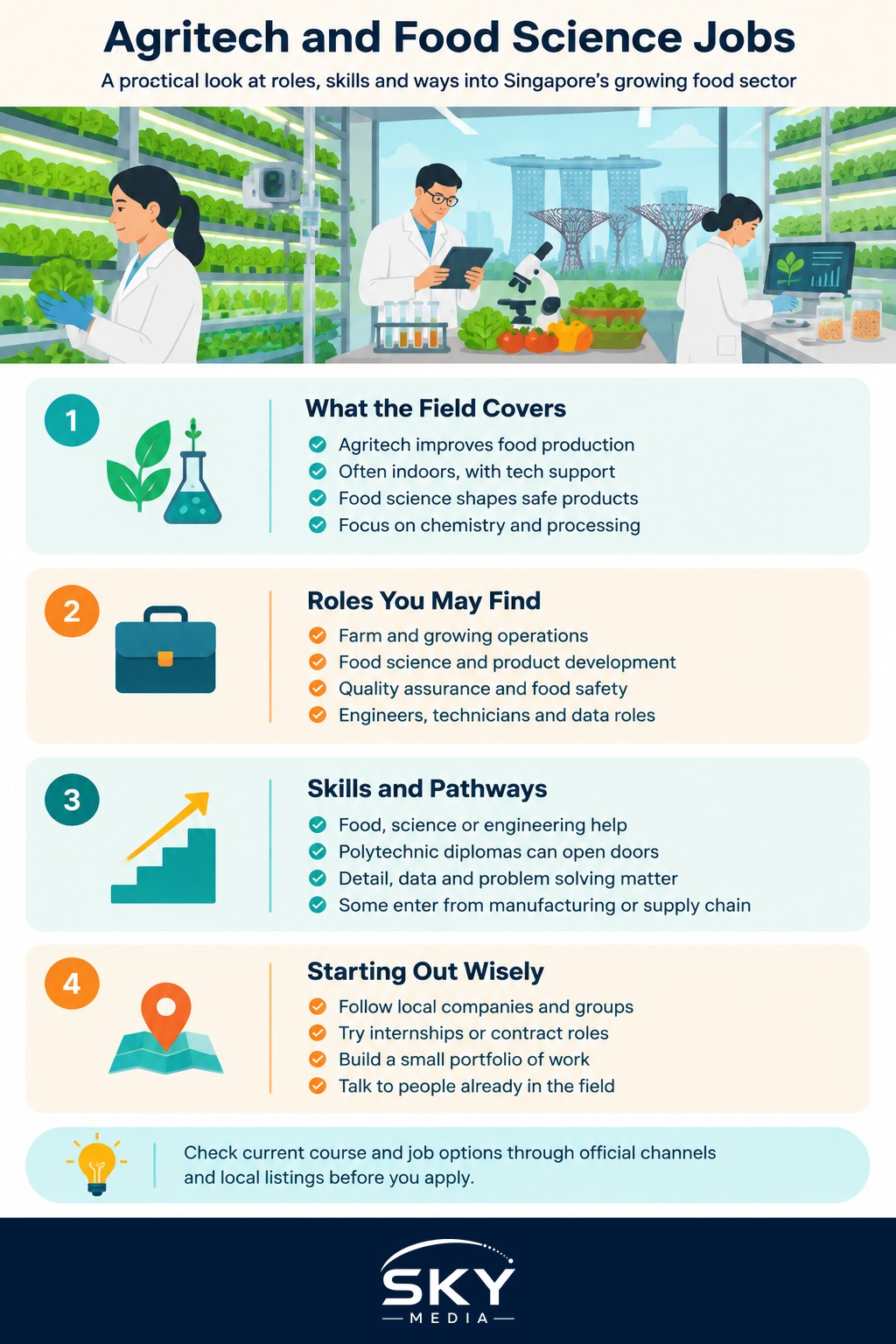
These are two overlapping worlds. Agritech is about producing food more efficiently, often indoors and with technology doing the heavy lifting. Think controlled environment farms, aquaculture systems, sensors, automation, and data. Food science sits closer to the product itself, the chemistry, microbiology, nutrition, and processing that turn raw ingredients into something safe, tasty, and shelf-stable.
Common roles you will see include:
- Farm or growing operations staff who run day to day production, monitor crops, and manage systems.
- Food scientists and technologists who develop recipes, test formulations, and improve shelf life.
- Quality assurance and food safety officers who make sure products meet standards and regulations.
- R and D staff working on alternative proteins, plant based products, or fermentation.
- Engineers and technicians who design, maintain, and automate equipment.
- Data and agronomy roles that tune growing conditions using sensor readings.
- Commercial roles in sales, supply chain, and business development that get products to market.
Not everyone in this field wears a lab coat. Some spend their days on a farm floor, some in front of spreadsheets, and some in meetings with retailers and regulators.
The Skills and Pathways In
There is no single route, which is both the good and the frustrating news. A background in food science, food technology, biotechnology, chemistry, microbiology, biology, or engineering is a natural fit for the technical roles. Diplomas from a polytechnic can open the door to technician and QA positions, while research and product development roles often expect a degree and sometimes postgraduate study.
That said, plenty of people arrive from side doors. Someone from manufacturing may move into food production operations. A supply chain professional may shift into an agritech company’s commercial team. If you are weighing a move, our guide on transitioning to a new industry walks through how to reframe what you already know.
Skills that travel well across the sector:
- Attention to detail and comfort with standards and documentation, since food safety is non negotiable.
- Basic data literacy, because so much of modern growing and quality control runs on numbers.
- Hands on problem solving, whether that is a stuck pump or a formulation that will not set.
- Willingness to learn the regulatory side, as food is closely governed for good reason.
If you want to strengthen your data skills before applying, getting better with spreadsheets and data is a practical starting point. For structured upskilling, the Skills and Workforce Development Agency (SWDA, formed in 2026 from Workforce Singapore and SkillsFuture Singapore) lists courses, and you can check current options and any funding through its official channels rather than relying on figures you read secondhand.
An Honest Look at the Sector Here
It is worth being realistic. Singapore’s agritech scene is growing but still relatively small, and it has had its ups and downs. Some farms and startups have scaled, others have scaled back or closed. That means roles can be concentrated in a handful of companies, and job security varies with how well individual firms are funded. Pay ranges also vary widely by role and employer, so rather than trust any single number, look at a current salary guide and job listings on MyCareersFuture to see what is really on offer.
None of this should scare you off. It means you should go in with your eyes open, build broadly useful skills, and stay open to adjacent sectors like food manufacturing, ingredients, and packaging where the same expertise is valued.
How to Get Started
A few grounded first steps:
- Follow local companies and industry bodies to learn who is hiring and what they work on.
- Look for internships, attachments, or contract roles to get real experience, even short stints teach a lot.
- Build a small portfolio of what you have done, projects, lab work, or process improvements.
- Talk to people already in the field. A short informational chat can tell you more than any article.
If you are drawn to the sustainability angle of feeding a city responsibly, you may also enjoy exploring green jobs and sustainability careers, which overlaps with a lot of agritech work.
An agritech career in Singapore rewards people who are curious, careful, and patient with a young industry that is still finding its feet. If that sounds like you, start small, keep learning, and let your experience compound. The field needs practical people who care about doing things well, and there is real room to grow alongside it.
Frequently Asked Questions
What does a food technologist do compared with a food scientist? Both work on making food safe and appealing, and the titles often overlap. Scientists tend to lean towards research into chemistry, microbiology and nutrition, while technologists focus on turning that knowledge into products and processes, such as recipes, shelf life and production. Job ads usually spell out the split.
Do I need a degree to work in a vertical farm? Not always. Production and growing operations roles may be open to people with diplomas, technical training or relevant experience, while research and product development tend to expect degrees. Reliability, attention to detail and comfort with systems and data count a great deal.
Is a polytechnic diploma enough for a food safety or QA job? A diploma can open the door to technician and quality assurance positions, as the article notes. Employers also value knowledge of standards and documentation. Check specific job listings for what each company asks for, since requirements differ.
Is agritech a safe career bet given that some farms have closed? It carries more risk than established sectors, because the industry is young and job security depends on how well each firm is funded. Build skills that transfer to food manufacturing, ingredients or packaging, so you have options if one company struggles.
What kind of beginner experience helps most when applying? Short internships, attachments or contract roles give real exposure, and even brief stints teach a lot. Add a small portfolio of projects, lab work or process improvements, and speak to people in the field to learn who is hiring.
Further reading: Exploring a Career in Environmental Science · Exploring a Career in Culinary Arts