

Caring for animals is a calling for many people, and a veterinary career singapore path can turn that care into meaningful, skilled work. Veterinary science is the study and practice of animal health, covering everything from the pets in our homes to wildlife, farm animals, and public health. It is a demanding field that blends deep scientific knowledge with hands-on clinical skill and real compassion. This guide gives you an honest look at what the work involves, the roles around it, and the pathways to get in, including the important fact that it is a regulated profession.
What veterinary science involves
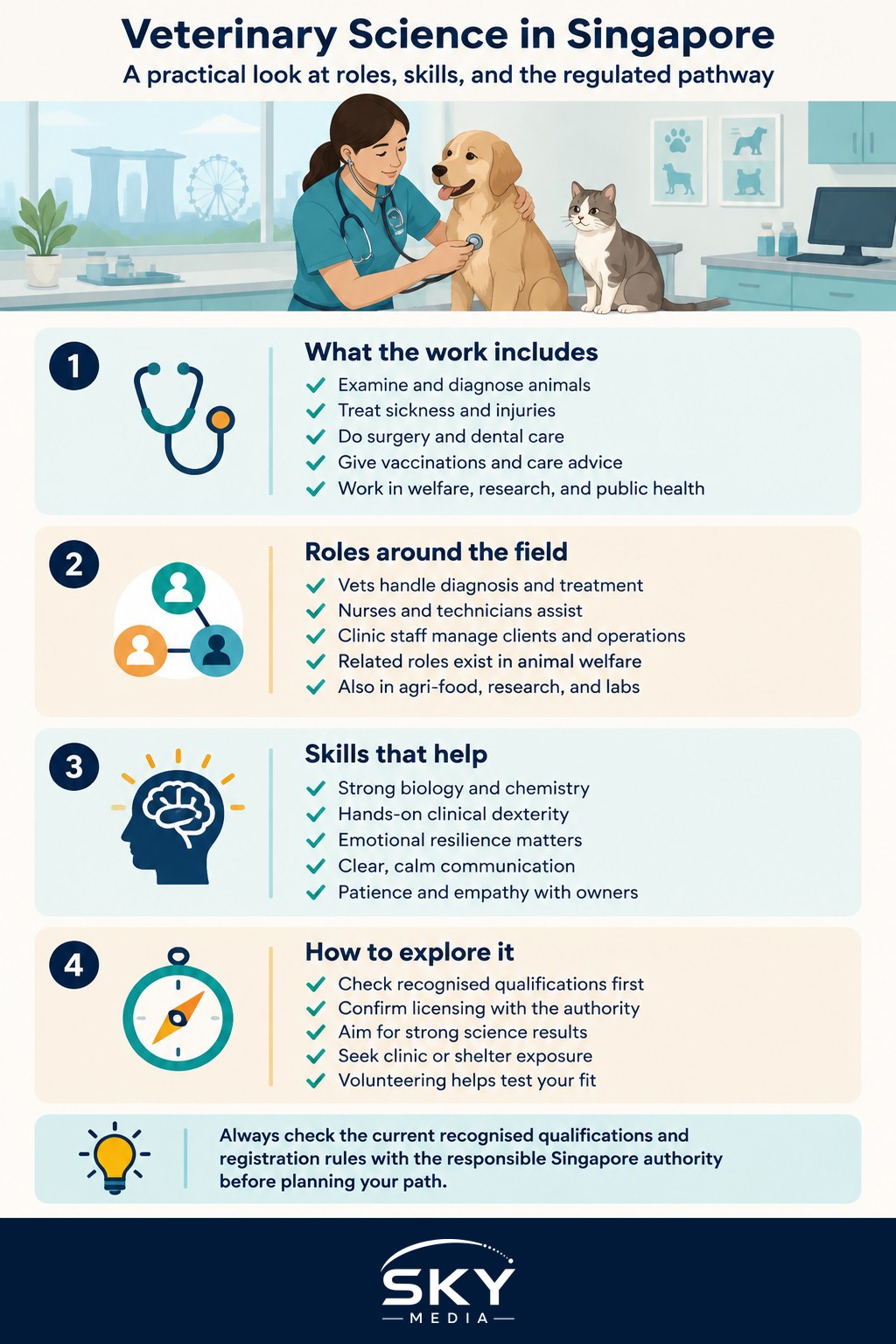
At its heart, veterinary science is about keeping animals healthy and treating them when they are sick or injured. In practice that means examinations, diagnosis, surgery, dentistry for animals, vaccinations, and giving owners advice on care. Beyond the familiar clinic setting, vets also work in areas such as animal welfare, food safety, research, laboratory animal care, and public health, since animal and human health are closely linked.
It is important to be realistic about the work. It can be emotionally heavy, involving difficult conversations with owners and hard decisions about very sick animals. It can also be physically demanding and involve long or irregular hours. People who thrive tend to combine a genuine love of animals with resilience and strong communication skills for dealing with worried owners.
An important note: veterinary work is regulated
Veterinary science is a regulated profession in Singapore. Practising as a veterinarian requires the relevant recognised qualification and registration or licensing with the appropriate authority before you can work in the role. Because these requirements can change and involve specific conditions, you should always check the current rules directly with the responsible government body rather than relying on general articles.
This guide does not set out specific exams, licensing steps, timelines, or pass rates, because those details are exactly the kind of thing that must come from the official source. Treat registration and licensing as a real, non-optional part of the journey, and confirm what applies to your situation, especially if you studied or plan to study overseas.
Roles in and around the field
Not everyone who works with animal health is a fully registered vet, and that is worth knowing early.
- Veterinarians diagnose and treat animals and carry the clinical and legal responsibility for care.
- Veterinary nurses and technicians support the vet, assist in procedures, and help care for animals.
- Practice and clinic staff handle reception, client care, and the running of the business.
- Related careers exist in animal welfare organisations, research, agri-food and public health, and laboratory animal science.
If your interest is really in the wider science of living things, it can help to compare paths like biotech and pharma or agritech and food science. If you love the caring side but are open to human health, reading about healthcare may broaden your options.
Skills and qualities that help
The academic path into veterinary practice is science-heavy, so a strong foundation in biology and chemistry matters. Beyond the science, dexterity and comfort with hands-on clinical and surgical work are essential. So is emotional resilience, because you will encounter loss and difficult cases.
Communication is a bigger part of the job than many students expect. You spend a lot of time explaining conditions, options, and costs to owners who are anxious and attached to their animals. Patience, empathy, and the ability to stay calm under pressure are as important as technical skill.
How to explore the pathway
Because the qualification requirements are specific and regulated, the smartest first step is research rather than assumptions. Find out which qualifications are recognised, and confirm the current registration or licensing requirements with the appropriate Singapore authority. If you are still a student, focus on strong science results and get real exposure to the field.
Practical experience is invaluable and also helps you test whether the reality suits you. Volunteering at animal shelters, seeking work experience at clinics, or supporting animal welfare groups all give you a clearer, honest picture of the work. That kind of exposure is exactly the sort of work experience with no experience that strengthens applications and confirms your motivation.
A realistic word on pay and outlook
Pay for veterinary roles varies by setting, seniority, and whether you are a registered vet, a nurse, or support staff. Rather than trusting figures from forums, check a current salary guide from a reputable source and speak to people already in the field. Be aware too that training for the fully qualified role is long and demanding, so it is a serious commitment that deserves careful thought.
Demand for animal care tends to be steady, supported by Singapore’s large community of pet owners and the ongoing importance of animal welfare and public health. That said, the number of training places and roles is limited, so it remains a competitive path that rewards genuine dedication.
Bringing it together
A veterinary career in Singapore can be deeply fulfilling for people who combine a love of animals with scientific ability and real resilience. Start by understanding that this is a regulated profession, confirm the current qualification and registration requirements with the appropriate authority, and get hands-on exposure to test your commitment. It is a demanding road, but for the right person, few careers offer the same blend of science, skill, and heart.
Further reading: Exploring a Career in Environmental Science