
Helping people move better, feel stronger, and build healthier habits can be deeply satisfying work. If you are drawn to a fitness career in Singapore, the field is wider than the image of a gym trainer suggests. It spans personal training, group instruction, sports coaching, nutrition support, physiotherapy-adjacent roles, corporate wellness, and community health programmes. This guide walks through the common roles, the skills and qualifications that matter, and sensible ways to start, so you can decide whether this path suits your temperament and goals.
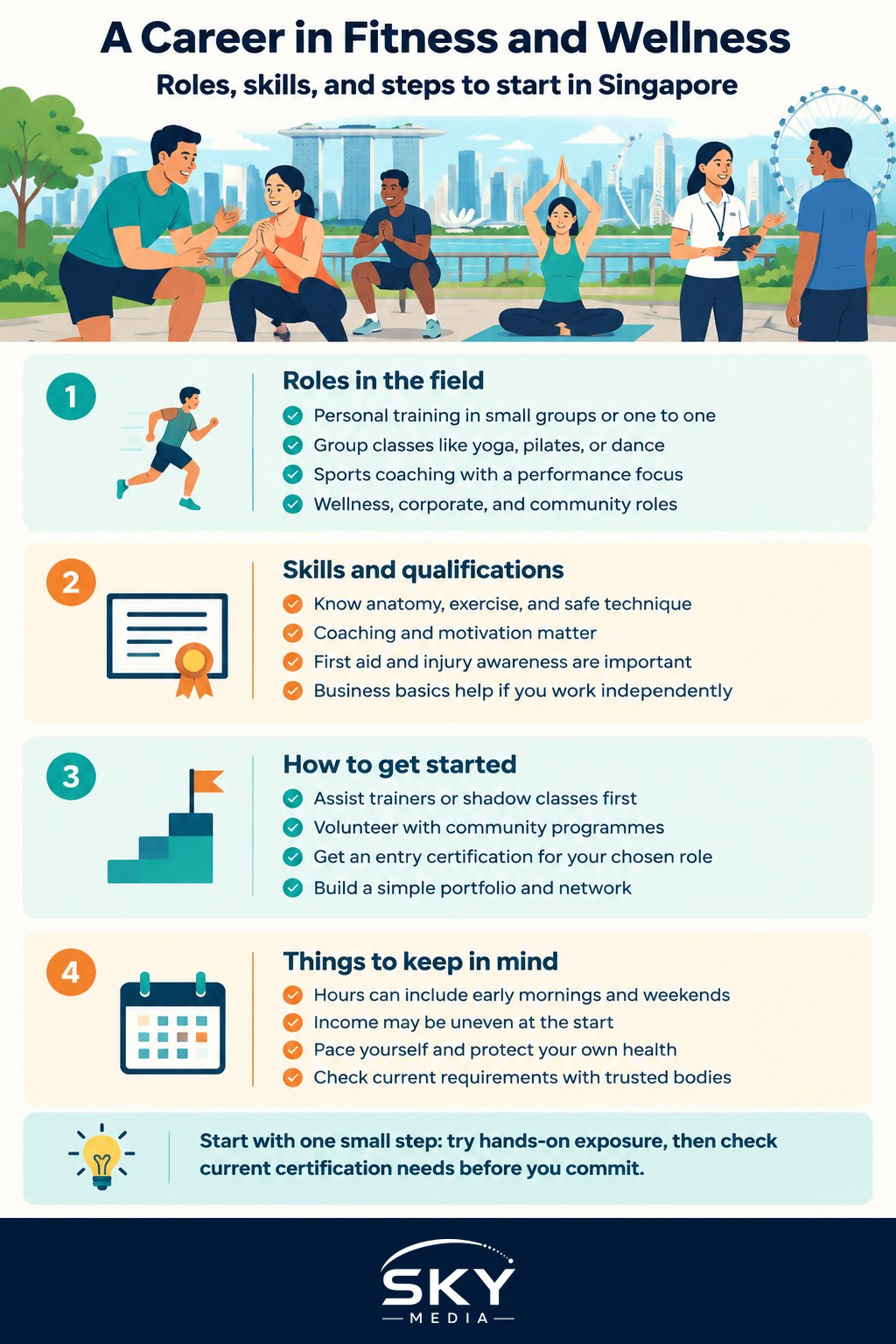
The range of roles in fitness and wellness
Wellness is a broad umbrella, and the roles vary in setting, pace, and the kind of relationships you build with clients.
- Personal trainers work one to one or in small groups, designing programmes and coaching technique.
- Group fitness and studio instructors lead classes, from strength and conditioning to yoga, pilates, or dance-based formats.
- Sports and strength coaches support athletes or teams, often with a performance focus.
- Wellness coaches and health promotion staff help people build sustainable habits around movement, sleep, and stress.
- Corporate wellness specialists design workplace programmes, while others work in community health, rehabilitation support, or facility management.
Different settings suit different people. Some enjoy the energy of a busy studio, others prefer the steady rhythm of long-term client relationships or the structure of a corporate or clinical environment. It is worth being honest about the working hours too, since early mornings, evenings, and weekends are common, because that is when clients are free. If you like variety and the idea of shaping your own service, our guide to building a portfolio career explores how people combine several streams of work.
Skills, qualifications, and certification
Success in fitness rests on more than being fit yourself. The people who last combine technical knowledge with genuine care and good communication.
- Sound knowledge of anatomy, exercise physiology, programme design, and safe technique.
- Coaching and motivational skills, because behaviour change is often the real work.
- First aid and injury-awareness, plus the judgement to refer clients to medical professionals when something is beyond your scope.
- Business basics if you plan to work independently: scheduling, client retention, pricing, and clear communication.
On qualifications, most reputable fitness roles expect a recognised certification, and many employers and facilities set their own requirements. Certification typically covers areas such as personal training, group instruction, or a specialist discipline, and many are renewed periodically with continuing education. Because standards and expectations change, do not rely on this article as the final word. Check the current requirements with recognised certifying bodies and the relevant professional or sector authorities before you commit money or time, and confirm what specific employers, gyms, or studios ask for. If your work moves toward clinical or rehabilitation settings, the requirements are stricter, so verify these with the appropriate healthcare regulator. SkillsFuture may support some accredited courses, so it is worth checking what applies to your situation.
Getting started and building experience
You rarely need to have everything in place before you begin. A steady, layered approach works well.
- Gain hands-on exposure first: assist experienced trainers, shadow classes, or volunteer with community programmes to test whether you enjoy the day to day.
- Earn a recognised entry certification aligned to the role you want, then keep learning through a specialism as you go.
- Build a small track record and a simple portfolio of client outcomes and testimonials, being careful never to over-promise results. Our guide on building a work portfolio can help you present it well.
- Grow your network genuinely, since much of this industry runs on referrals and reputation. If that feels daunting, networking without being awkward offers a gentler approach.
- Use MyCareersFuture and reputable industry channels to see what employers are actually hiring for.
A word on expectations. Building a client base takes time, income can be uneven at the start, and physical work has its own demands, so pacing yourself and protecting your own health matters. Keep your promises modest and your care high, and let results and word of mouth build your reputation. If you love helping people improve their lives and you are willing to keep learning, a career in fitness and wellness can be a genuinely rewarding path. Start with one small step this week, and grow from there.
Frequently Asked Questions
Can I make a living as a personal trainer in Singapore? Many do, but building a client base takes time and income can be uneven at the start. Employer-based and freelance models differ, so talk to working trainers and research current market realities before leaving a steady job.
Should I work for a gym or go freelance as a trainer? Working for a gym gives structure and a ready stream of members, while freelancing gives flexibility but means handling pricing, marketing and admin yourself. Many start employed to build experience and clients.
What should a trainer do when a client has an injury or health condition? Stay within your scope and refer them to a doctor or physiotherapist rather than diagnosing or treating. Ask the client to get medical clearance when needed, and adapt sessions based on professional advice.
Is an online fitness coaching business realistic? It can be, though competition is strong and results depend on trust and consistent communication. Build credibility through experience and testimonials, and never over-promise results. Check any advertising or certification rules that apply.
Is it possible to switch to fitness from an office job? Yes. Gain hands-on exposure by assisting trainers or volunteering, earn an entry certification and build your clientele on the side while you keep your job. A portfolio career can help bridge the move.
Further reading: Exploring a Career in Sports and Coaching in Singapore