

If sport is the thing that gets you out of bed early and keeps you going, a sports career in Singapore is worth a serious look. It is easy to picture only professional athletes, but the field is far wider than that. From coaching and fitness to sports science, event management, and administration, there are many ways to build a working life around movement, health, and helping people perform. This guide gives you an honest map of the field and how to explore your way in.
What a sports career can actually look like
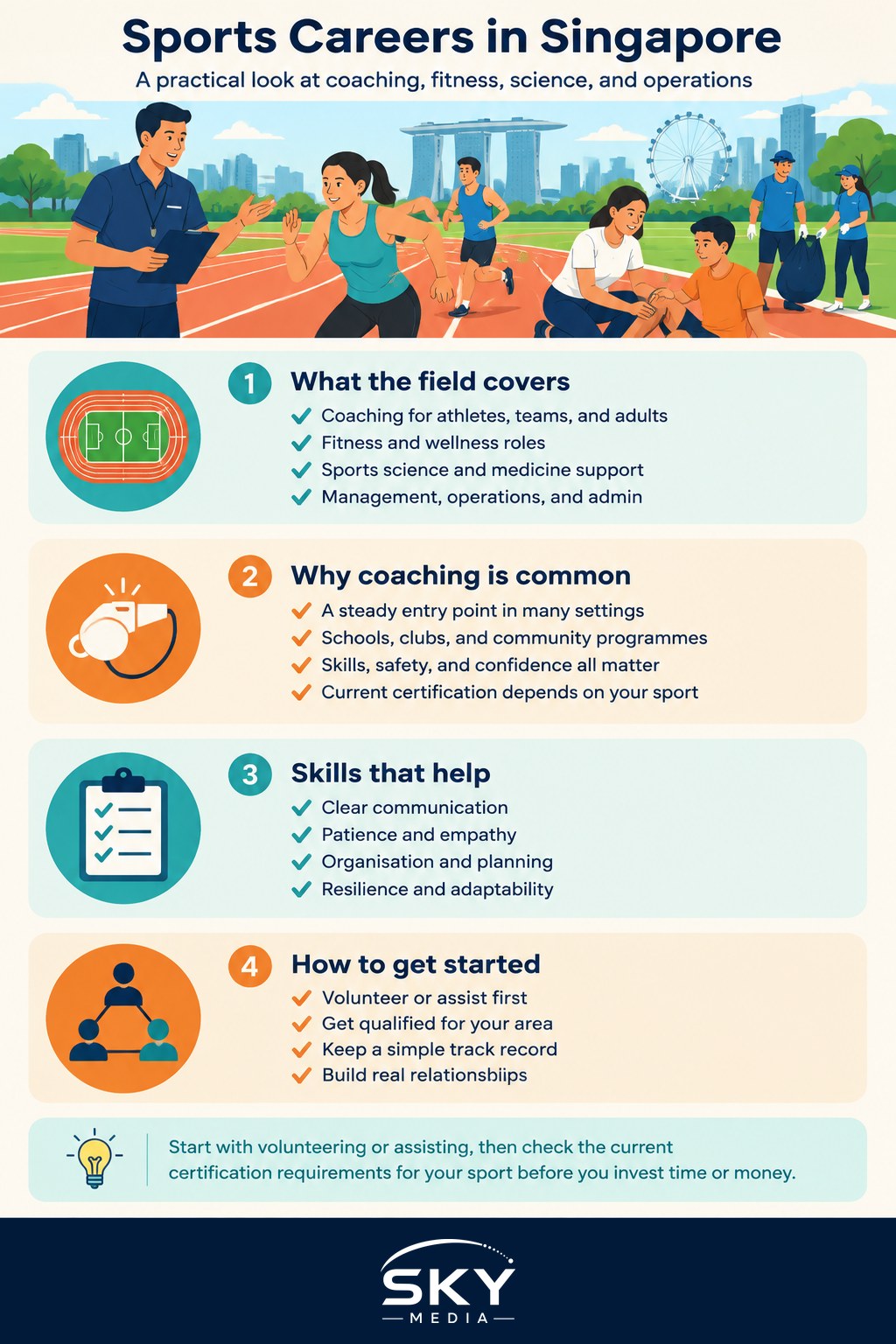
Sport in Singapore has grown into a real industry, supported by public interest in health, active ageing, youth development, and major events. That growth has created a range of roles.
- Coaching. Working with athletes, teams, students, or everyday adults to build skills and performance, from grassroots to competitive levels.
- Fitness and wellness. Personal training, group fitness, and health coaching for the general public. Our guide on exploring a career in fitness and wellness in Singapore goes deeper on this path.
- Sports science and medicine. Roles that support performance and recovery, such as strength and conditioning, physiotherapy, nutrition, and analysis. Some of these overlap with the allied health field covered in exploring a career in physiotherapy and allied health in Singapore.
- Management and operations. Running clubs, facilities, competitions, and events, plus marketing, sponsorship, and administration behind the scenes.
The point is that you do not have to be an elite athlete to work in sport. Many rewarding roles are about enabling others to play, train, and compete well.
Coaching as a pathway
Coaching is one of the most common entry points, partly because the demand is steady across schools, clubs, and community programmes. Good coaches are part teacher, part motivator, and part planner. They break down skills, design training, manage safety, and build confidence in the people they work with.
Coaching in Singapore generally involves getting properly qualified, and there are recognised coaching certification pathways for different sports and levels. Rather than list specific programmes, which change over time, the honest advice is to check the current requirements with the relevant national sports body or the appropriate coaching accreditation framework for your sport. Getting certified matters for safety, credibility, and the trust of parents, schools, and clubs.
Beyond certification, the coaches who thrive tend to keep learning. If that sounds like you, our piece on building a continuous learning habit in Singapore is a useful companion.
Skills and qualities that help
Whichever part of the field you enter, a few strengths carry across sport careers:
- Communication. You will explain, encourage, and correct, often to people of very different ages and abilities.
- Patience and empathy. Progress is rarely quick, and people learn at different speeds.
- Organisation. Sessions, schedules, safety, and paperwork all need managing.
- Resilience. Weather, injuries, and setbacks are part of the job, and outcomes are never guaranteed.
Business and people skills matter too, especially if you want to run your own coaching practice or move into management. Many sport professionals in Singapore build a mix of roles, and our guide on building a portfolio career in Singapore explores how that can work.
How to start exploring
Take it in steady steps rather than trying to plan everything at once.
- Volunteer or assist first. Helping at a club, school programme, or community event shows you the reality and builds experience.
- Get qualified for your area. Look up the current certification requirements from the relevant sports body before you commit money or time.
- Build a track record. Keep a simple record of who you have coached, events you have supported, and results, so you can show it later.
- Network genuinely. Sport is a relationship business, and coaches, physios, and organisers often refer work to people they trust.
Being honest about the trade-offs
Sport careers can be deeply rewarding, but they come with real trade-offs. Hours can be early, late, and on weekends when other people are free to play. Income can be irregular, especially when you are self-employed, so it pays to understand things like declaring income and managing an uneven schedule. Progress with athletes is not guaranteed, and you will need to keep upgrading your skills to stay relevant.
If you go in with clear eyes, though, few fields let you combine passion, movement, and helping people quite like this one. Start small, get properly certified, keep learning, and let your experience build. A sports career in Singapore rewards people who show up consistently, care about those they work with, and treat their craft as something to keep improving.
Frequently Asked Questions
Do I need to be a former athlete to become a coach? No. The article notes you do not have to be elite to work in sport, and good coaches are part teacher, part motivator and part planner. What matters is being properly qualified, communicating well and being patient with different learning speeds.
How do I find out which coaching certification I need? It depends on the sport and level, so check with the relevant national sports body or the coaching accreditation framework for your sport. Requirements change, so confirm before paying for any course. Certification matters for safety and for the trust of parents, schools and clubs.
Can I coach part-time while keeping a day job? Many people do, and it is a sensible way to test the field. Hours tend to fall early, late and on weekends, which suits those with day jobs. Starting by assisting at a club or community programme builds experience before you commit.
What is the difference between a fitness trainer and a sports coach? A fitness trainer usually helps the general public with personal training, group classes and health goals. A sports coach builds skills and performance in a particular sport, from grassroots to competitive level. Some people work across both, and sports science roles support either path.
How steady is income for self-employed coaches? It can be irregular, especially at the start. Self-employed coaches should plan for quieter periods, keep records of earnings and declare income properly to IRAS. Many professionals combine several roles, such as coaching, classes and events, to even things out.