

As the world shifts towards cleaner power, the people who design, build, and manage renewable energy systems are in growing demand. If you want work that is future facing and genuinely useful, a renewable energy career in Singapore is worth a serious look. From solar installations on rooftops to energy management and clean energy planning, this is a field where technical skill meets a real sense of purpose.
This guide gives an honest picture of what renewable energy work involves, the skills that help, and how people get in. Singapore has natural constraints on some forms of renewable energy, so the field is specialised and evolving. Treat this as a starting map, and remember that outcomes vary from person to person.
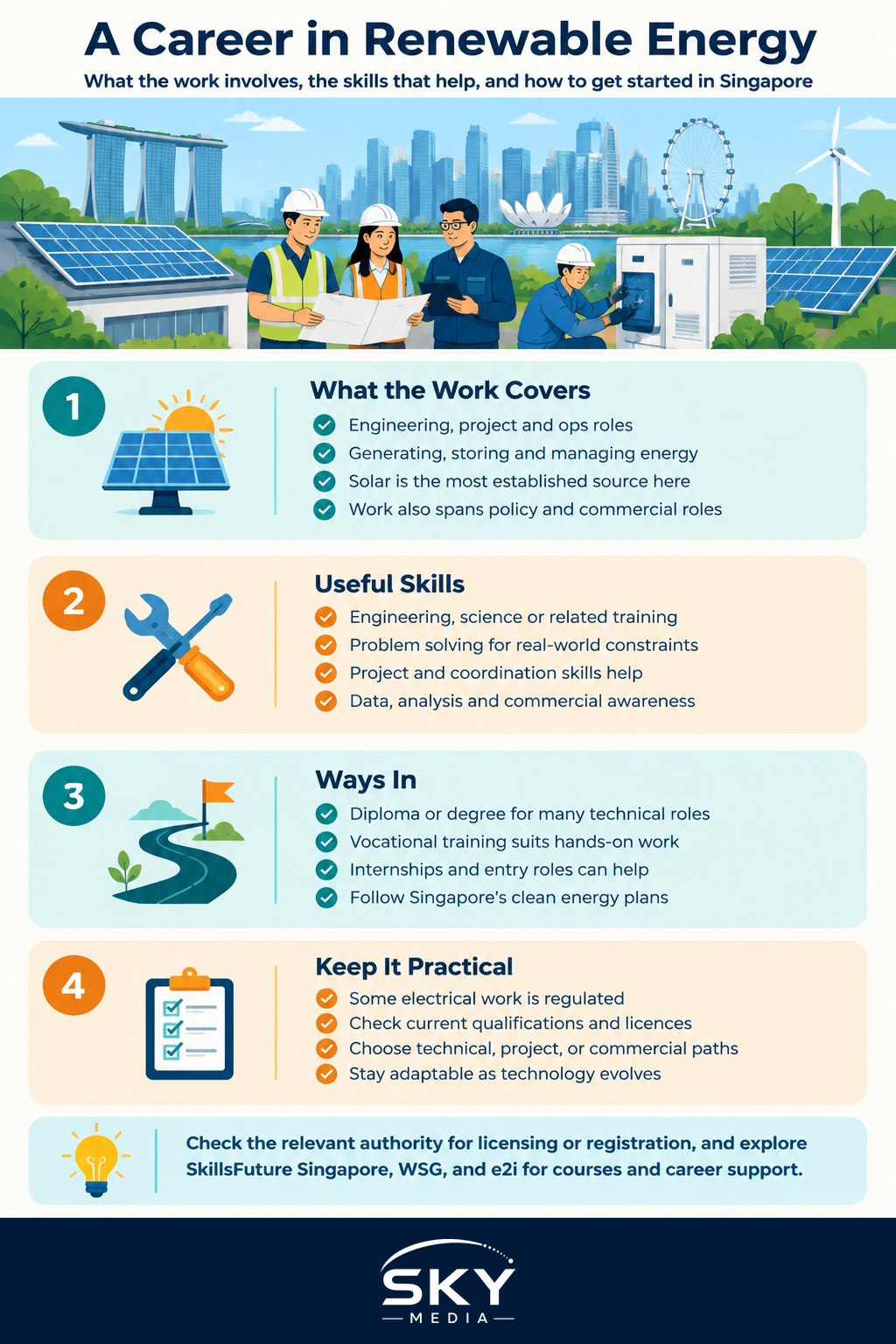
What Renewable Energy Work Involves
Renewable energy is a broad field that spans engineering, project work, operations, policy, and commercial roles. The common thread is generating, storing, or managing energy in cleaner ways, and helping homes, businesses, and the wider system use energy more efficiently.
In Singapore, solar power is the most established renewable source given our climate and land situation, so many roles relate to designing, installing, and maintaining solar systems, as well as to energy storage and smart energy management. Beyond that, there is growing work in regional clean energy, grid technology, sustainability consulting, and the trading and financing of clean power.
Typical roles you might come across include:
- Solar or renewable energy engineers who design and size systems.
- Project managers who deliver installations on time and on budget.
- Operations and maintenance technicians who keep systems running.
- Energy analysts who study consumption and efficiency.
- Sustainability and policy specialists who shape clean energy strategy.
- Commercial roles in sales, financing, and project development.
Because the field connects to the wider push for sustainability, it overlaps with green jobs and sustainability careers, with environmental science, and with core engineering disciplines.
Skills and Qualities That Help
Renewable energy rewards people who combine technical grounding with practicality and a willingness to keep learning as the technology changes.
Useful strengths include:
- A technical foundation, often in engineering, science, or a related field.
- Problem solving, since real installations bring real constraints.
- Project and coordination skills, because delivery involves many parties.
- Data and analysis skills for understanding energy use and performance.
- Commercial awareness, since clean energy must also make financial sense.
- Adaptability, as the sector and its technologies keep evolving.
Not every role is deeply technical. There are also commercial, analytical, and coordination roles for people from business or finance backgrounds. Whatever your path, building in demand skills such as data handling and project delivery will make you more useful across the sector.
Pathways Into the Field
Many technical roles start with a relevant diploma or degree in engineering, science, or a related discipline. For hands on installation and maintenance work, technical and vocational training is often the entry point, and skilled trades experience is valued. Commercial and analytical roles can be reached from business, finance, or sustainability backgrounds.
Practical steps to explore the field:
- Look for internships or entry roles with clean energy firms, engineering companies, or sustainability teams.
- Build relevant technical or analytical skills depending on the path you want.
- Follow Singapore’s clean energy and sustainability plans, since local context shapes what is realistic here.
- Consider whether you prefer technical, project, or commercial work, and aim your applications accordingly.
Some work in this field, particularly electrical and installation work, is regulated and requires the appropriate qualifications, licensing, or registration. Where that applies, check the current requirements directly with the relevant authority rather than assuming. The Skills and Workforce Development Agency (SWDA, formed in 2026 from Workforce Singapore and SkillsFuture Singapore) and e2i support skills upgrading and career moves, and you can find current courses and any funding through the official channels. If you are switching from another sector, it is also worth reading up on how a career conversion programme generally works.
A Realistic Wrap Up
A renewable energy career in Singapore offers purposeful, future oriented work in a field that is steadily growing. It is specialised, and our local conditions shape which paths are most practical, so it pays to be realistic and to keep learning as the technology moves. If you bring curiosity, a solid skill base, and patience, you can build a meaningful career helping power our homes and businesses in cleaner ways.
Frequently Asked Questions
Is rooftop solar the only renewable energy option in Singapore? It is the most established, but not the only one. The article notes solar suits our climate and land situation, while energy storage, smart energy management, grid technology and regional clean energy are growing areas. Local constraints limit some other renewable sources, so check current national plans.
Can someone with a finance or business background work in renewable energy? Yes. The field includes commercial roles in sales, financing and project development, as well as analytical and coordination jobs. You do not need to be an engineer. Learning the basics of how energy projects are structured and priced will help you stand out.
Do solar installers need a licence in Singapore? Electrical and installation work is regulated, so the right qualifications, licensing or registration may be required. The exact rules depend on the type of work, so check the latest requirements with the relevant authority before applying for hands-on roles or taking courses.
What is a good entry-level role to start in renewable energy? Common starting points include operations and maintenance technician, junior project coordinator, energy analyst and internships with clean energy or engineering firms. Choose based on whether you prefer technical, project or commercial work, and use the first role to learn how systems are delivered.
Are mid-career switchers supported when moving into clean energy? There is support for career moves, including training and programmes offered through SWDA and e2i. Details and funding change over time, so look at the official channels for current options. Your previous experience in engineering, project work or sales can also transfer well.