
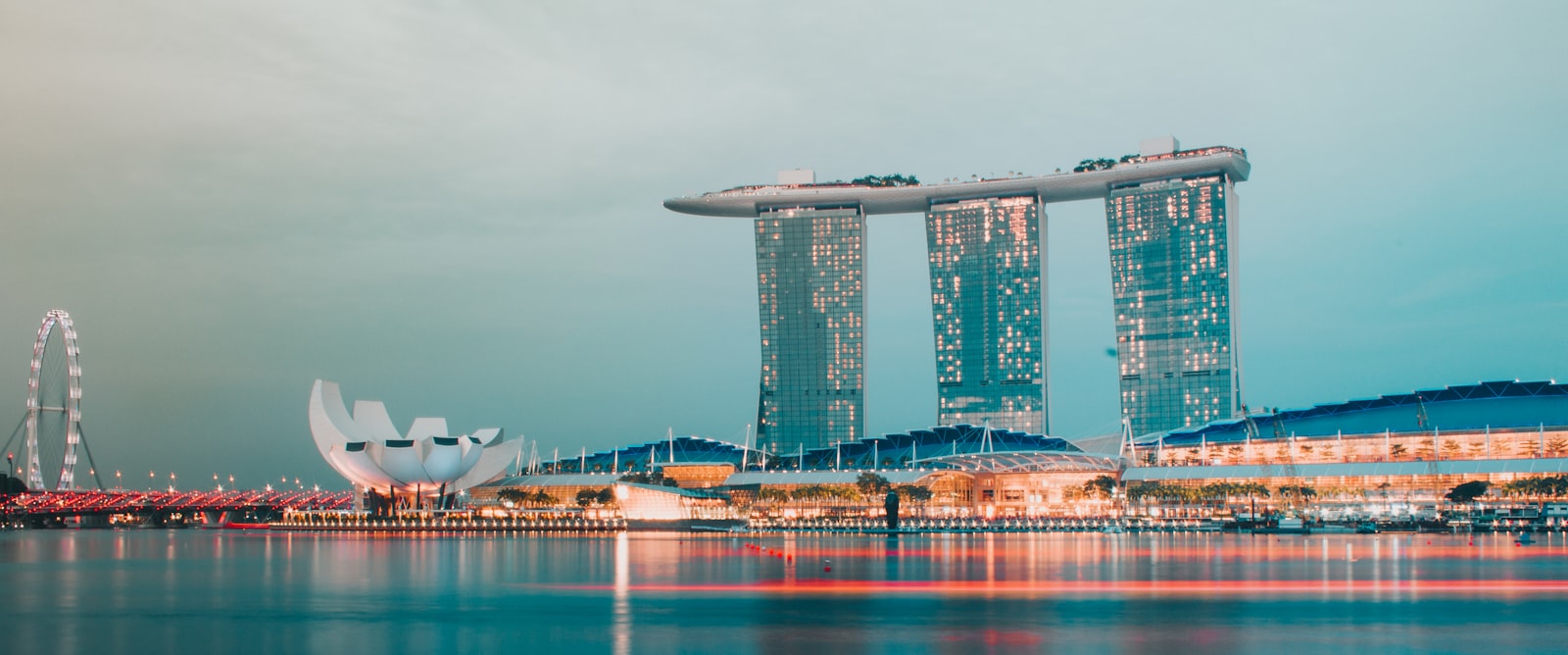
Singapore is one of the world’s busiest ports and a major maritime hub, so a maritime career in Singapore places you close to the heart of global trade. The industry moves goods across oceans, keeps supply chains running, and supports a vast web of shore-based services. Whether you dream of working at sea or prefer a role on land, there is genuine breadth here. This guide explores the field generally, the roles you might grow into, the skills that help, and honest ways to get started.
A Broad Industry, at Sea and Ashore
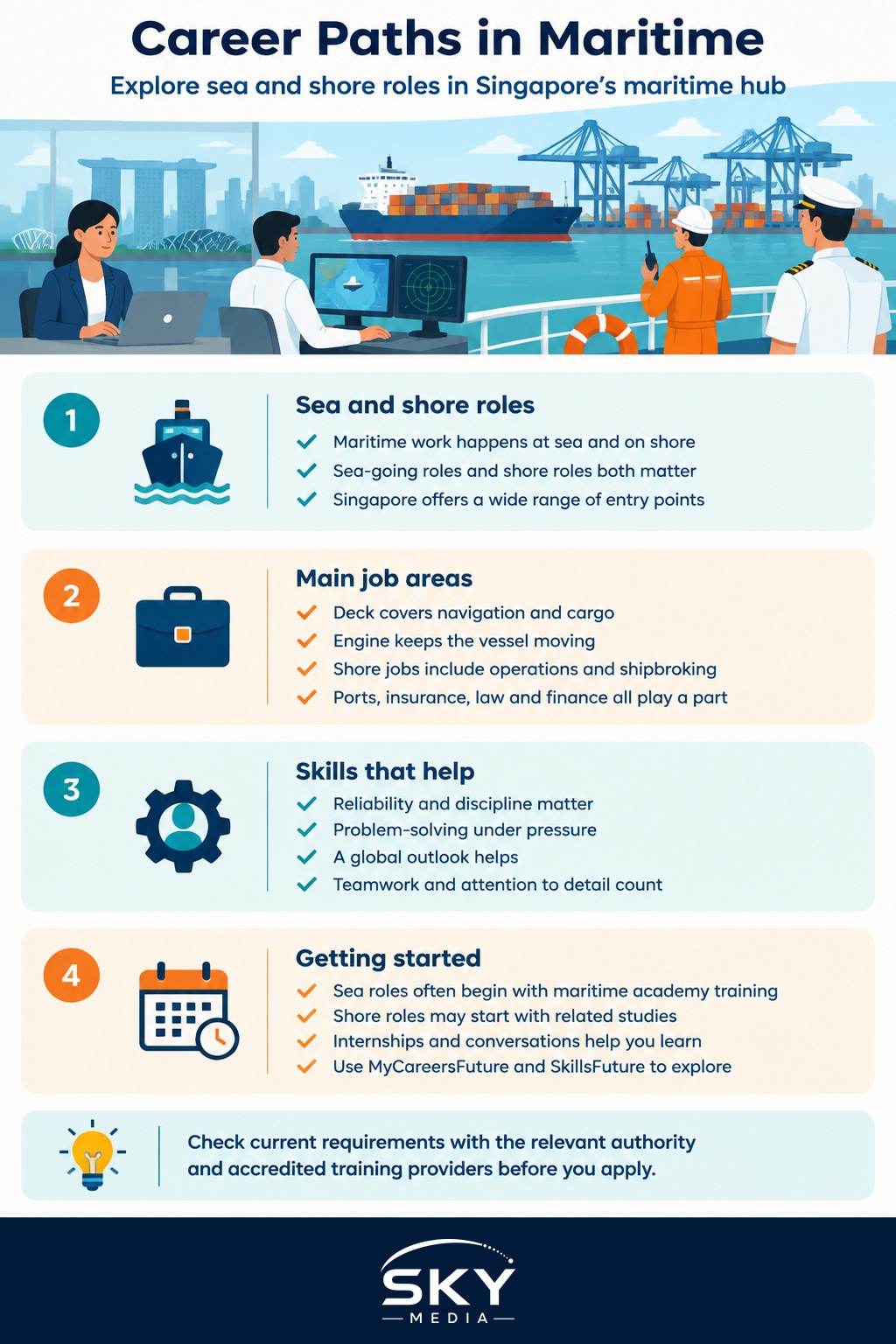
Many people picture the maritime industry as life aboard a ship, and sea-going careers are certainly part of it. But a large share of maritime work happens on shore, in offices, ports, and specialised firms. Understanding both sides helps you find the right fit.
Sea-going roles broadly split into two departments:
- Deck, responsible for navigation, cargo, and the safe running of the vessel, leading toward officer and eventually captain roles.
- Engine, responsible for the machinery that keeps a ship moving, leading toward marine engineer positions.
Shore-based roles are just as varied and include:
- Ship management and operations, coordinating vessels, crews, and voyages.
- Chartering and shipbroking, arranging the movement of cargo and vessels.
- Port and terminal operations, keeping the flow of goods efficient and safe.
- Marine insurance, law, and finance, supporting the commercial side of shipping.
- Naval architecture, surveying, and technical services, ensuring vessels are sound.
This mix means people from many backgrounds can find a place, from engineers and logisticians to lawyers, analysts, and commercial specialists. If you are also weighing related fields, our guide on exploring a career in engineering is a useful companion, since technical maritime roles draw on similar foundations.
Skills and Qualities That Help
The right strengths depend on whether you head to sea or stay ashore, but some qualities travel across the industry:
- Reliability and discipline. Ships and ports run around the clock, and safety depends on consistent standards.
- Problem-solving under pressure. Conditions change, and calm, practical thinking matters.
- Global outlook. Shipping is international, so comfort with different cultures and time zones helps.
- Teamwork. Whether on a vessel or in a control room, work depends on trusting your crew.
- Attention to detail. Cargo, compliance, and safety leave little room for carelessness.
Because maritime work often involves coordinating many parties, communication is a real asset. Learning to give a clear status update at work translates well to voyage reports and operations updates alike.
Pathways Into the Maritime Industry
There are several realistic ways in, depending on your goals.
For sea-going careers, the usual route is formal training at a maritime academy, leading to recognised certificates of competency that allow you to serve and progress as an officer or engineer. These qualifications, and the training and examinations behind them, are governed by strict international and national standards. In Singapore, the sector is overseen by the Maritime and Port Authority, and the specific certifications, medical requirements, and sea-time expectations do change over time. Verify the current requirements with the relevant authority and accredited training providers rather than relying on any single article.
For shore-based careers, entry is often through relevant studies in areas such as maritime business, logistics, engineering, law, or finance, followed by roles in shipping firms, ports, or service providers. Some enter through graduate schemes or from adjacent industries such as supply chain and trade. If you are already working elsewhere, our guide on transitioning to a new industry can help you plan a thoughtful move.
Whichever path you consider, a few steps help you learn the reality:
- Seek exposure. Internships, attachments, and entry-level roles reveal the true nature of the work.
- Talk to insiders. Honest conversations with people at sea and ashore are invaluable.
- Build relevant skills. Depending on your direction, that might mean technical training, logistics knowledge, or commercial acumen.
Local platforms such as MyCareersFuture and SkillsFuture can point you toward training and current openings, and industry bodies can help you stay up to date.
An Honest, Encouraging Word
A maritime career can be adventurous, international, and full of purpose, since the industry quite literally keeps the world moving. Sea-going life can also mean long periods away from home, while shore roles bring their own pace and pressures. Pay and progression vary widely by role and employer, so research current market realities rather than assuming, and speak to people doing the work you are drawn to.
The encouraging news is that Singapore’s status as a maritime hub creates real breadth of opportunity, at sea and on land. Start by learning the landscape, seeking honest conversations, and verifying current requirements with the right bodies. A maritime career in Singapore is a realistic and rewarding goal for someone willing to be dependable, adaptable, and open to the wider world. Take one informed step this month, and set your course from there.