
Some of the most joyful, rhythmic sounds you will hear in the region come from the Malay musical world and the wider Nusantara, the great arc of island Southeast Asia. From gentle, romantic ballads to lively communal singing, malay music singapore listeners grow up with is rich, varied, and deeply tied to community life. This guide offers a friendly starting point: what the main styles sound like, which instruments to listen for, and how to explore respectfully.
A living, community-rooted tradition
“Nusantara” is a term for the Malay world spanning the region’s islands and peninsulas, and its music reflects centuries of exchange between local traditions and influences carried along trade routes. In Singapore, Malay music is very much alive at weddings, festive gatherings, cultural performances, and community events. It is music you participate in as much as listen to.
Because it is a living tradition, styles blend and evolve. You will hear older forms performed with great care, alongside modern pop and fusion that carry the same spirit into new settings. Approaching it with curiosity and respect, rather than treating it as a museum piece, is the best way in.
Styles worth knowing
A few well-loved forms give you a map of the territory:
- Keroncong: a gentle, lilting style with plucked strings and a swaying feel, often romantic and nostalgic. It has roots that stretch across the region and remains beloved.
- Dikir barat: energetic group singing, usually with call-and-response between a lead singer and a seated chorus, driven by hand percussion and lots of coordinated movement. It is communal, competitive in a friendly way, and great fun to watch live.
- Ghazal: an ornate, expressive vocal style with instrumental accompaniment, prized for its refined singing.
- Zapin and joget: dance-linked rhythms that get people moving, common at celebrations.
- Modern Malay pop and fusion: contemporary songwriting that keeps the language and feeling at the centre while drawing on global styles.
You do not need to master the labels. Listening to one example of each, and noticing how the rhythm and singing differ, is enough to start hearing the family resemblances.
Instruments to listen for
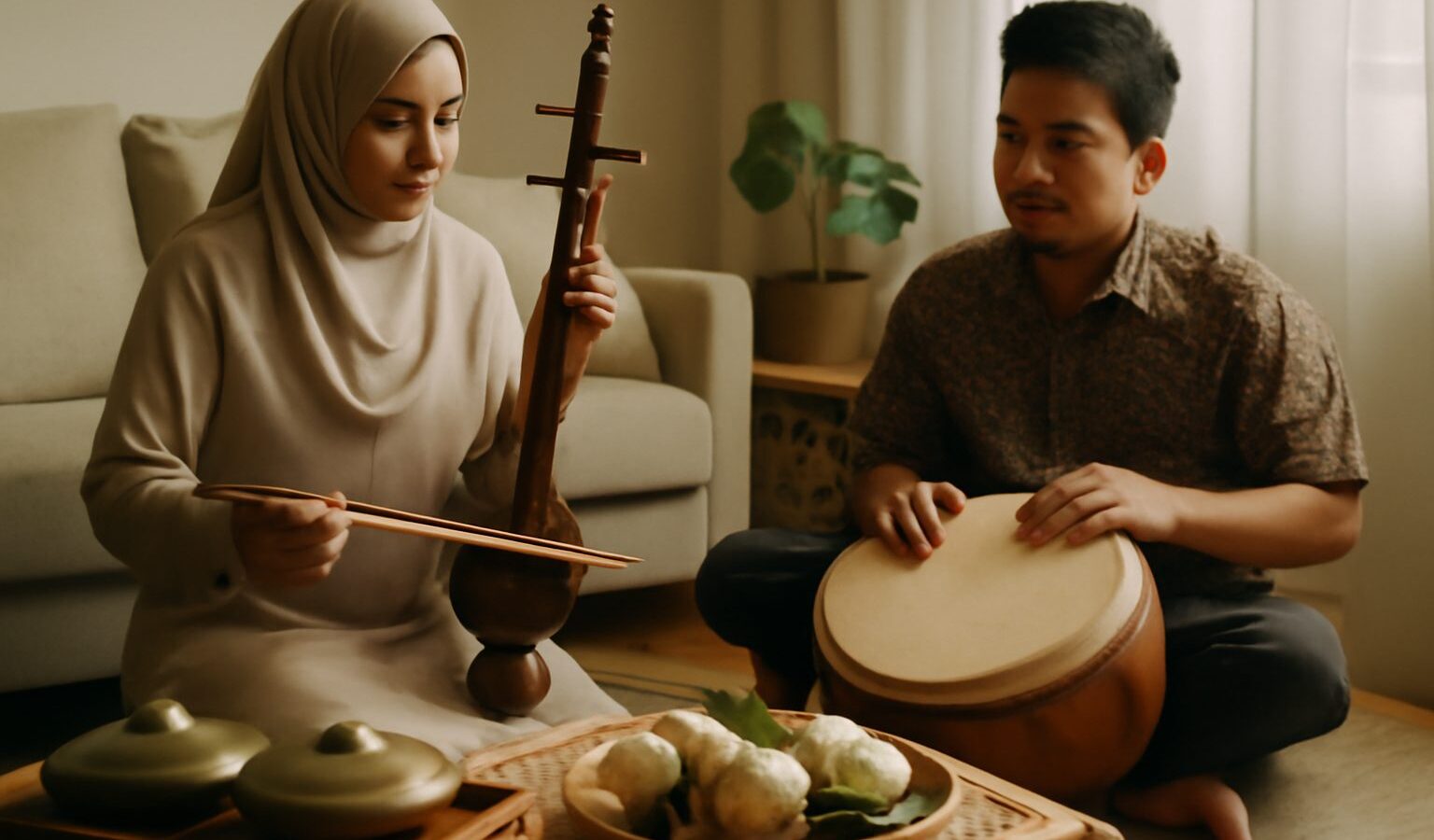
Malay and Nusantara music uses a colourful mix of strings, winds, and above all percussion. Hand drums are central, giving many styles their distinctive lilt and drive. Frame drums and goblet-shaped drums set the groove, while plucked strings and, in some settings, gongs and metallophones add colour and depth.
Percussion is such a big part of the sound that it is a natural entry point for players. If the rhythmic side draws you in, our guide to learning hand drums and percussion is a gentle place to begin, and the wider world of world music puts these traditions in a bigger picture. For the singing-led styles, good vocal habits matter, and our piece on caring for your singing voice will serve you well.
Where to hear it in Singapore
Malay and Nusantara music turns up in more places than you might expect: cultural festivals, heritage events, community performances, weddings, and dedicated concerts. Malay Heritage settings, community clubs, and arts venues often host performances, and festive seasons such as Hari Raya bring music to the fore. Programmes and dates change through the year, so check current listings with the venues and organisers rather than relying on fixed schedules.
If you would like to build a habit of catching live performance generally, our overview of the live music scene in Singapore can help you find your footing.
Exploring with respect and care
A few gentle pointers as you dive in. First, treat the music as part of a living culture. Learn the names of styles, listen to how communities themselves perform and talk about them, and enjoy it without flattening its variety. Second, look after your body if you start to play or sing. Warm up before singing, keep your posture relaxed, do not push through pain, and rest your voice when it tires; if a vocal problem lingers, see a doctor or an ENT rather than straining on. Drumming and lively live events can be loud, so mind your hearing, take breaks, and use earplugs in very loud rooms, since prolonged loud exposure can cause permanent hearing damage.
Start with one song
The easiest way to begin is not with theory but with a single piece you enjoy. Pick a keroncong ballad or a rousing dikir barat performance, listen a few times, and notice the rhythm, the singing, and the interplay of instruments. From there, follow your curiosity to a live show or a first drum lesson. Malay and Nusantara music is generous and welcoming, and a little attention repays you with a whole world of sound rooted right here in the region.