
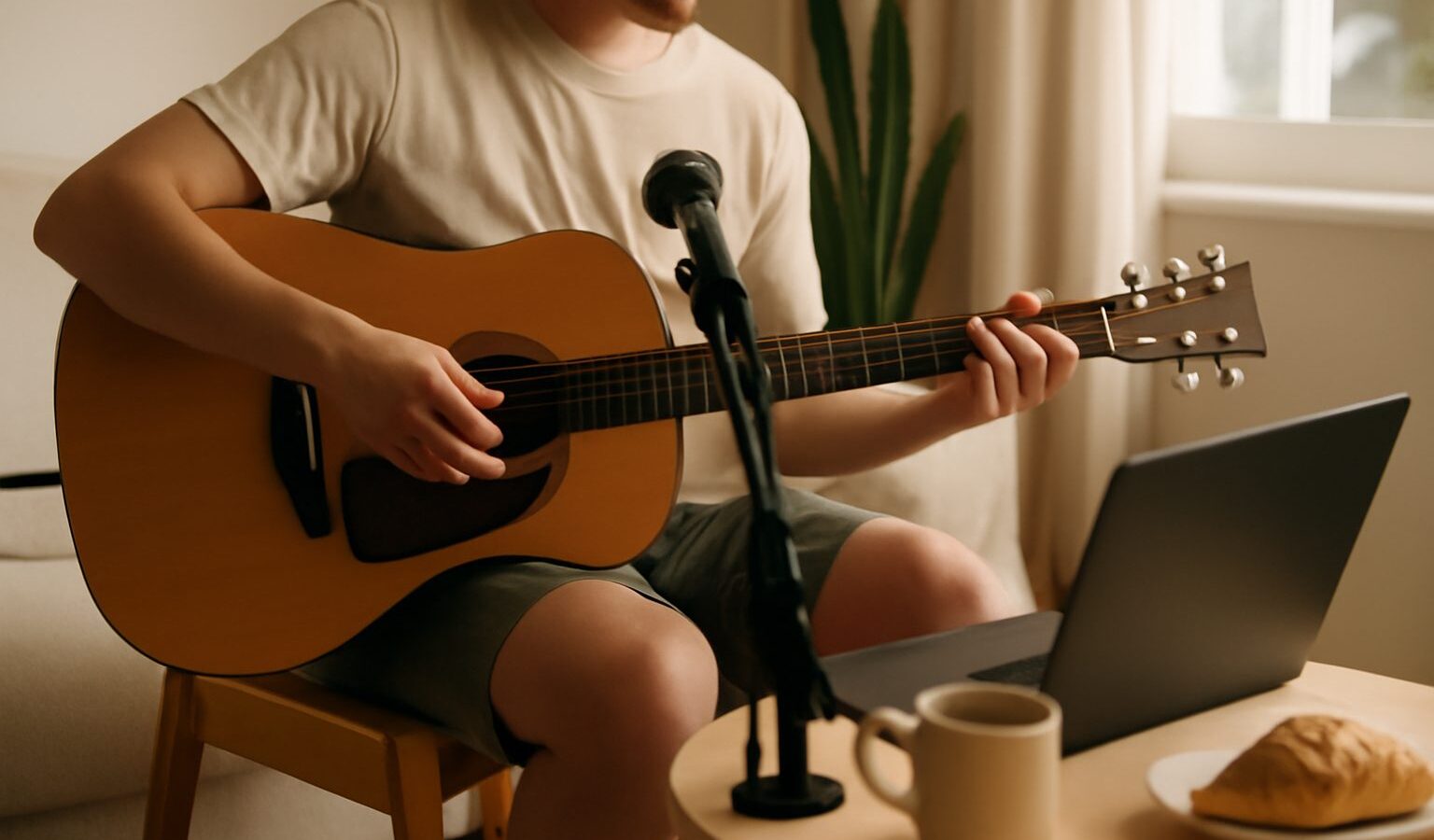
There is a big difference between playing well at home and playing well in front of people, and every musician has to cross that gap. The good news is that learning to perform live music is a skill like any other, built from preparation and practice rather than raw talent. Whether your first stage is an open mic in a cafe, a family gathering or a school event, this guide walks you through preparing a set, rehearsing the right way, handling a sound check, managing nerves and connecting with a crowd. It is written for complete beginners in Singapore, whatever your instrument or budget.
Prepare a Set That Suits You and the Room
A strong performance starts long before you step up, with a set list chosen to match your ability and your audience.
Begin by picking songs you can play confidently, not the hardest pieces you know. Nerves reliably shave some polish off your playing, so choose material with a comfortable margin. For a first outing, two to four well-rehearsed songs is plenty.
Then think about the room. A quiet cafe suits gentle, acoustic material, while a lively bar can take something with more energy. Consider these factors as you plan:
- The audience. Are they there to listen closely, or chatting over drinks? Match your intensity to the setting.
- The order. Open with a song you are sure of to settle your nerves, and finish with something memorable.
- The length. Confirm your slot time and rehearse to it, so you neither overrun nor finish awkwardly early.
- The transitions. Plan one short, friendly line between songs so there is no dead silence while you retune.
If you are performing your own material, our guide on writing your first song, linked below, helps you build a set that is truly yours.
Rehearse the Performance, Not Just the Notes
Most beginners rehearse the music and forget to rehearse the performance. On the night, the walking on, the talking and the recovering from a slip all matter as much as the notes.
Practise the whole experience:
- Run the full set standing up. If you will stand to play, rehearse standing, since it changes your posture and breathing.
- Play it through without stopping. Resist the urge to restart when you make a mistake. Learn to keep going, because that is what you must do on stage.
- Rehearse the talking. Say your between-song lines out loud, even if it feels silly at home. A planned sentence beats an awkward mumble.
- Record yourself. A phone recording reveals timing, volume and habits you cannot hear while playing. You do not need fancy gear; our guide on phone recording, linked below, covers the basics.
- Simulate pressure. Play for a friend or family member. Performing for even one person triggers some of the same nerves you will feel on the night.
Rehearsing in an HDB flat means being considerate of neighbours. Practise at reasonable hours, keep the volume sensible, and use headphones with electronic instruments where you can. Good habits at home keep the peace and still prepare you fully.
Handle the Sound Check and Your Gear
Turning up prepared for the technical side marks you out as easy to work with, which gets you invited back.
If the venue has a sound system, there is usually a sound check, a quick test before you play so the engineer can balance your levels. Arrive early, know how your instrument connects, and be ready to play a typical song at your real performing volume so the levels are set correctly. Speak clearly if you use a microphone, so your speaking and singing volumes can both be set.
A short table of common technical terms helps you follow along without feeling lost.
| Term | Plain meaning | Why it matters live |
|---|---|---|
| PA system | The speakers and amplifier that make you louder | Lets a room hear you clearly |
| Monitor | A speaker pointed at you so you hear yourself | Helps you stay in tune and in time |
| Sound check | A pre-show test of your levels | Prevents feedback and bad balance |
| Feedback | The screech when a mic hears its own speaker | Move the mic or lower volume to fix it |
| DI box | A device that connects some instruments to the PA | Gives a clean signal for guitars and keys |
Bring a few cheap spares that can save a set, such as spare strings, picks, a capo and a charged power bank. In Singapore’s humidity, wipe your instrument down and keep it out of direct sun and sudden temperature changes. Buy gear from local music shops so you can try before you buy, and always check current prices and specifications yourself, as they change.
Manage Nerves and Read the Crowd
Feeling nervous is not a sign you are not ready; it is a sign you care. Even seasoned performers feel it. The aim is not to remove nerves but to channel them.
A few reliable techniques:
- Breathe slowly before you start. A few long, slow breaths steady your heart rate and your voice.
- Focus outward, not inward. Put your attention on the song and the audience rather than on how you feel.
- Accept small mistakes. If you slip, keep going. Most listeners will not notice unless you stop or announce it.
- Warm up. A quiet vocal or instrumental warm-up backstage loosens you up, just as it would before sport.
Once you are playing, read the room and respond. Make eye contact and smile, because a warm connection covers a multitude of small errors. If the crowd is quiet and attentive, lean into the intimacy; if they are lively, feed off that energy. Between songs, a simple “thank you, this next one is about…” builds a bond that pure playing cannot. For a deeper toolkit on nerves specifically, our guide on stage fright, linked below, goes further.
After the Show: Learn and Come Back
The performance does not end when the last note fades. What you do afterwards turns one gig into steady improvement.
Thank the organiser and anyone who ran the sound, since good manners and reliability get you booked again. Chat with other musicians, because the local scene runs on these connections, and one friendly conversation can lead to your next slot or even a band. If you recorded the set, listen back the next day with kind but honest ears, and note one thing that worked and one thing to improve.
Then book the next one. Confidence on stage is built through repetition, not read from a book, so the single best thing you can do is perform again soon while the lessons are fresh. Open mics are ideal for this, as you can sign up week after week in a friendly setting.
Learning to perform live music is a journey every musician is on, from the first shaky open mic to the largest stage. Prepare well, rehearse the whole experience, look after the technical basics, breathe through the nerves and keep coming back. Do that, and you will not just survive your performances; you will start to enjoy them.
Explore more
Before you sing a note, our guides on learning to sing and caring for your singing voice keep your voice strong across gigs. To find your first stage, see open mics and busking in Singapore, and calm the nerves with overcoming stage fright. When you are ready for a set of your own songs, start with writing your first song, capture your rehearsals using music production on a phone or tablet, and find your people through joining a band or jamming in Singapore.