

There is a quiet moment in every relocation when you realise you need a haircut and have no idea where to go. It sounds small, but finding the right person to cut your hair, hem your trousers or fix your phone screen is part of feeling settled. Sorting out the everyday services singapore offers is one of those unglamorous tasks that, once done, makes the whole city feel more like home. This guide walks you through how to find people you trust for the ordinary jobs of daily life.
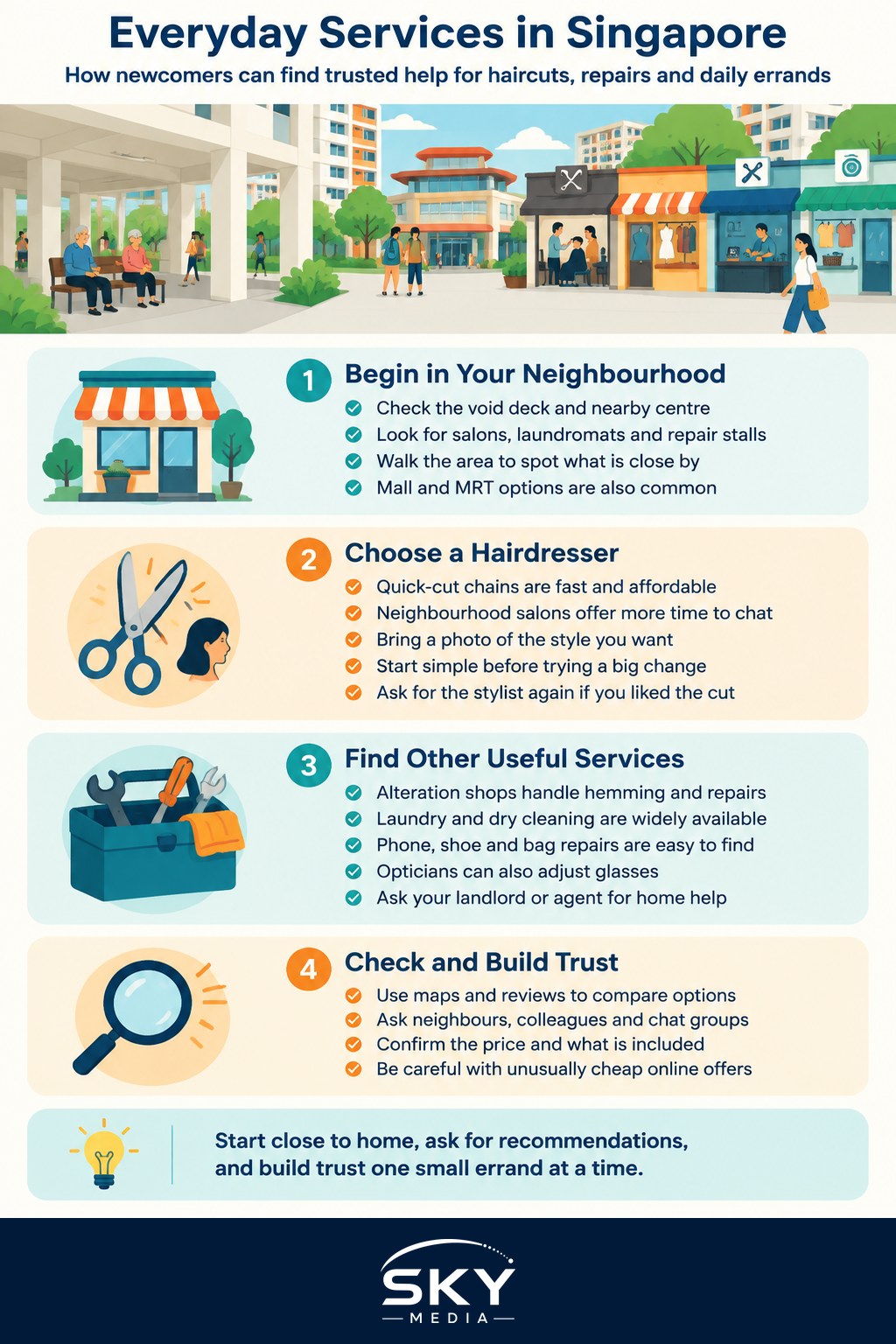
Start with your own neighbourhood
Singapore is dense and convenient, so most of what you need is closer than you think. Every HDB estate has a cluster of shops in the void deck or the nearby neighbourhood centre, and larger towns have a shopping mall within a short walk or bus ride. Take an afternoon to wander your immediate area and simply notice what is there. You will usually find a hair salon, a barber, a laundry and alteration shop, a mobile phone repair kiosk, a locksmith, a key and shoe repair stall, and a small provision shop, all within a few minutes of home.
Neighbourhood businesses in Singapore tend to be steady and long-running, which works in your favour. A salon that has been in the same void deck for years has built its reputation on regulars, and the same is true of the uncle who repairs shoes or the auntie who does alterations. Popping in during a quiet hour to ask a few questions, or to book a first appointment, is completely normal and nobody will mind.
Finding a hairdresser you trust
A haircut is personal, so it is worth a little trial and error. You have plenty of options across the price range. Quick-cut chains found in malls and MRT stations are fast, affordable and good for a simple trim. Mid-range neighbourhood salons offer a fuller service and time to chat about what you want. Higher-end salons in central districts cater to more specific styling and colouring needs.
A few practical tips help the first visit go smoothly:
- Bring a photo of the cut you want. This bridges any language gap far better than words.
- Ask whether the stylist has experience with your hair type and texture, since hair varies a lot across communities.
- Start with something simple before committing to a big change or a colour.
- If someone does a good job, ask for their name and request them next time. Building a relationship with one stylist saves you explaining yourself over and over.
If you have children, look out for family salons and dedicated kids’ corners, which make the whole thing much less stressful.
The other everyday services you will need
Beyond hair, a handful of services quietly keep daily life running. Here is what to look for and where.
- Tailoring and alterations. Small alteration shops handle hemming, taking in, and simple repairs quickly and cheaply. Many are tucked inside malls and neighbourhood centres.
- Laundry and dry cleaning. Self-service laundromats are common, and drop-off laundry and dry cleaning are widely available if you would rather not do it yourself.
- Phone and electronics repair. Mall kiosks and specialist shops handle screen replacements, batteries and general fixes. Ask for a quote before agreeing to any work.
- Shoe and bag repair, and key cutting. The traditional cobbler stall is alive and well in Singapore and remarkably good value.
- Optical and watch services. Opticians double as repair points for glasses, and many can adjust frames on the spot.
- Home help such as plumbers, electricians and aircon servicing. For anything involving your home, your landlord or property agent is often the first person to ask, as they may already have trusted contractors.
How to find and vet a provider
When you do not have word of mouth yet, a little research goes a long way. Online maps and review platforms let you see ratings, opening hours and photos, which is a useful starting filter. Community and neighbourhood chat groups, which you can find once you start joining a neighbourhood or residents group, are gold for honest local recommendations. Colleagues and neighbours are usually happy to share who they use.
Before you commit, especially for anything costing more than a token amount, ask for a clear price upfront, confirm what is included, and pay attention to how they communicate. Trustworthy providers are transparent and unhurried. As with anywhere, be cautious with unusually cheap online offers and never share personal or banking details you do not need to.
Give yourself time to build your circle
You will not find your perfect barber, tailor and repair person in the first week, and that is fine. Think of it as slowly assembling a little team of people who make your life easier. Each small win, a good haircut, a well-hemmed pair of trousers, a quickly fixed phone, adds to the feeling that you belong here. It is all part of the wider work of settling in Singapore and finding your rhythm.
If you are still early in the process, our guide to your first month in Singapore covers the bigger setup tasks that pair naturally with these everyday ones. Take it one errand at a time, and before long the city will feel comfortably familiar.
Frequently Asked Questions
Do I need to tip my hairdresser or repairer? Tipping is not expected in Singapore, and a thank you is enough. Some places add a service charge or include it in the price, so check the bill. A kind word or a repeat visit is the best compliment.
Can I walk in without an appointment, or should I book? Quick-cut shops often take walk-ins, while mid-range and higher-end salons usually prefer a booking, especially on weekends. Call or message ahead to check availability. Appointments also let you ask about price and services in advance.
What can I do if I am unhappy with a haircut or a repair? Speak up politely as soon as you notice, and ask whether it can be fixed or adjusted. Keep receipts and take photos. If the provider refuses to help, a consumer protection body can advise on your options.
How do I find a reliable handyman or aircon servicing company? Ask your landlord, agent, neighbours or colleagues for referrals, then get quotes from a couple of providers. Confirm what the price includes and whether work is guaranteed. Avoid paying a large sum upfront, and keep records of what was done.
Is it worth repairing an old phone or pair of shoes? Often yes when the repair costs a fraction of replacement, as with shoe resoling or a screen fix. Ask for a quote first and compare it with the price of a new one. For old devices, consider whether other parts might fail soon.
Further reading: Using SingPost and Post Office Services as a Newcomer · Finding a Dentist and Optician as a Newcomer