
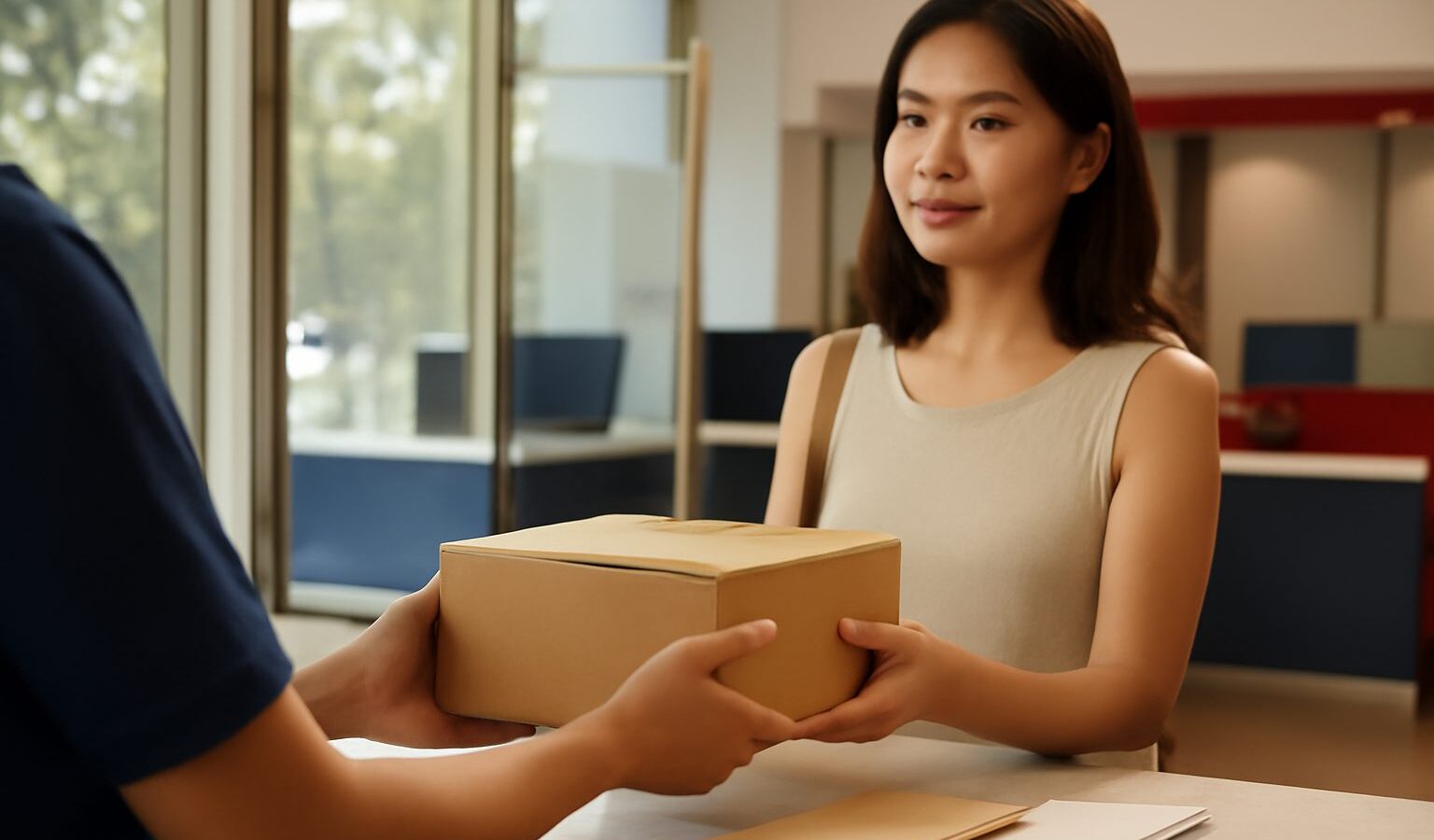
Sooner or later every newcomer needs to post something: a signed form back home, a birthday parcel to family, or a return to an online shop. Getting to grips with SingPost services early saves a lot of queuing and guesswork. SingPost (Singapore Post) is the national postal service, and alongside its post offices it runs parcel lockers, online tools and tracked delivery options that are easy to use once you know how they fit together.
This guide walks through the practical side: sending, collecting and using lockers. Services, prices and branch locations change from time to time, so always check the latest details on the SingPost website or app before you set out.
The Main Ways to Reach SingPost
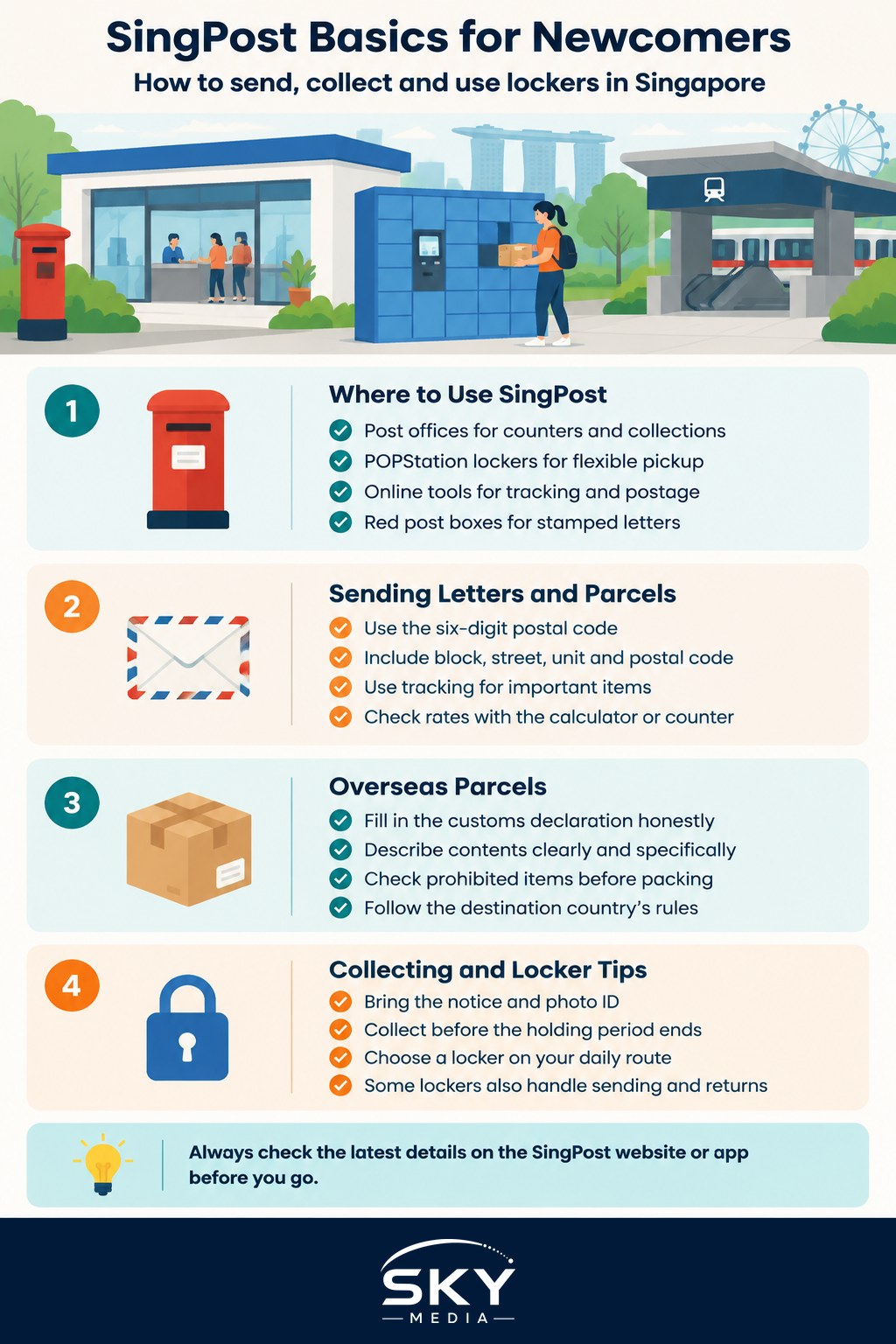
You do not always need to visit a counter. Most everyday tasks can be done in one of these places:
- Post office branches. Staffed counters for buying postage, sending registered or tracked items, posting parcels overseas and collecting items held for you. Branches are spread across the heartland, often inside or next to malls and HDB town centres. Opening hours differ by branch, and SingPost has adjusted its branch network over the years, so check the branch locator before travelling.
- POPStation parcel lockers. Self-service lockers found at MRT stations, malls, community clubs and some HDB estates. You can have parcels delivered to a locker and pick them up at any time the location is open, and some lockers also accept parcels for sending or returns.
- Online and in the app. SingPost’s website and app let you track items, rearrange delivery, find branches and lockers, and, for many services, prepare and pay for postage before you drop the item off.
- Post boxes. The red street post boxes are for letters and small items with postage already paid. Collection times are usually shown on the box.
If you are used to postal or courier apps in China, the logic is similar: track with a number, choose where to collect, and pay online. The difference is that Singapore relies more on lockers and branch pickup than on building-based parcel rooms.
Sending Letters and Parcels
For local letters, a stamp on a correctly addressed envelope dropped into a post box is enough. Singapore addresses use a six-digit postal code, which is the single most important part of the address. For HDB flats and condos, include the block number, street, unit number written mid-line (for example “unit #05-12”) and the postal code. A missing unit number is one of the most common reasons items go astray.
Postage is based on size, weight and destination. If you are unsure, take the item to a counter or use the rate calculator on the SingPost site. Stamps are sold at post offices and at some other retail points.
For anything important, consider a service with tracking or proof of delivery rather than ordinary mail. This matters for documents like signed contracts, school forms or anything you would struggle to replace.
Sending parcels overseas
International parcels need a customs declaration describing the contents and their value. Fill it in honestly and specifically: “clothes” or “snacks” is less helpful than “two cotton T-shirts” or “packaged biscuits”. Vague or incorrect declarations are a common cause of delays at the destination.
Some items cannot be posted at all, or only under conditions, such as batteries, liquids, flammable items, certain foods and medicines. The destination country also has its own import rules. If you are sending food or traditional medicines to family in China, check both SingPost’s prohibited items list and the destination’s customs rules before you pack.
Comparing the Main SingPost Options
| Option | Best for | What to keep in mind |
|---|---|---|
| Ordinary mail via post box | Letters, cards, non-urgent small items | Cheapest, but limited or no tracking |
| Registered or tracked service at a counter | Important documents, valuable items | Costs more, gives proof of posting and tracking |
| POPStation locker pickup | Online shopping when you are out at work | Collect within the time limit stated in your notice |
| Post office collection | Missed deliveries, items needing ID checks | Bring the notice and photo ID, check branch hours |
| International parcel with declaration | Gifts and goods to family overseas | Declare contents accurately, check prohibited items |
Collecting Missed Deliveries
If no one is home when a delivery is attempted, you will usually receive a notification by card, SMS, email or in the app, depending on the sender and service. The notice should tell you where the item is held and how long it will be kept.
A few practical tips:
- Read the notice carefully. It may give the option to rearrange delivery, redirect to a locker or collect from a specific post office.
- Bring photo identification. For counter collection, staff will generally ask for ID that matches the addressee. Newcomers can usually use a passport or their pass card. If someone else is collecting for you, check what authorisation SingPost needs before sending them.
- Do not leave it too long. Uncollected items are returned to the sender after the holding period.
- Check the tracking number. If you have an online order, the seller’s tracking link often shows the same status in more detail.
Using POPStation Lockers Well
Lockers are a lifesaver when you work office hours. When ordering online, many local shops let you choose a POPStation at checkout. You then receive a code or link to open the locker once the parcel arrives.
To get the most out of them:
- Pick a locker on your daily route, such as at your MRT station or near your office, rather than near home if you are rarely home in daylight.
- Check that the locker’s location is accessible when you plan to collect. Lockers inside malls or MRT stations follow the building’s opening times.
- Large or heavy parcels may not fit, and some sellers will not ship certain items to lockers.
- Collect within the stated window, or the item may be moved or returned.
Some lockers also support sending and returns. You prepare the shipment online, print or display the label as instructed, and drop the parcel into a locker compartment.
Other Useful SingPost Services for Newcomers
Beyond sending and collecting, a few services are worth knowing about when you first arrive:
- Mail redirection. If you are moving from a short-term rental to a longer lease, ask SingPost about redirecting mail to your new address for a period. Update your address with government agencies as well, since that is a separate step.
- Holding mail while you travel. If you are going home for a long trip, check whether SingPost can hold your mail rather than letting it pile up in your letterbox.
- Bill and service payments. Some post offices offer payment services. Check what is available at your branch, since this varies.
Remember that SingPost is not the only option. Private courier companies also operate in Singapore and may suit urgent or bulky shipments better. Compare delivery times, insurance cover and tracking before choosing.
Common Newcomer Mistakes to Avoid
- Writing the address in a foreign format or leaving out the postal code.
- Under-declaring the value of a gift parcel to save on duties at the destination, which can cause the parcel to be held.
- Packing lithium batteries, perfume or aerosols without checking the rules.
- Assuming a nearby branch is open on weekends or public holidays without checking.
- Ignoring SMS notices that look unfamiliar. That said, be alert to scam messages pretending to be from SingPost that ask you to pay a small “redelivery fee” through a link. Check any suspicious message directly in the official app or website rather than clicking the link.
Once you have sent your first parcel and collected your first locker delivery, the system becomes second nature. For other everyday set-up tasks, see our guides to using LifeSG and government digital services, finding a hairdresser and everyday services as a newcomer and using self storage in Singapore.
Further reading: Renting a SingPost PO Box in Singapore and How It Works