
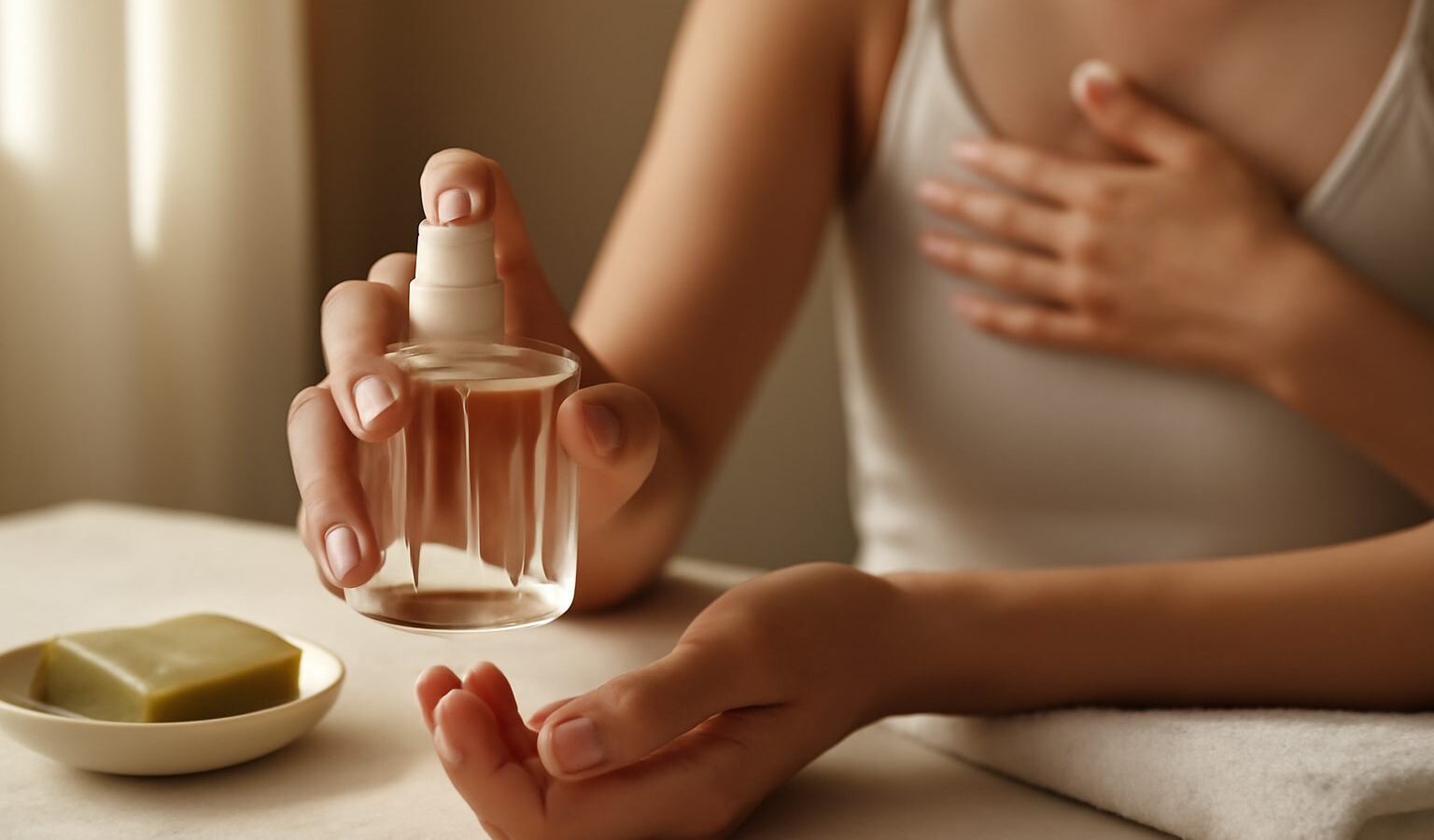
Perfume is one of life’s small pleasures, but if your skin is easily upset, it can also be a source of redness, itching and frustration. Scent is genuinely one of the more common triggers for skin irritation and allergy, which is worth knowing rather than glossing over. If you are navigating fragrance and sensitive skin in Singapore, the aim is not necessarily to give up scent altogether, but to wear it more thoughtfully so your skin stays calm. This guide explains why fragrance can bother sensitive skin, how to test and apply it carefully, and when a reaction is a sign to see a doctor.
A quick note on scope first. This is general cosmetic and self-care information, not medical advice, and it is not a way to diagnose a skin condition. If your skin reacts persistently, or a reaction is severe, please treat that as a reason to seek professional help rather than to soldier on.
Why Fragrance Can Irritate Skin
Fragrance, whether in a perfume or hidden inside a moisturiser or shower gel, is made up of many aromatic ingredients. Some of these are well-recognised as potential irritants or allergens for a portion of people. That does not make fragrance dangerous for everyone, and plenty of people wear scent happily for a lifetime. But for those with sensitive, reactive, eczema-prone or already-compromised skin, fragrance is one of the usual suspects worth watching.
It also helps to know the difference between two things. Simple irritation is a general “this stings or goes red” response that can happen to anyone if a product is strong enough. A true allergy is a specific immune reaction to a particular ingredient, which can develop over time even to something you used to tolerate. Both can look similar on the skin, with redness, itching, small bumps or a burning feeling, and both are your skin’s way of asking you to ease off.
Our local conditions add their own twist. Heat and sweat can carry fragrance into skin folds and make irritation more likely, while the constant switch between humid outdoors and dry aircon can leave the skin barrier a little frayer than usual. When your barrier is stressed, it tends to react more readily to everything, fragrance included. If your barrier already feels sensitised, our guides on sensitive skin care and repairing your skin barrier are useful companions.
One more thing worth flagging is that some fragrance ingredients can react in sunlight, which is a real consideration in sunny Singapore. Applying scent to skin that will be in strong sun, rather than to clothing, can occasionally lead to irritation or marks. When in doubt, keep perfume off sun-exposed skin.
Patch Testing and Wearing Scent Safely
The single most protective habit is patch testing before you commit a new fragrance or scented product to regular use. It is quick and it can save you a lot of grief.
- Dab a small amount on a discreet, low-risk spot such as the inner forearm or behind the ear.
- Leave it for a day or two and watch for redness, itching, bumps or stinging.
- Only carry on if your skin stays comfortable. If it reacts, stop and wash the area gently.
Our step-by-step on how to patch test new skincare applies neatly to scented products too.
Beyond testing, a few gentle habits make a real difference for sensitive skin:
- Never apply fragrance to broken, raw, freshly shaved or already-irritated skin, since damaged skin absorbs and reacts far more.
- Consider spraying scent onto clothing or hair ends rather than directly onto skin, which keeps it further from reactive areas. Do check it will not stain delicate fabric.
- Apply to pulse points on less reactive spots, and start with a light hand. You can always add more.
- Look out for “fragrance” or “parfum” tucked into the ingredient lists of everyday products like lotions and cleansers, and choose fragrance-free versions for those if your skin is very reactive. Learning to read labels helps here, and our guide on how to read a skincare label shows you how.
- Introduce one new scented product at a time, so that if something does upset your skin, you know exactly what to blame.
If a reaction does happen, stop using the product, gently cleanse the area, and let your skin settle with a plain, soothing moisturiser. A mild, one-off sting that fades quickly is usually nothing to worry about.
However, and this is the important part, please see a doctor or dermatologist if a reaction is persistent, keeps coming back, spreads, blisters, is very itchy or painful, or does not settle within a reasonable time. See a doctor promptly for any severe reaction, or if you feel unwell beyond the skin. A professional can work out whether it is irritation or a genuine allergy, and help you identify what to avoid. That is not something to guess at yourself.
To wrap up kindly: fragrance and sensitive skin can absolutely coexist, but it takes a little care. Patch test everything new, keep scent off broken or sun-exposed skin, favour fragrance-free everyday basics, and go gently. And if your skin keeps protesting despite all that, let a doctor take a look rather than pushing through. With a thoughtful approach, you can still enjoy a scent you love without paying for it in redness later.