
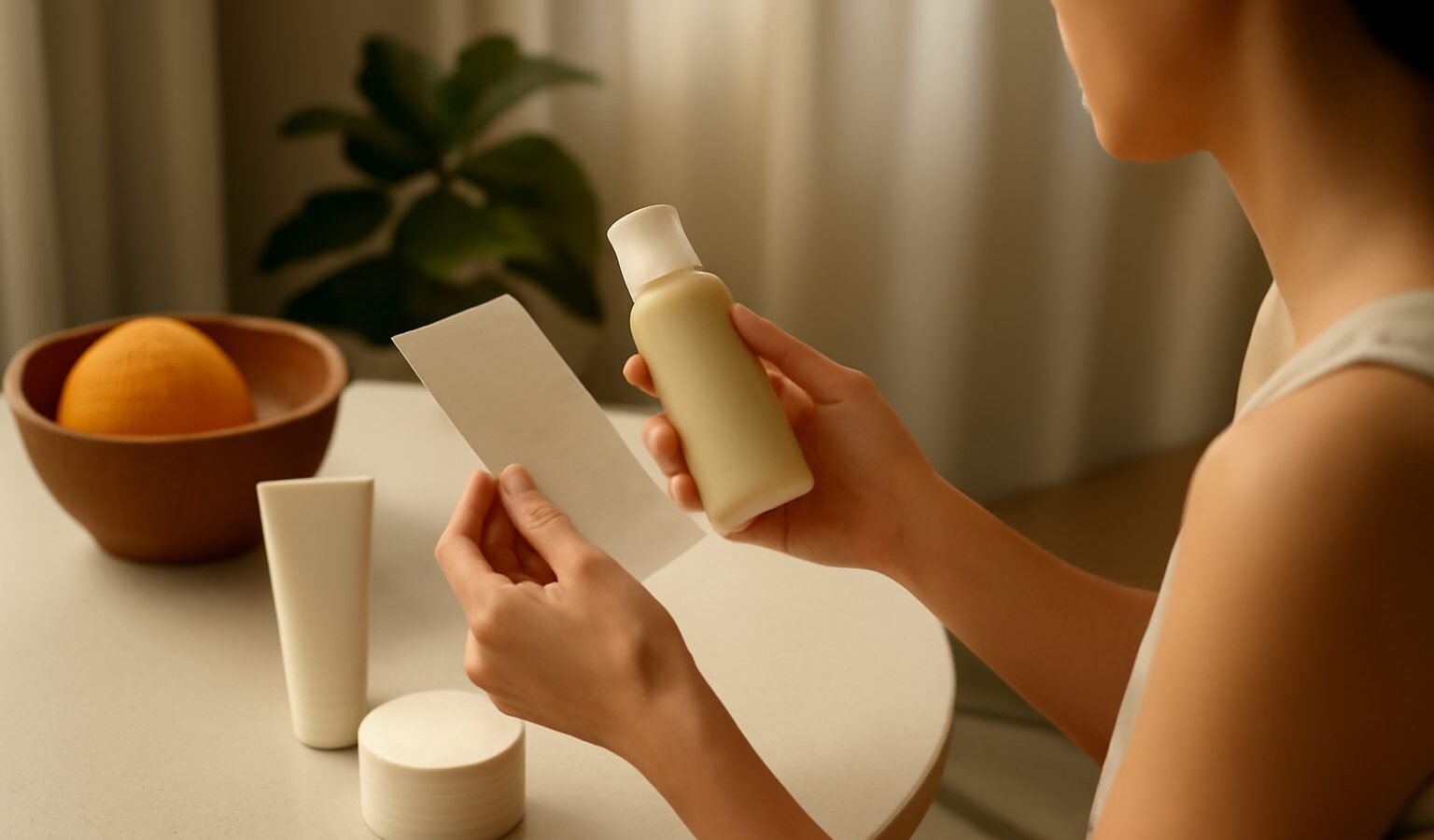
A skincare label can look like a wall of tiny print, half of it in Latin. Yet reading skincare labels well is one of the quietest skills that saves you money and spares your skin. Once you know where to look, you can tell in under a minute whether a product suits oily, humid-climate skin or is likely to sit heavy on your face all day. This guide walks through the parts of a label that actually matter in Singapore, so you can shop with a clear head rather than by the prettiness of the bottle.
Start With the Ingredient List
The ingredient list, often headed INCI (International Nomenclature of Cosmetic Ingredients), is the most honest part of any package. Ingredients are listed in order of quantity, from most to least, down to roughly the one percent mark. After that point, the order stops meaning much, so anything near the tail is present in small amounts.
A few practical habits help:
- Read the first five names. These make up the bulk of the product. If water (aqua) leads, you have a lightweight base, which usually feels better in the heat.
- Spot the workhorses near the top. Glycerin, hyaluronic acid and niacinamide high on the list tend to do real work; the same names right at the bottom are often there for the label, not your skin.
- Watch where fragrance sits. “Parfum” or “fragrance” low down is normal, but if your skin flares easily, a fragrance-free formula is the safer default in our climate, where you sweat and reapply often.
You do not need to memorise chemistry. You need to recognise a handful of names and roughly where they land.
Decode Actives and Their Strengths
Actives are the ingredients doing the heavy lifting: exfoliating acids, retinoids, vitamin C, and the like. Labels vary in how clearly they state strength, so learn the shorthand.
Percentages, when shown, tell you concentration: a 10 percent vitamin C is stronger than a 5 percent one, though stronger is not automatically better for you. AHAs such as glycolic and lactic acid work on the surface; BHA (salicylic acid) suits oily, congested skin common in humidity. Retinol and its relatives are usually listed plainly, but the amount is rarely printed, so start low and slow regardless.
Two safe defaults apply whenever you introduce an active. First, patch test before committing it to your whole face, especially with acids, retinoids and brightening ingredients. Second, wear a daily broad-spectrum sunscreen, because most actives make skin more sun-sensitive and Singapore’s UV stays strong even on grey, hazy days. If a product is not working after a fair trial, or if it stings, peels or reddens beyond mild tingling, stop and speak to a pharmacist or a doctor rather than pushing through.
Read the Claims Without Falling for Them
Front-of-pack claims are marketing, not regulation-grade promises. They are not lies, but they are chosen to sell. A little translation goes a long way.
- “Dermatologically tested” means a skin doctor was involved in testing; it does not guarantee results or that it suits your skin.
- “Non-comedogenic” suggests it is formulated to be less likely to clog pores, useful if you break out in the heat, though no formula can promise this for everyone.
- “Oil-free” does not mean lightweight by default, and “natural” or “clean” have no fixed legal meaning here, so judge by the ingredient list, not the adjective.
- “Hypoallergenic” implies a lower chance of reaction, not zero, which is exactly why patch testing still matters.
Treat claims as a starting hint, then confirm against the ingredient list and how the product actually feels over a couple of weeks.
Check Dates, Storage and Packaging
This is the part most people skip, and it matters more in our heat. Look for the little open-jar symbol with a number and an “M”, such as “12M”. This is the period-after-opening (PAO): how many months the product stays good once opened. A separate printed expiry or “best before” date applies to the unopened product.
Storage cues on the label are worth heeding. In Singapore, bathroom shelves get warm and humid, which shortens the life of actives like vitamin C and retinoids. A cooler, darker spot, or the fridge for a few sensitive products, keeps them stable for longer. Packaging is a clue too: opaque tubes and pump bottles protect delicate ingredients far better than open jars and clear droppers left in the light.
Here is a quick side-by-side of the label parts and what each one really tells you.
| Label element | What it tells you | What to do with it |
|---|---|---|
| Ingredient list (INCI) | What is inside, most to least | Scan the first five names; note where fragrance sits |
| Percentages on actives | Concentration of the active | Match to your tolerance; start low, patch test |
| Front-of-pack claims | Marketing intent, not a guarantee | Verify against the ingredient list, not the adjective |
| PAO symbol (e.g. 12M) | Months usable after opening | Note the date you open it; toss when past |
| Expiry / best before | Shelf life while sealed | Buy fresh; avoid heavily discounted near-expiry stock |
| Storage advice | How to keep it stable | Keep out of heat and light; fridge if advised |
Match the Label to Your Skin and Climate
A label reads differently depending on your skin and the weather it lives in. In year-round humidity, lightweight, water-based textures and gel formulas usually feel more comfortable than rich creams, which can sit greasy and mix with sweat. If aircon dries your skin at work, humectants like glycerin and hyaluronic acid near the top of the list are your friends.
Pay attention to how a formula behaves on you, not only what it promises. A “brightening” serum that stings, or a “lightweight” moisturiser that pills under sunscreen, is not the right label for you, whatever it says out front. When you find combinations that suit you, note the key ingredients so you can repeat the win with other brands, since the same actives appear across price points.
Finally, keep expectations realistic. Skincare supports healthy skin; it does not cure conditions. For persistent acne, eczema, rosacea, stubborn pigmentation, or anything painful, spreading or worsening, and for pregnancy or breastfeeding routines, see a doctor, dermatologist or pharmacist. A label is a shopping tool, not a diagnosis, and reading it well simply means you make calmer, better-informed choices.
Explore More
Once you can read a label, put it to work: use it when choosing a cleanser for your skin type and when choosing a moisturiser for humid weather. Before any new active goes on your face, follow our guide to patch testing new skincare, then slot it in with layering your skincare in the right order.