

Your bouquet is in almost every photo, from the gate crash to the tea ceremony to the banquet march-in, so it has to survive a long, hot day. In Singapore that is a real test. A preserved bridal bouquet, a fresh bouquet and a dried bouquet each handle heat, humidity and handling very differently, and they also differ in what you are left with after the wedding. This guide compares the three on the things that matter here: heat tolerance, cost, weight, look in photos and keepsake value, so you can brief your florist with a clear idea of what you want.
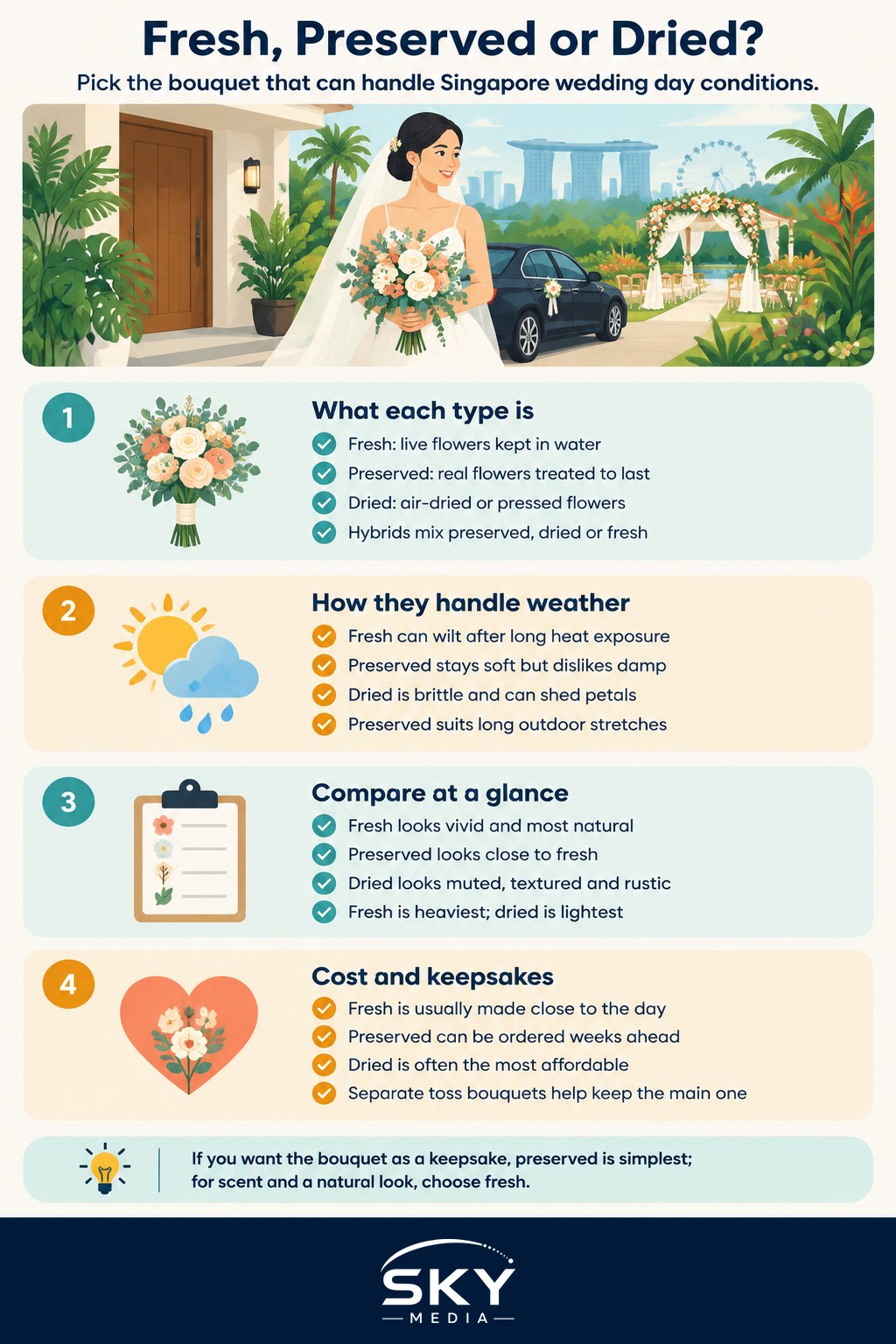
What Each Bouquet Type Actually Is
Fresh bouquets use live, cut flowers kept in water until shortly before the event. They are the traditional choice and give you the widest range of blooms, scent and natural movement.
Preserved bouquets use real flowers that have been treated, usually by replacing the sap and water in the petals with a glycerine-based solution and dye. The flowers stay soft and flexible, keep a fresh look and do not need water. Preserved roses, hydrangeas and some foliage are common; not every flower takes the treatment well.
Dried bouquets use flowers and grasses that have been air-dried or pressed. They are papery, lighter in colour or deliberately muted, and suit rustic, boho or minimalist themes. Pampas grass, bunny tails, statice and dried roses are typical ingredients.
There are also hybrid bouquets that mix preserved focal flowers with dried fillers, or fresh blooms with a few preserved accents. Many florists in Singapore offer these if you ask.
How Each Type Handles Singapore Heat and Humidity
Heat is the biggest practical difference. A typical wedding day here includes outdoor moments (the arrival at the bride’s home, car transfers, solemnisation at a garden venue, outdoor photos) where temperatures and humidity are high.
- Fresh flowers start to wilt once they are out of water for long periods in heat. Hardy blooms such as orchids, roses, carnations and many tropical flowers cope better than delicate ones like hydrangeas, peonies or sweet peas, which can droop within hours. Florists usually condition stems and wrap them, but you may still want a vase of water at each stop.
- Preserved flowers do not wilt because there is no water in them to lose. The catch is the other direction: high humidity can make preserved petals feel slightly damp or cause dye to transfer in rare cases, so keep them out of direct rain and away from very wet hands or light-coloured gown fabric for long periods.
- Dried flowers do not wilt either, but they are brittle. Humidity can soften them and make them limp, and rough handling during gate crash games or car transfers can snap stems or shed petals onto your dress.
If your day involves a lot of outdoor time or long gaps between locations, preserved is the most forgiving. If everything happens in air-conditioned venues, fresh flowers become much easier to manage.
Side-by-Side Comparison
| Factor | Fresh | Preserved | Dried |
|---|---|---|---|
| Heat tolerance | Varies by flower; can wilt within hours outdoors | Very good; no wilting | Good, but becomes brittle or limp |
| Look in photos | Most natural, vivid and dewy | Close to fresh, slightly matte | Muted, textured, rustic |
| Scent | Yes, depending on flowers | Little or none | Little or none |
| Weight | Heaviest, especially with water-soaked stems | Light to moderate | Lightest |
| Lasts after the wedding | Days to about a week | Often a few years with care | Months to years, fades over time |
| Can order early | No, made close to the day | Yes, weeks ahead | Yes, weeks ahead |
| Typical cost | Wide range; imported and seasonal blooms cost more | Often higher per stem than common fresh flowers | Usually the most affordable of the three |
Cost: What Drives the Price
We will not quote prices here, because they change with season, flower origin and florist, but you can understand what drives cost and ask better questions.
- Flower choice. Imported fresh flowers such as peonies, garden roses and ranunculus cost more than locally available orchids or common roses, and prices often rise around Valentine’s Day, Chinese New Year and popular wedding dates.
- Preservation process. Preserved flowers carry the cost of treatment, so the same number of preserved roses usually costs more than fresh ones. You are paying partly for longevity.
- Size and style. A large cascading bouquet uses far more stems and labour than a compact round posy, whichever type you choose.
- Extras. Ribbon wrapping, matching boutonnieres, a second toss bouquet, delivery to more than one address and same-day touch-ups all add to the bill.
A practical way to manage budget is to choose a preserved or dried bouquet for yourself (because you will keep it) and fresh or dried flowers for bridesmaids, corsages and table pieces. Ask each florist for a quote broken down by item so you can compare like for like. For a sense of what local florists offer, see our guide to the best florists in Singapore.
Keepsake Value and What Happens After the Wedding
Many brides want to keep their bouquet, and this is where the three types diverge most.
Fresh bouquets can be kept in a vase for a few days, then either discarded or sent for preservation. Some services press flowers into a frame or set them in resin. If you plan to do this, arrange it before the wedding, because flowers need to reach the preserver quickly, ideally within a day or two, before they brown.
Preserved bouquets are already a keepsake. Displayed indoors, out of direct sunlight and away from humid bathrooms or kitchens, they commonly last a few years. Colours can fade with strong light, and dust settles on petals, so a glass dome or shadow box helps.
Dried bouquets can also be kept, though they tend to fade and shed over time. They suit people who like a softer, vintage look and are relaxed about gradual change.
If you want a bouquet to toss, consider ordering a separate, smaller toss bouquet so you can keep the main one intact.
Choosing the Right Bouquet for Your Day
Ask yourself a few questions before you brief your florist:
- How much of the day is outdoors? More outdoor time favours preserved or hardy fresh flowers.
- Is scent important to you? Only fresh flowers deliver it.
- Do you want to keep it? If yes, preserved is the simplest route; fresh needs a separate preservation step.
- What is your theme? Dried suits rustic and minimalist looks; fresh suits lush, romantic styles; preserved can do either.
- When do you want to finalise? Preserved and dried bouquets can be made and approved weeks ahead, which reduces wedding-week stress and lets you use the bouquet in pre-wedding shoots.
Also think about how the bouquet works with everything else. Make sure the colours suit your gown and the look your bridal makeup artist is planning, and check whether your bridal studio package already includes a bouquet for the pre-wedding shoot, which could be a preserved one you reuse on the actual day.
Practical Tips for the Wedding Day
- Keep fresh bouquets in water in an air-conditioned room until you leave, and ask the florist whether a mister or water vial is suitable for your flowers.
- Do not leave any bouquet in a parked car; the cabin heats up quickly and fresh flowers suffer most.
- Assign a bridesmaid to hold and protect the bouquet during gate crash games and the tea ceremony.
- For preserved and dried bouquets, avoid pressing them against a damp dress or leaving them on wet surfaces.
- Confirm delivery time and address with the florist a few days before, especially if flowers go to more than one home.
Whichever type you choose, ask to see real examples of the florist’s past work in that style, and be clear about which flowers are fresh, preserved or dried in a mixed design.
Explore more: Preparing a Bridal Trousseau in Singapore
Further reading: Bouquet Toss Alternatives for Singapore Weddings