
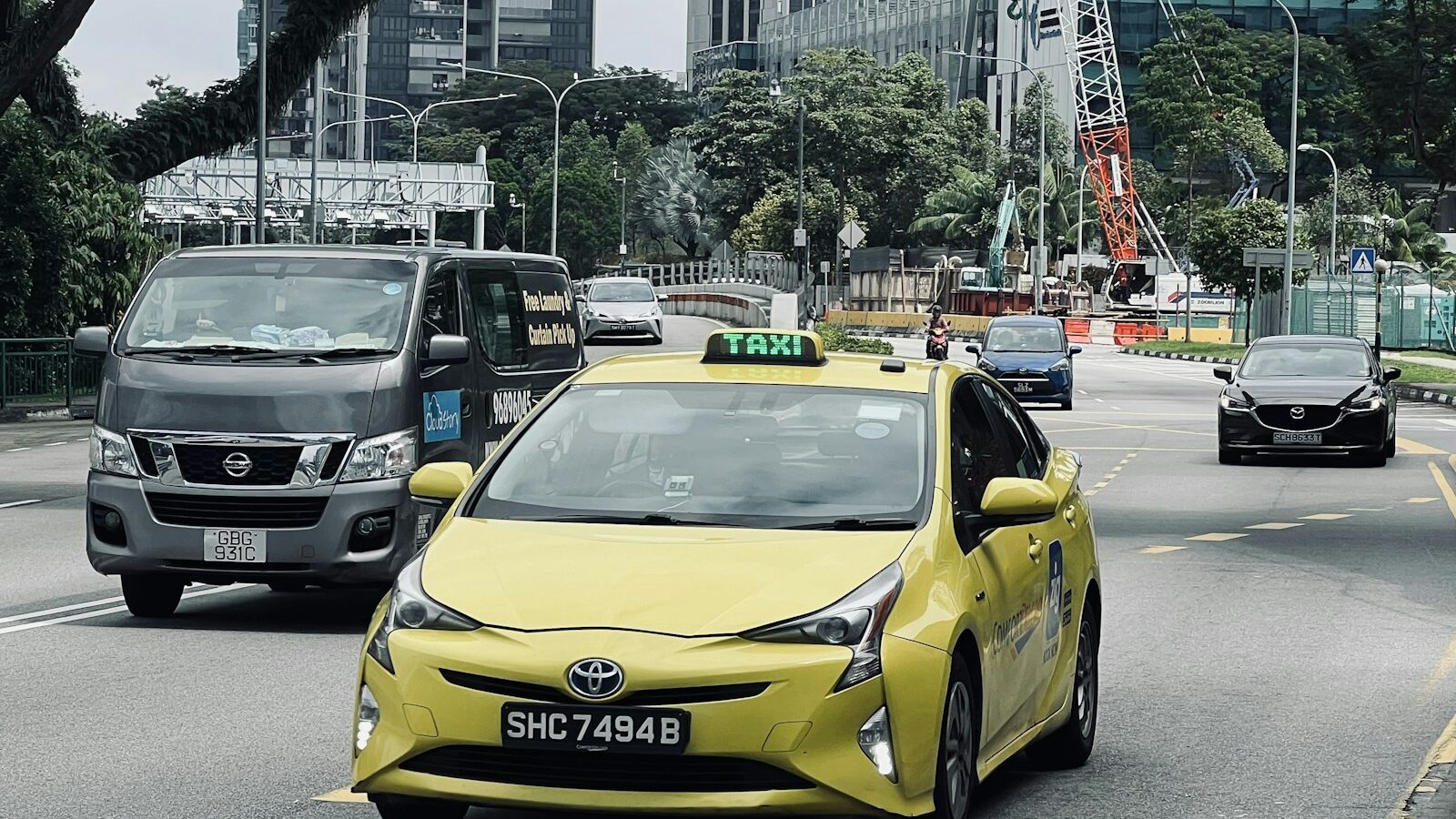
Driving a taxi is one of the more flexible ways to earn a living in Singapore, but you cannot simply pick up a cab and start taking fares. Every taxi driver needs a Taxi Driver’s Vocational Licence, usually shortened to TDVL, issued by the Land Transport Authority (LTA). This guide explains how the taxi vocational licence in Singapore works: who can apply, what the course and tests involve, the medical and background checks, and how the practical side of renting a taxi from an operator works once you are licensed.
It covers taxis only. Driving for a ride-hailing app needs a different licence, the Private Hire Car Driver’s Vocational Licence (PDVL), and the two are not interchangeable.
This is general information, not legal advice. LTA updates vocational licence requirements from time to time, so confirm the current rules, fees and forms on LTA’s official website before you apply.
Who Can Apply for a TDVL
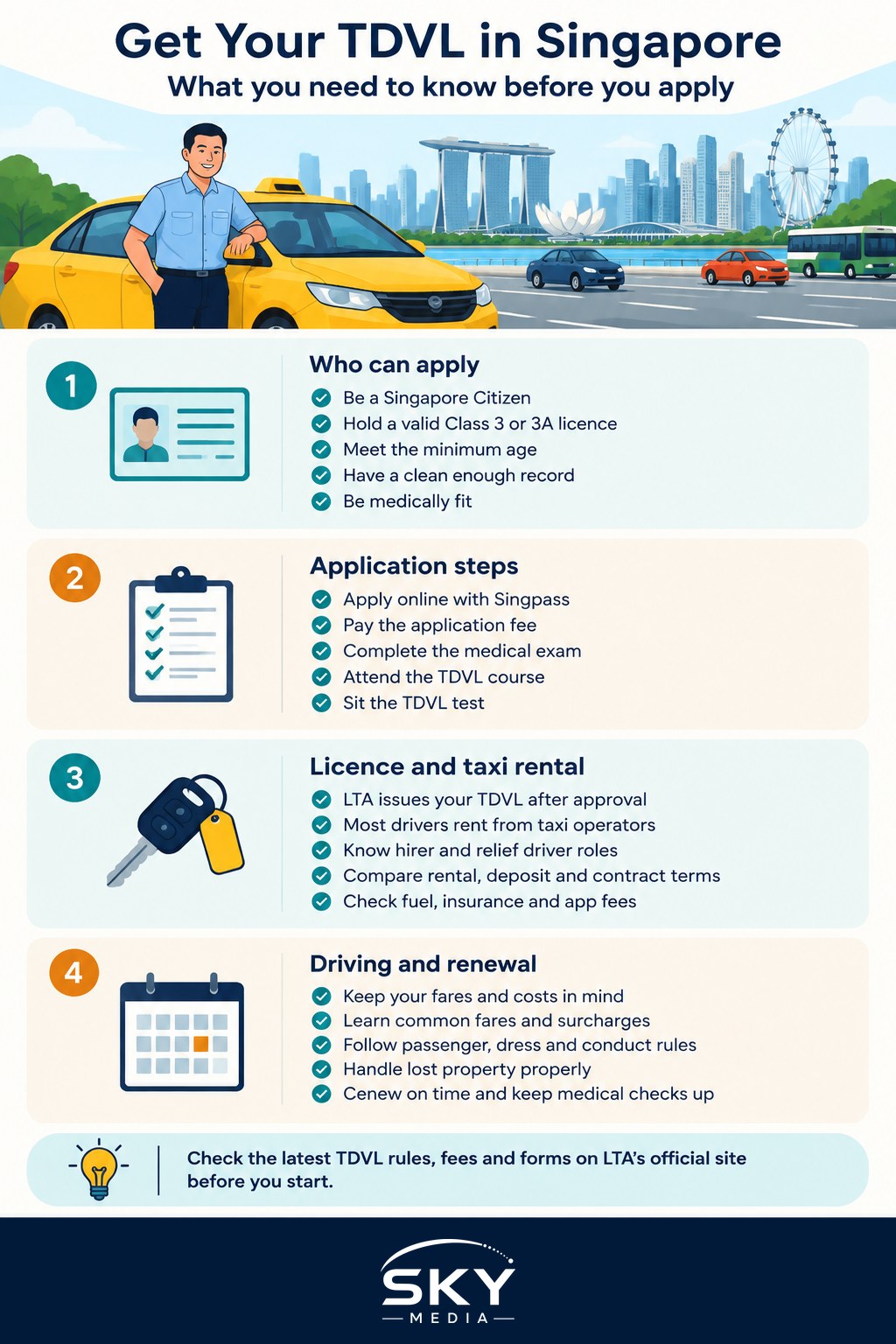
LTA sets the eligibility criteria, and they are stricter than for an ordinary driving licence because you will be carrying paying passengers. In broad terms, applicants are expected to:
- Meet the citizenship requirement. The TDVL has generally been open to Singapore Citizens. Check LTA’s site for the current position before you start.
- Meet the minimum age. The minimum age for a taxi licence is higher than for a regular driving licence. There is also an upper age limit for vocational licence holders, with extra medical checks as drivers get older.
- Hold a qualifying driving licence for long enough. You need a valid Singapore Class 3 or 3A licence, held for a minimum period. If you only recently passed, read up on the probationary driving licence rules first, because you will need to be well clear of that stage.
- Have a clean enough record. LTA screens applicants for serious traffic offences, driving demerit points and certain criminal records. A poor record can lead to rejection.
- Be medically fit. A medical examination by a registered doctor is part of the application.
Thresholds can change, so confirm where you stand on LTA’s vocational licence pages before paying for anything.
The Application, Course and Tests Step by Step
The TDVL process runs in a fixed order, so it helps to know the sequence in advance.
- Submit your application to LTA. Applications are made online through LTA’s vocational licence services, logging in with Singpass. You pay an application fee at this stage. LTA then checks your eligibility and records.
- Complete the medical examination. You will be asked to see a doctor for a medical exam within a set window. The doctor submits the results. Older applicants face repeat checks as they age.
- Attend the TDVL course. Once LTA approves your application in principle, you sign up for the taxi driver course at an LTA-appointed training centre. The course covers areas such as road safety and defensive driving, Singapore’s road network and key locations, taxi regulations and fare structures, handling passengers including those with disabilities, and customer service.
- Sit the TDVL test. After the course you take a written or computer-based test at the training centre. It checks your knowledge of the rules, local geography and service standards. If you fail, you can retake it, but there are limits and fees for re-tests.
- Receive your licence. When you pass and all checks are cleared, LTA issues your TDVL. You must carry or display it as required whenever you drive a taxi.
The course is usually spread over several sessions, so plan around your current job. Ask the training centre for the schedule, the language options for the course and test, and what happens if you miss a session.
| Stage | What you do | What to check first |
|---|---|---|
| Application | Apply online with Singpass and pay the fee | Current eligibility criteria and fee on LTA’s site |
| Medical exam | Visit a doctor within the given window | Which form to bring and the deadline |
| TDVL course | Attend all sessions at an appointed centre | Course schedule, language and course fees |
| TDVL test | Sit the test after completing the course | Re-test rules and how long results take |
| Licence issued | Start driving with a taxi operator | Renewal date and any refresher training |
How Renting a Taxi From an Operator Works
Most new taxi drivers in Singapore do not own their cab. Taxis belong to licensed taxi operators, and drivers rent them. Before committing, it is worth understanding the main arrangements:
- Hirer. The main driver who rents the taxi under a contract with the operator, usually paying a daily rental. The hirer is responsible for the vehicle during the rental and often picks the shift pattern.
- Relief driver. A second driver who shares the same taxi with a hirer, usually driving the opposite shift. Rental is split according to the private arrangement between hirer and relief driver, within the operator’s rules.
- Single-shift or double-shift. A single-shift taxi is driven by one person; a double-shift taxi is shared by two drivers, which lowers each person’s rental cost but needs good coordination on handover times and fuel.
When comparing operators, ask about:
- Daily rental and what it covers, such as insurance, maintenance and the in-car equipment.
- Fuel or charging arrangements, especially for electric or hybrid taxis.
- Insurance excess you must pay if there is an accident, and how claims are handled.
- Minimum contract period and deposit, plus the penalties for ending early.
- Booking app and payment systems used in the car, and any commission on app bookings.
- Incentives for new drivers, which some operators offer for a limited period.
Rental rates and incentives change often, so compare the written terms rather than headline figures before you sign.
Earning, Fares and Passenger Rules You Need to Know
Your earnings are fares and booking income, minus rental, fuel or charging, and any other costs. Weekly hours, how well you know the roads, and the time of day you drive all make a big difference.
Taxi fares in Singapore are metered, with flag-down fares, distance and waiting charges, plus surcharges at certain times and places. Passengers often ask about them, so get familiar with the main ones. Our guide to taxi surcharges in Singapore explains them from the passenger’s side, which helps you answer questions clearly.
Day-to-day rules that new drivers sometimes miss include:
- Do not refuse passengers without good reason, and follow the rules on picking up and dropping off at taxi stands and restricted zones.
- Display your licence and follow the dress and conduct standards set by LTA and your operator.
- Handle lost property properly. Items left in your cab should go back to the operator through its lost-and-found process.
- Keep your record clean. Vocational licence holders face a separate demerit system, and too many points can lead to suspension or revocation.
Keeping and Renewing Your Licence
A TDVL is not permanent. It must be renewed periodically, and you may need refresher training before renewal. Older drivers need regular medical checks to keep driving. LTA sends reminders, but it is your responsibility to renew on time; driving a taxi with an expired vocational licence is an offence.
If you later want to drive private-hire cars too, check LTA’s current rules rather than assuming one licence covers the other.
Is Taxi Driving Right for You?
Taxi driving suits people who enjoy the road and dealing with the public. Hours are flexible, but income depends on how much you drive, and rental is due even on slow days. Before you apply, talk to current drivers, compare at least two operators, and work out a realistic weekly budget.
If you are still exploring options, our guide to learning a vocational or trade skill covers other hands-on career paths in Singapore. Whichever you choose, start with the official source: LTA’s vocational licence pages carry the latest eligibility rules, fees and course details.
Frequently Asked Questions
Is a taxi licence the same as a licence for driving Grab or other private hire cars? No. Taxis need a Taxi Driver’s Vocational Licence, while ride-hailing needs the Private Hire Car Driver’s Vocational Licence, and the two are not interchangeable. If you want to do both, check LTA’s current rules rather than assuming one covers the other.
What happens if I fail the TDVL test? You can retake it, but there are limits and fees for re-tests. Ask the training centre about the re-test rules, how long results take and the language options for the test before you book.
Who pays for the taxi, petrol and insurance if I rent from an operator? You rent the taxi, usually paying a daily rental, and the contract sets what that covers, such as insurance, maintenance and in-car equipment. Fuel or charging arrangements and the accident insurance excess vary, so compare written terms from at least two operators.
What is the difference between a hirer and a relief driver? A hirer rents the taxi under a contract with the operator, while a relief driver shares the same taxi with the hirer, usually on the opposite shift. Rental is split by private arrangement within the operator’s rules, which needs good coordination on handover times and fuel.
Can I lose my taxi licence if I have too many demerit points? Yes. Vocational licence holders face a separate demerit system, and too many points can lead to suspension or revocation. A TDVL must also be renewed periodically, and driving a taxi with an expired vocational licence is an offence.
Official sources: Land Transport Authority (LTA)
Further reading: Becoming a Private-Hire Driver in Singapore