

Driving for a ride-hailing app looks simple from the outside: sign up, switch on the app, start earning. In practice, becoming a private hire driver singapore involves a licence, an approved vehicle, the right insurance, and a clear head about costs. This guide walks through the pieces in plain language so you know what to sort out before your first trip. It is general information, not financial or legal advice, and the exact rules can change, so always confirm current requirements with the Land Transport Authority (LTA) and the platform you plan to drive for.
The PDVL and who can drive
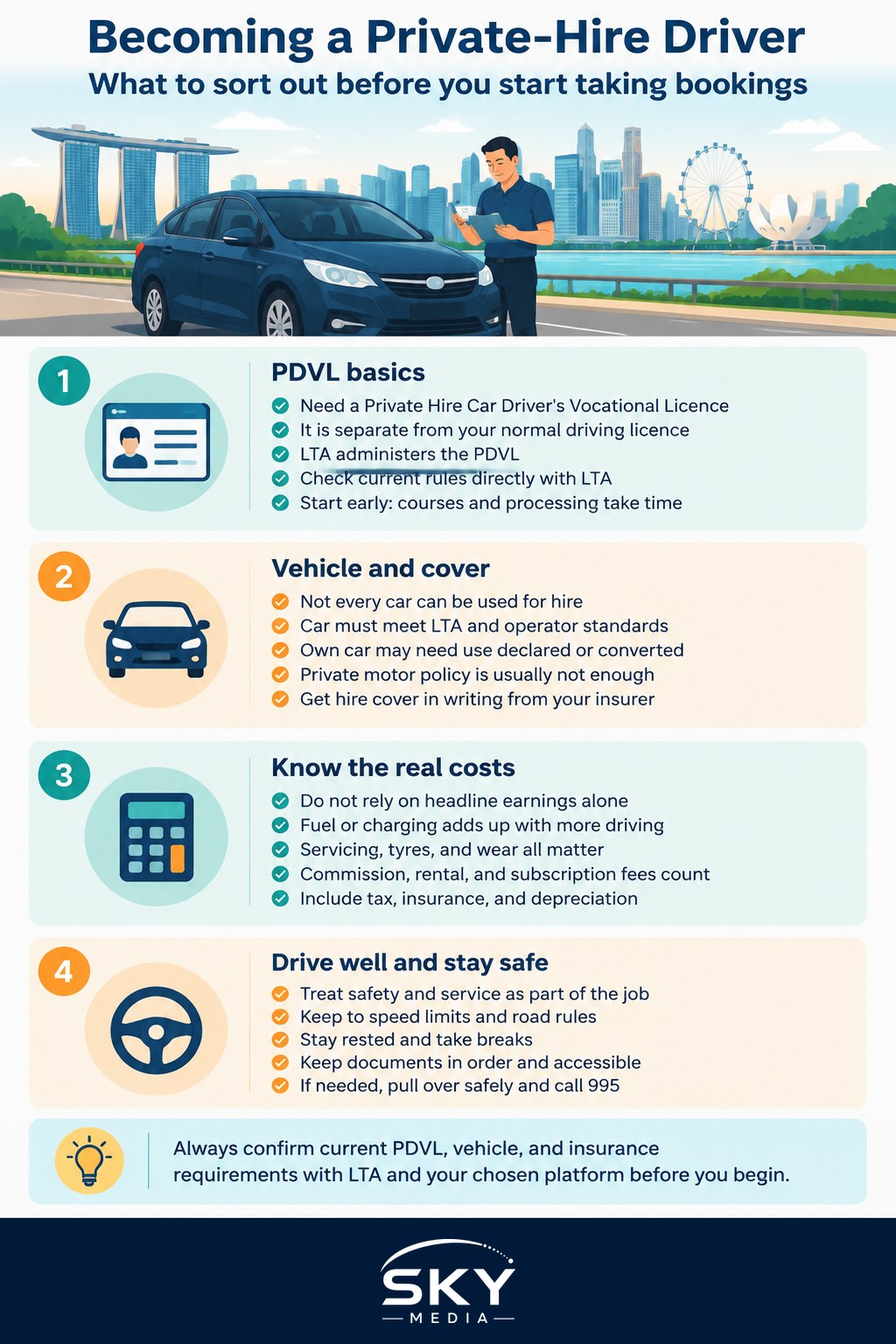
To carry paying passengers on a ride-hailing platform, you generally need a Private Hire Car Driver’s Vocational Licence (PDVL). This is separate from your normal Class 3 or 3A driving licence and is administered by LTA. The idea is that anyone driving members of the public for hire meets a basic standard for safety and conduct.
Requirements typically cover things like holding a qualifying driving licence for a minimum period, being medically fit, passing a required course and test, and meeting background and residency conditions. Because eligibility criteria and the application steps are set by LTA and are updated from time to time, do not rely on what a friend told you a few years ago. Check the current PDVL requirements directly on the LTA or OneMotoring channels, and start early, since courses and processing take time.
The platform itself may add its own onboarding steps on top of the PDVL, such as verifying your documents, a short orientation, or standards for ratings and conduct. Treat the licence as the legal baseline and the platform terms as the commercial layer on top.
The vehicle and insurance
Not every car can be used for private hire. Vehicles used to carry paying passengers usually need to be properly registered or licensed for that purpose, and they must meet the standards set by LTA and, in many cases, the operator. If you drive your own car, you may need to declare or convert its use; if you rent one through a fleet or the platform’s partner, that vehicle should already be set up for hire.
Insurance is the part people most often get wrong. A normal private motor policy is usually not enough once you carry paying passengers. You generally need coverage that specifically includes private-hire or point-to-point use, and driving without the right cover can leave you personally exposed after an accident. Speak to your insurer, tell them exactly how the car will be used, and get the correct policy in writing. Our overview of car insurance in Singapore explains the general types of cover, and it is worth understanding your insurance excess before anything goes wrong.
Counting the real costs
The headline earnings from ride-hailing rarely reflect what lands in your pocket. We will not quote income figures, because they vary widely by hours, area, demand, and the platform’s own fees, all of which change. What matters is that you count the costs honestly.
Think about:
- Fuel or charging, which rises the more you drive.
- Servicing, tyres, and wear, since a hire car clocks far more mileage than a private one.
- The platform’s commission and any rental or subscription fees.
- Insurance, road tax, and, if you own the car, depreciation and financing.
Running the numbers like a small business keeps you honest. Our guide to lowering your car running costs has practical ideas that matter even more when the car is your income. If you are weighing whether to rent or use your own vehicle, reading up on renting a car in Singapore helps you compare arrangements.
Driving well and staying safe
A vocational licence is a floor, not a ceiling. The best private-hire drivers treat safety and service as the job. Keep to speed limits and road rules, stay rested, and do not chase incentives to the point of driving tired. Long hours behind the wheel bring real fatigue risk, so build in breaks.
Keep your documents in order and accessible, maintain the car properly, and be clear and courteous with passengers. If something goes wrong on the road, follow the calm basics: pull over safely, use hazard lights, and call for help, with 995 for emergencies.
The bottom line
Becoming a private hire driver singapore is achievable, but it rewards preparation over impulse. Get the PDVL sorted through LTA, make sure the vehicle is properly set up for hire, and lock down insurance that actually covers paying passengers. Count your true costs before you count your earnings, and confirm every current requirement with LTA and your chosen platform rather than assuming. Do that, and you start with clear eyes and a solid foundation.
Official sources: Land Transport Authority (LTA)
Further reading: Driving for Grab or Gojek: The PDVL Explained