
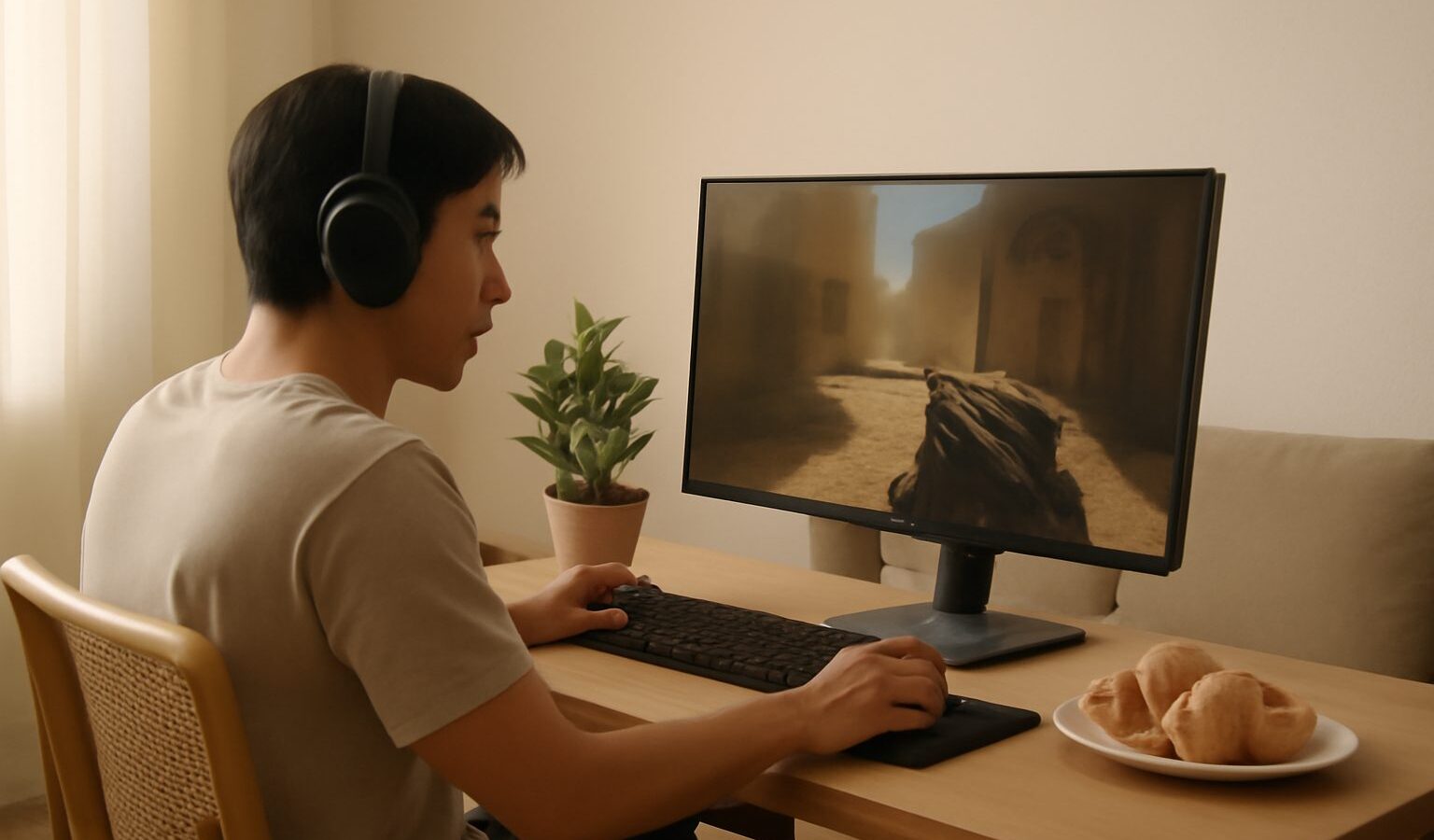
If you have watched someone play a shooter and felt curious but slightly lost, this guide is for you. FPS games, short for first-person shooters, are titles where you see the action through the eyes of your character, usually holding a weapon or tool at the bottom of the screen. The letters can be confusing, because FPS also means frames per second, a measure of how smoothly a game runs. Here we mean the game type. FPS games are among the most popular in the world, they run on almost every device, and you can start with nothing more than a phone or the console already in your living room. This is a warm, no-pressure introduction for complete beginners in Singapore.
What FPS Games Actually Are
In a first-person shooter, the camera sits behind your character’s eyes, so the view feels like you are really there, looking down your own arms. You move with one hand and aim with the other, whether that is a mouse, a controller stick or a thumb on a touchscreen. The genre covers a huge range, from fast, arcade-style matches to slow, tactical rounds where a single mistake ends your turn.
Most FPS games fall into two broad camps. PvP, or player versus player, pits you against other real people online, which is exciting but competitive. PvE, or player versus environment, sends you against computer-controlled enemies, often with a story or co-operative missions you can tackle with friends. Beginners often enjoy PvE first, because you can learn the controls without anyone rushing you. Many popular shooters offer both, so you are never locked into one style.
Why FPS Games Appeal to Beginners
The appeal is immediate. The controls are intuitive, the feedback is instant, and a single match can last just a few minutes, which suits a quick break between classes, chores or work. You do not need a deep knowledge of stories or characters to enjoy a round, and the best titles ease you in with tutorials and practice modes.
There is also a strong social side. Voice chat and teamwork make shooters a lively way to spend time with friends, whether they are sitting in the same HDB flat or logging in from across the island. Singapore has an active competitive scene too, with community tournaments and gaming cafes that host regular sessions, so there is a clear path from casual play to organised events if you ever want it. None of that is required, though. Plenty of players simply enjoy a relaxed match or two in the evening.
What You Need to Start in Singapore
You can begin an FPS with gear you probably already own. A recent smartphone runs many mobile shooters well, and any current console or a capable laptop opens up the bigger titles. If you decide to invest later, buy generically and check current specs and prices at a local IT mall or online, because hardware changes fast. A basic setup looks like this:
- A device: a phone, a console, or a desktop or laptop that meets the game’s stated requirements.
- A stable connection: home fibre broadband from a local ISP is ideal, and a wired network cable beats Wi-Fi for steadiness.
- Simple controls: a controller for console, or a mouse and keyboard for desktop, where a mid-range mouse is plenty to start.
- Optional comfort: a headset for team chat and a supportive chair for longer sessions.
One term worth learning early is ping, sometimes called latency, measured in milliseconds. It is the delay between your action and the game’s response. Lower is better. Choosing a server near Singapore or in the Southeast Asia region keeps your ping low and your matches fair, while a distant server can make you feel a step behind.
Choosing Your First FPS Game
The best first shooter is one that matches your mood and your gear. Some are frantic and forgiving, others are slow and punishing. Rather than name specific titles, which come and go, think about the experience you want. The table below maps common styles to what suits a beginner.
| Style of FPS | What it feels like | Good for a beginner because |
|---|---|---|
| Casual arcade shooter | Fast, colourful, respawn quickly | Mistakes cost little, so you learn by doing |
| Co-op PvE campaign | Team up against the computer | No pressure from strangers, friendly pace |
| Tactical PvP shooter | Slow, careful, one life per round | Rewards patience once you are ready |
| Battle royale | Many players, last one standing | Every match is different and free to try |
Try a free title first so you risk nothing but time. Spend an hour in the tutorial and a practice range before jumping into live matches, and switch off in-game voice chat until you feel comfortable. There is no shame in playing against bots while you find your feet.
Skills That Help You Improve
Getting better at FPS games is mostly about small, repeatable habits rather than talent. Aim is the obvious one. Practise moving your crosshair smoothly to a target and stopping cleanly, rather than flicking wildly. Most games have a training range for exactly this. Keep your sensitivity, the speed at which your view turns, on the lower side at first, so your aim is steady and predictable.
Beyond aim, awareness wins matches. Learn the map, listen for footsteps and reloads, and keep an eye on where teammates are. Communicate simply and kindly: call out what you see, not what someone did wrong. A few practical pointers:
- Warm up in a practice range for a few minutes before ranked matches.
- Use headphones so you can hear direction and distance.
- Watch a replay or a skilled streamer to learn positioning.
- Change one habit at a time, so you can tell what is working.
Improvement is gradual, and everyone has rough days. Judge yourself against last month, not against the top players.
Playing Comfortably and Staying Well
FPS games can be gripping, so it pays to build healthy habits from the start. Sit with your screen at eye level and your wrists relaxed, take a proper break every hour, and follow the 20-20-20 rule for your eyes: every 20 minutes, look at something about 20 feet away for 20 seconds. Keep water nearby, stretch your shoulders, and protect your sleep by finishing well before bedtime.
Online, protect yourself as you would anywhere. Do not share personal details in voice or text chat, be wary of strangers who ask you to move to another app, and report scams to ScamShield or the Police. If a game ever stops being fun, or if gaming starts to affect your sleep, studies, work or relationships, it is fine to step back, and you can reach out to a doctor, a counsellor, or mindline at 1771 or mindline.sg for a chat. Games are meant to be one of the good parts of your week, not a source of stress.
Explore more
Ready to widen your library? If storytelling appeals more than reflexes, try getting into RPGs, or think tactics with getting into strategy games. To play alongside friends, see co-op and couch multiplayer games, and when you want to sharpen up, read how to improve at competitive games.