
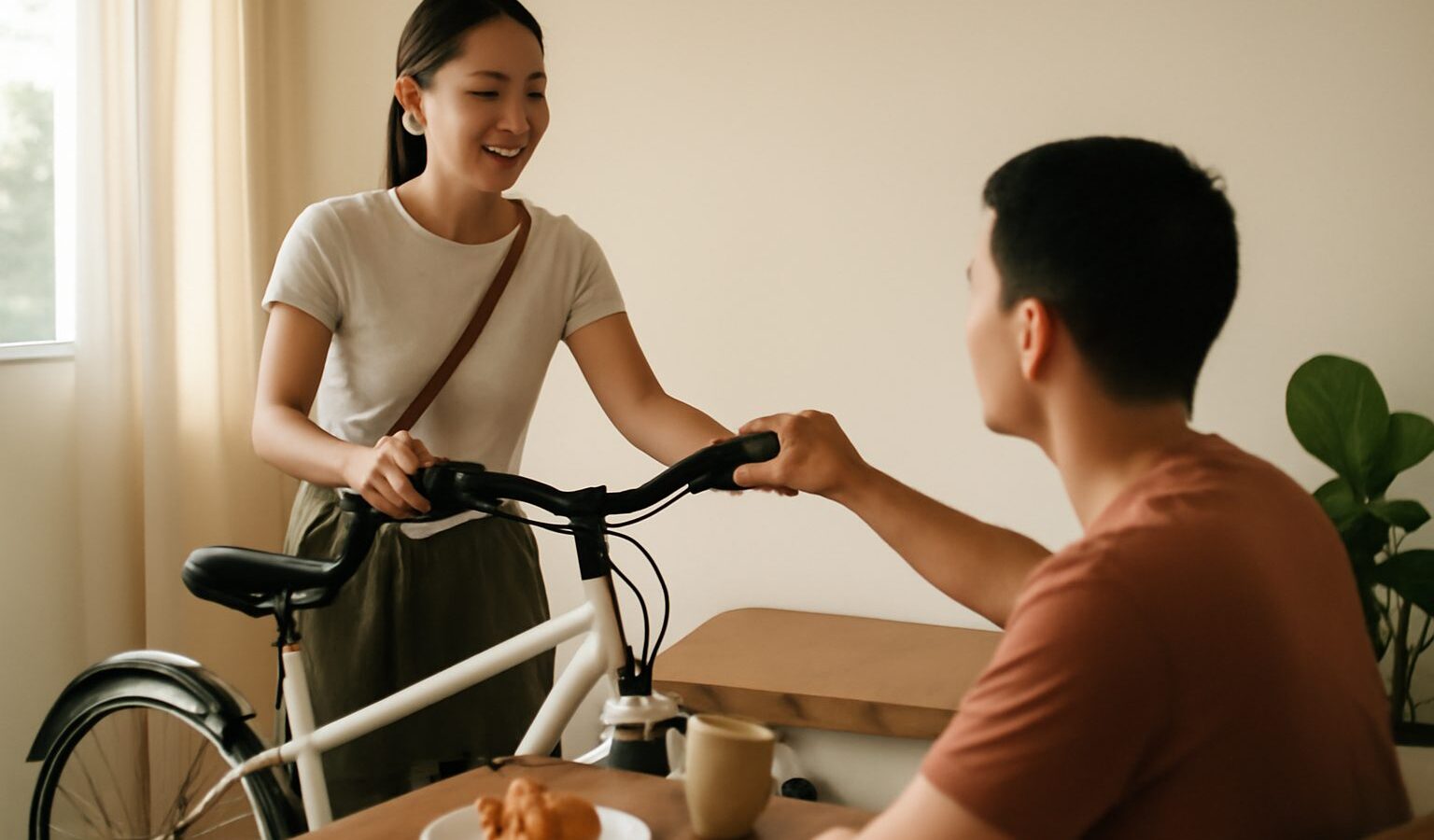
Going car-lite does not mean swearing off cars forever. It simply means leaning on them less, and reaching first for the MRT, a bus, a bicycle or your own two feet before you reach for the keys. In a city as compact and well-connected as Singapore, that shift is easier than it sounds, and it tends to pay you back in money, time and a lighter footprint. This is a beginner-friendly guide to trimming your car use without turning your life upside down.
The honest starting point is that transport is one of the biggest slices of a household’s carbon footprint, and a private car is usually the heaviest part of it. You do not have to give up the convenience of driving entirely to make a real dent. Even swapping a handful of trips each week for greener options adds up over a year.
What Car-Lite Actually Means Here
Singapore has made “car-lite” an explicit national ambition, woven through the way new towns, cycling paths and transport nodes are planned. For a resident, it lands as a spectrum rather than an all-or-nothing choice.
At one end, you keep your car but use it deliberately: grocery runs, family outings, the occasional trip that public transport handles poorly. At the other end, you go car-free and rent or share a vehicle only when you genuinely need one. Most people who go car-lite sit somewhere in the middle, and that is perfectly fine. The goal is fewer car kilometres, not guilt.
It helps to know why this matters beyond your own wallet. Fewer cars on the road means less congestion, cleaner air near void decks and schools, quieter streets, and lower emissions. When you do drive, the electricity or fuel behind the car still has a footprint, so understanding where your electricity comes from is a useful companion to this topic, especially if you are weighing up an electric vehicle later.
The Options You Already Have
The reason car-lite living works so well here is that the alternatives are genuinely good. You are not being asked to sacrifice; you are being handed a menu.
- Trains and buses. The MRT and bus network reaches most of the island, runs frequently, and spares you the search for parking. A contactless card or your phone is all you need to tap in.
- Cycling and personal mobility. Park Connector Networks and cycling paths keep growing, and folding bikes travel on trains and buses within the current rules. For short first-and-last-mile hops, a bicycle often beats a car door to door.
- Walking. Sheltered walkways and covered linkways make short trips comfortable even in the heat and sudden downpours. Many errands within your own town are a ten-minute stroll.
- Car-sharing and rental. Pay-per-use car-sharing lets you book a vehicle by the hour for the odd IKEA trip or airport run, so you get a car when you need one without the fixed costs of owning one.
- Ride-hailing and taxis. For late nights, heavy loads or awkward routes, an occasional booked ride is far cheaper than a car sitting idle in a carpark all week.
Check LTA for the current rules on cycling paths, personal mobility devices and where folding bikes are allowed, since these are reviewed from time to time.
Weighing the Trade-Offs Honestly
Car-lite living is not automatically better for every trip. It shines for commuting and solo journeys and struggles for bulky loads, very late nights or trips to far-flung corners. Being clear-eyed about this keeps you from feeling let down.
| Trip type | Car-lite option that fits | Where a car still wins |
|---|---|---|
| Daily commute to a town centre or CBD | MRT or bus, or bicycle for short hops | Rarely, unless your route is poorly served |
| Weekly grocery shop | Trolley plus bus or walk, or delivery | Big monthly stock-up with heavy items |
| Family day out | Train to the destination, walk around | Multiple young children plus gear and prams |
| Airport or furniture run | Car-sharing or a booked ride | Frequent odd-hour trips with lots of luggage |
| Elderly or unwell family member | Booked ride door to door | Regular medical trips needing flexibility |
The pattern is clear: keep the greener default, and reach for a shared or hired car only for the trips it genuinely suits. That way you are not paying to own a vehicle that spends most of the week parked.
Easing Into It Without the Stress
You do not need to sell the car this weekend. Try a gentler on-ramp.
- Track your trips for two weeks. Jot down every car journey and ask which ones a bus, train or bicycle could have covered comfortably. You will usually spot a few obvious swaps.
- Pick one recurring trip to convert. The commute is the classic candidate because it repeats daily and rewards you fast.
- Sort out your gear. A good water bottle, a compact umbrella, a breathable bag and comfortable shoes make walking and transit far more pleasant in our climate.
- Plan for the heat. Travel with sheltered routes in mind, keep a small towel handy, and give yourself buffer time so you are not rushing in the humidity.
- Set a realistic target. Perhaps two car-free days a week to start. Celebrate hitting it rather than fixating on the trips you still drive.
If you are thinking further ahead, a household that has already gone car-lite is in a strong position to decide whether to keep any car at all, or to move to an electric vehicle used sparingly. Car-lite first, then cleaner car, is a sensible order.
Saving Money and Making It Stick
The financial case is often the quiet clincher. Owning a car here carries substantial fixed costs before you have driven a single kilometre, and those costs do not shrink when the car sits idle. Shifting trips to transit, cycling and occasional sharing turns many of those fixed costs into small variable ones you only pay when you travel. Because prices, schemes and incentives change, treat any figures you read as a prompt to check the current official sources rather than gospel, and look to LTA for transport schemes.
To make the habit durable, fold it into your wider routine instead of treating it as a standalone project. Batch errands into a single loop on foot or by bus, keep a reusable bag and bottle by the door, and borrow bulky one-off items rather than driving to buy them, perhaps from a library of things. Small systems like these are exactly what a sustainable daily routine is built from, and they make the greener choice the easy one.
Going car-lite is one of the highest-impact green habits available to an ordinary Singapore resident, precisely because the alternatives are so good and the city is so walkable and connected. Start with one trip, keep what works, and let the savings and the calmer commute do the convincing.
Related across Sky Media: Cutting Down on Salt and Sodium: A Practical Everyday Guide