
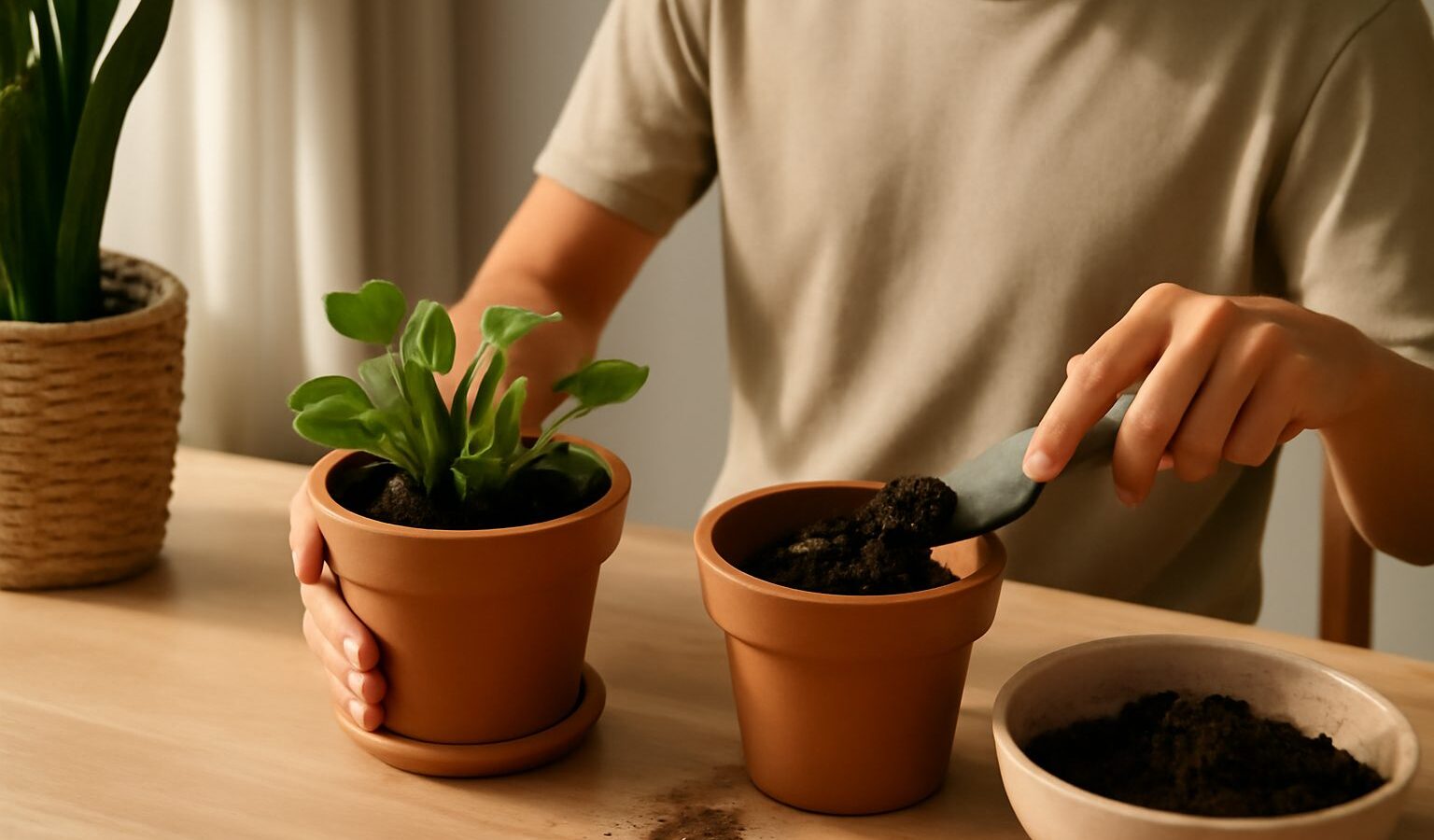
Few plants delight a curious mind like the snapping traps of a Venus flytrap, and it is easy to see why they fly off nursery shelves. Yet a Venus flytrap in Singapore has a reputation for dying within weeks, not because it is delicate but because almost everything a normal houseplant wants is wrong for it. This is a bog plant that craves blazing sun, drinks only pure water, and feeds itself. Get those three things right and it is genuinely tough. Treat it like a fern on a shady shelf and it will quietly starve. Here is how to keep yours thriving.
Light, Water and the Right Pot
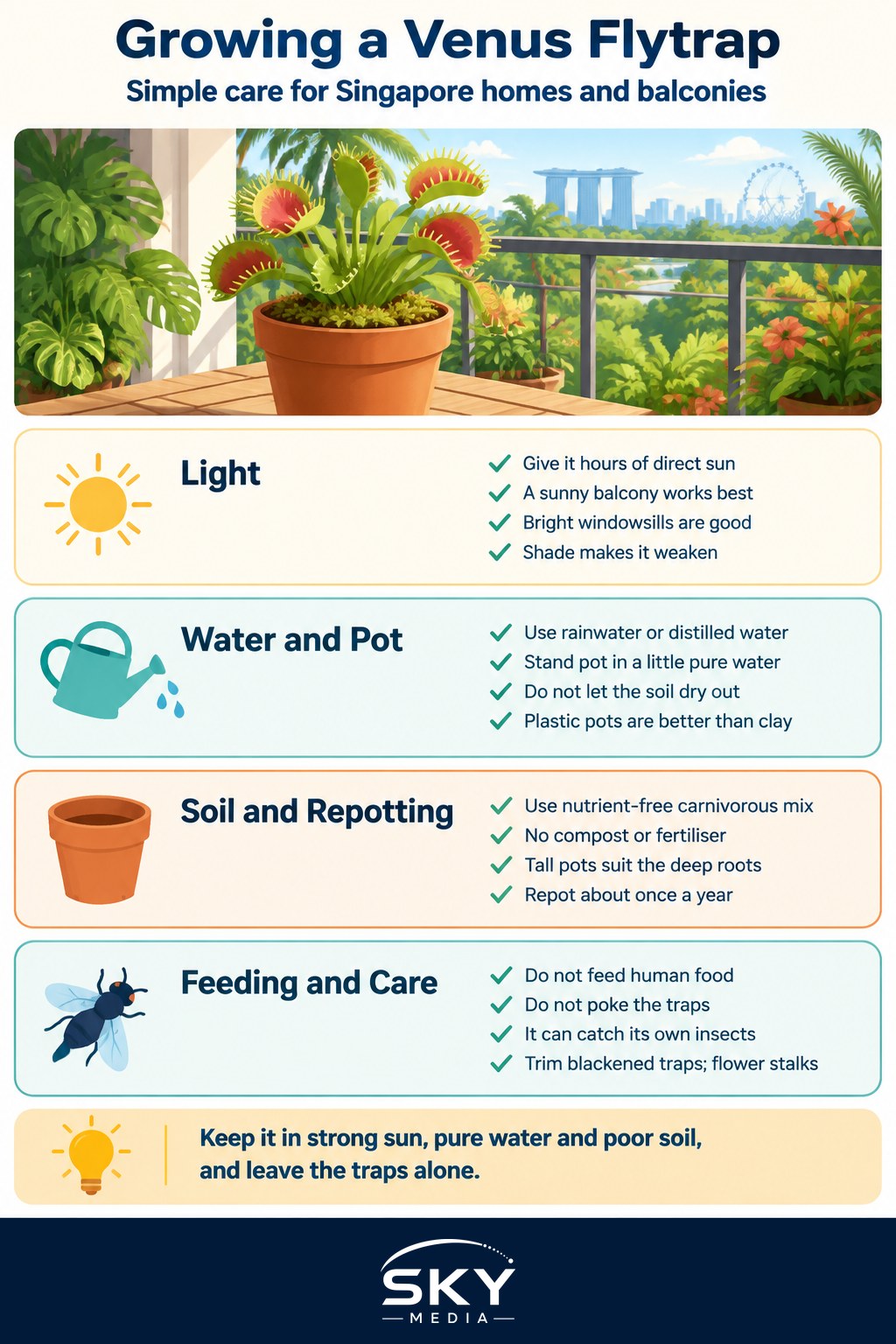
Start with light, because this is where most people go wrong. A Venus flytrap wants hours of direct, bright sun every single day. A sunny balcony or a bright windowsill that catches the morning sun is ideal, and our guide to the best plants for a sunny balcony shows the kind of exposure it enjoys. Indoors on a dim shelf, the plant weakens, the traps stay green instead of blushing red inside, and it slowly declines. If your only bright spot also cops harsh afternoon glare, watch for the leaf stress described in dealing with sunburn and leaf scorch on plants, though flytraps tolerate far more sun than typical houseplants.
Water is the next make-or-break. Singapore tap water carries dissolved minerals that build up in the soil and poison a Venus flytrap over time. Use rainwater or distilled water only. Because it is a bog native, it likes to stay wet, so stand the pot in a saucer holding a couple of centimetres of pure water and let it drink from the bottom, topping up as it empties. Do not let it dry out completely.
The soil must be nutrient-free. A Venus flytrap will die in ordinary potting mix or anything with added fertiliser. The standard recipe is a peat-free carnivorous plant mix, or a blend of sphagnum-type moss and washed sand or perlite, with no compost and no feed. Never fertilise the roots. For a pot, plastic is better than clay, which leaches minerals, and a tall pot suits the deep roots. Repot into fresh mineral-free mix roughly once a year to keep the medium sweet. If carnivorous plants pull you in, the broader growing carnivorous plants in Singapore guide covers pitcher plants and sundews that enjoy the same conditions.
Feeding, Traps and Common Mistakes
Here is the golden rule: do not feed your Venus flytrap human food, and never stick your finger in a trap. Bits of meat, cheese or rice will rot inside the trap and turn it black, and repeatedly triggering traps for fun wastes the plant’s energy, since each trap only snaps a limited number of times before it dies. Left on a bright balcony, a Venus flytrap will happily catch its own ants, flies and small insects, and in most Singapore homes that is all the feeding it ever needs. If yours lives somewhere insects rarely reach, you can occasionally offer a single dried mealworm or a live bug small enough to fit inside one trap, then gently massage the closed trap to mimic a struggling insect so it seals and digests. Feed sparingly, one trap at a time, and never overdo it.
A few more things surprise new owners. Blackening traps are completely normal, as each trap ages, dies and is replaced, so simply trim off the dead ones. Do not panic if a flower stalk shoots up; many growers snip it off, because flowering drains a lot of energy from a young plant. And unlike temperate flytraps that need a cold winter rest, plants grown in our unbroken warmth often just keep going without a true dormancy, so do not chill yours in the fridge unless you know its history.
Keep the plant out of reach of very young children who might poke the traps, and resist the urge to trigger them yourself. Watch for the same pests that trouble other plants, and treat gently, taking cues from how to deal with plant pests rather than reaching for harsh sprays.
Give a Venus flytrap in Singapore strong sun, pure water, poor soil and a hands-off attitude to feeding, and it rewards you with one of the most fascinating little dramas on any balcony. The trick is to stop caring for it like a houseplant and start treating it like the sun-loving bog hunter it truly is.
Frequently Asked Questions
Where can I find rainwater or distilled water for my flytrap? Collect rain in a clean, covered container, never leaving it uncovered where mosquitoes could breed, or use distilled water. Avoid tap water, which carries minerals that build up in the soil. Store collected water briefly and use it fresh to keep the plant healthy.
Why are my Venus flytrap’s traps turning black? Individual traps blacken as they age and die, which is normal because new ones replace them. Snip off dead traps cleanly. If many turn black at once, check light, water quality and whether someone fed it human food or triggered the traps repeatedly.
Should I cut off the flower stalk on a young flytrap? Many growers do, since flowering uses a lot of energy that a young plant needs for growing traps. Cut the stalk early, close to the base. A mature, healthy plant can flower if you want seeds, but that is optional and slows trap growth.
Can a Venus flytrap live indoors under an air-conditioned room? It struggles unless it gets bright direct sun every day. A dim, cool room weakens it and traps stay green instead of reddening. A sunny windowsill that catches strong morning light is better than a shelf, and balcony space is usually the safest choice.
Is a Venus flytrap safe around pets and children? It is not poisonous in the way many houseplants are, but it is delicate and easily damaged by poking. Keep it out of reach of small children and pets who might trigger or chew the traps. Supervise young children and wash hands after handling.
Further reading: Growing Nepenthes Pitcher Plants in Singapore