

A common worry among new plant owners is whether ordinary tap water is somehow bad for their plants. You may have read online that chlorine will harm roots or that you must always let water stand overnight. The good news, when it comes to water quality for plants singapore gardeners can relax about, is that our tap water is generally perfectly fine for most plants. There are a few genuine exceptions worth knowing, but for the great majority of herbs, vegetables, and houseplants, you can water straight from the tap without a second thought.
Is Singapore tap water fine for plants?
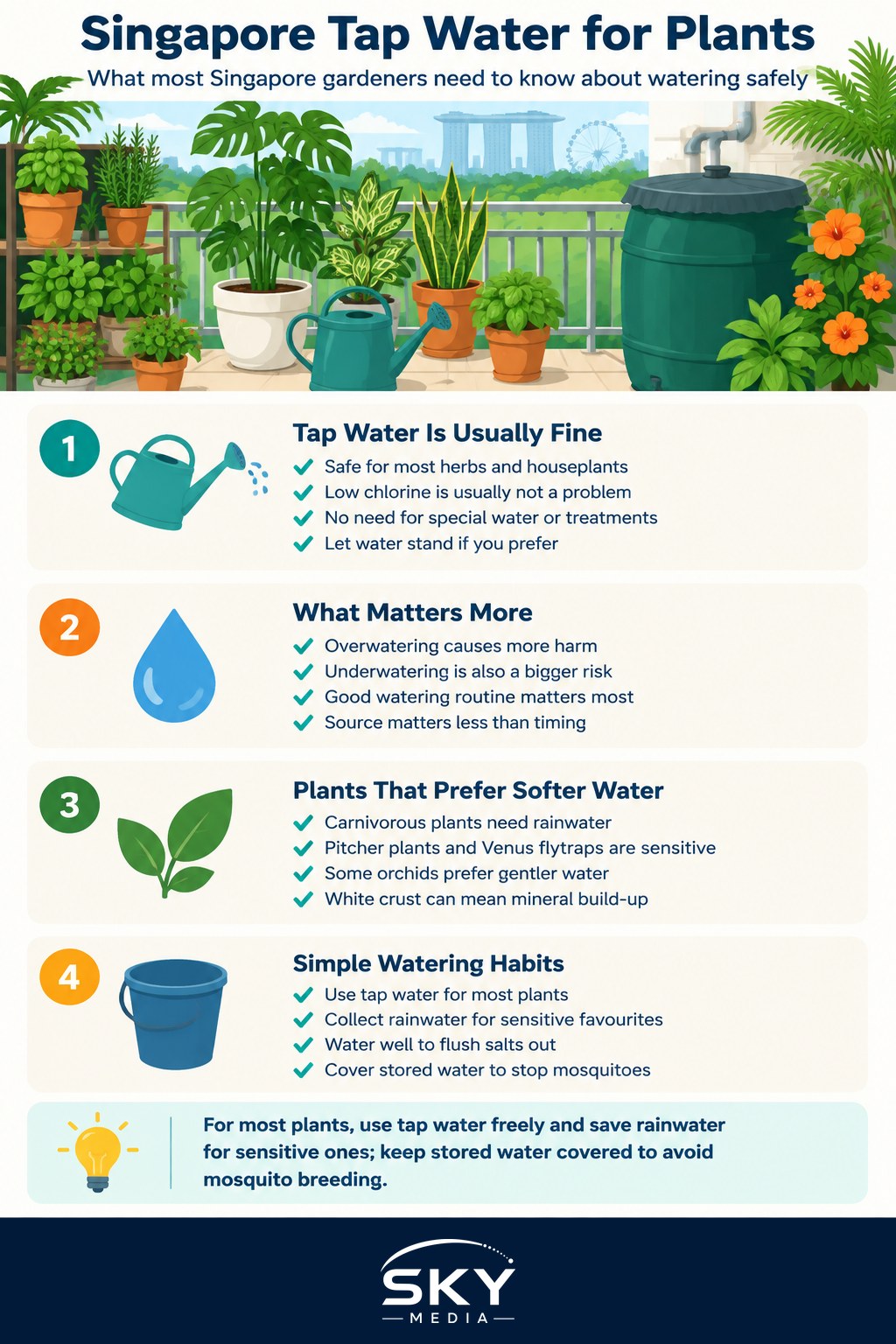
For most plants, yes. Singapore tap water is clean, safe drinking water, and the same qualities that make it good for us make it perfectly usable for the plants on your windowsill and balcony. The levels of things like chlorine are low, and any small amount that concerns very sensitive plants will dissipate quickly. If you fill a watering can and let it sit for a little while before using it, which many people do simply out of habit, that is more than enough to settle most worries. There is no need to buy special water or treatments for everyday greenery.
It also helps to focus on what actually harms plants, which is usually how you water rather than what you water with. Overwatering and underwatering cause far more casualties than tap water ever will. If your plants look unhappy, the watering routine is a much likelier culprit than the water source, and the practical tips in how to water plants in Singapore’s heat will help far more than switching water. Consistent, appropriate watering beats fussing over water quality for almost everyone.
The plants that do prefer softer water
Now for the honest exceptions. A small group of plants are genuinely sensitive to the minerals in hard water or to chlorine, and for these it is worth using rainwater or letting tap water stand first. The clearest example is carnivorous plants such as pitcher plants and Venus flytraps. These evolved in low-nutrient, low-mineral conditions, and hard tap water can slowly harm them. For carnivorous plants, use rainwater or low-mineral water rather than hard tap water, do not fertilise their soil, and let them catch their own insects. Our guide to growing carnivorous plants goes into their needs properly.
Some orchids and other delicate or mineral-sensitive plants can also do a little better on rainwater over the long term, and if you ever see a crusty white mineral build-up on the soil surface or pot rim, that is a sign of accumulated salts and minerals worth flushing out. This is not a reason to panic, and it is easily managed by occasionally watering thoroughly so water drains freely and carries excess salts away. If build-up is a recurring issue in your pots, our guide to dealing with salt buildup in pots walks through it.
None of this means tap water is dangerous. It simply means a handful of special plants appreciate a gentler drink, and rainwater is the easy answer for them.
Simple habits for good watering
You do not need to overthink water quality. A few relaxed habits cover almost every situation:
- Water most plants straight from the tap without worry.
- Let a filled can stand a while if you like, which is plenty for any sensitive houseplant.
- Collect rainwater for carnivorous plants and any mineral-sensitive favourites.
- Water thoroughly until it drains, occasionally, to flush out any salt build-up.
- Focus your attention on how much and how often you water, not the water itself.
If you want to make the most of our frequent tropical rain, collecting it is easy and free, and our guide to rainwater harvesting for your garden shows how to set up a simple catchment. Just remember the dengue point that applies to any stored water: keep any collection barrel or bucket covered so it cannot become an Aedes mosquito breeding site, empty and scrub containers regularly, and follow NParks and NEA guidance on preventing mosquito breeding.
The bottom line is reassuring. For nearly all your plants, Singapore tap water is a fine, safe choice, and you can put those online scare stories aside. Save the rainwater for your carnivorous plants and the occasional fussy orchid, water sensibly, and let the rest take care of itself.
Frequently Asked Questions
Do I need to let tap water stand overnight before watering? No. Standing it overnight is a habit rather than a need. A filled can left for a short while is more than enough for sensitive houseplants, and most herbs and vegetables can be watered straight from the tap.
Why do pitcher plants and Venus flytraps need rainwater? They evolved in low-nutrient, low-mineral conditions, so hard tap water can slowly harm them. Give them rainwater or low-mineral water, do not fertilise their soil, and let them catch their own insects.
What is the white crust on my pot, and is it the water’s fault? It is mineral salts that have accumulated over time, and it is easily managed rather than a reason to panic. Water thoroughly now and then so it drains freely and carries the excess away.
Is collecting rainwater for my plants worth the trouble? It is easy and free, and it helps the few plants that prefer softer water, such as carnivorous plants and some orchids. Ordinary plants do not need it, so do it only if you have the space and keep the container covered.
How do I store rainwater without breeding mosquitoes? Keep any barrel or bucket covered so Aedes mosquitoes cannot lay eggs, and empty and scrub containers regularly. Follow NParks and NEA guidance on preventing mosquito breeding.