

It can be unsettling when an elderly parent says they can see children sitting in the living room, insects on the wall, or a stranger standing by the door. Families often fear the worst, but elderly hallucinations causes range widely, from treatable infections and medicine side effects to vision loss, which can produce vivid images in people whose minds are otherwise clear. Understanding the possible causes helps you respond calmly and get the right help quickly.
This article is general information, not medical advice. Any new hallucination in an older person should be checked by a doctor.
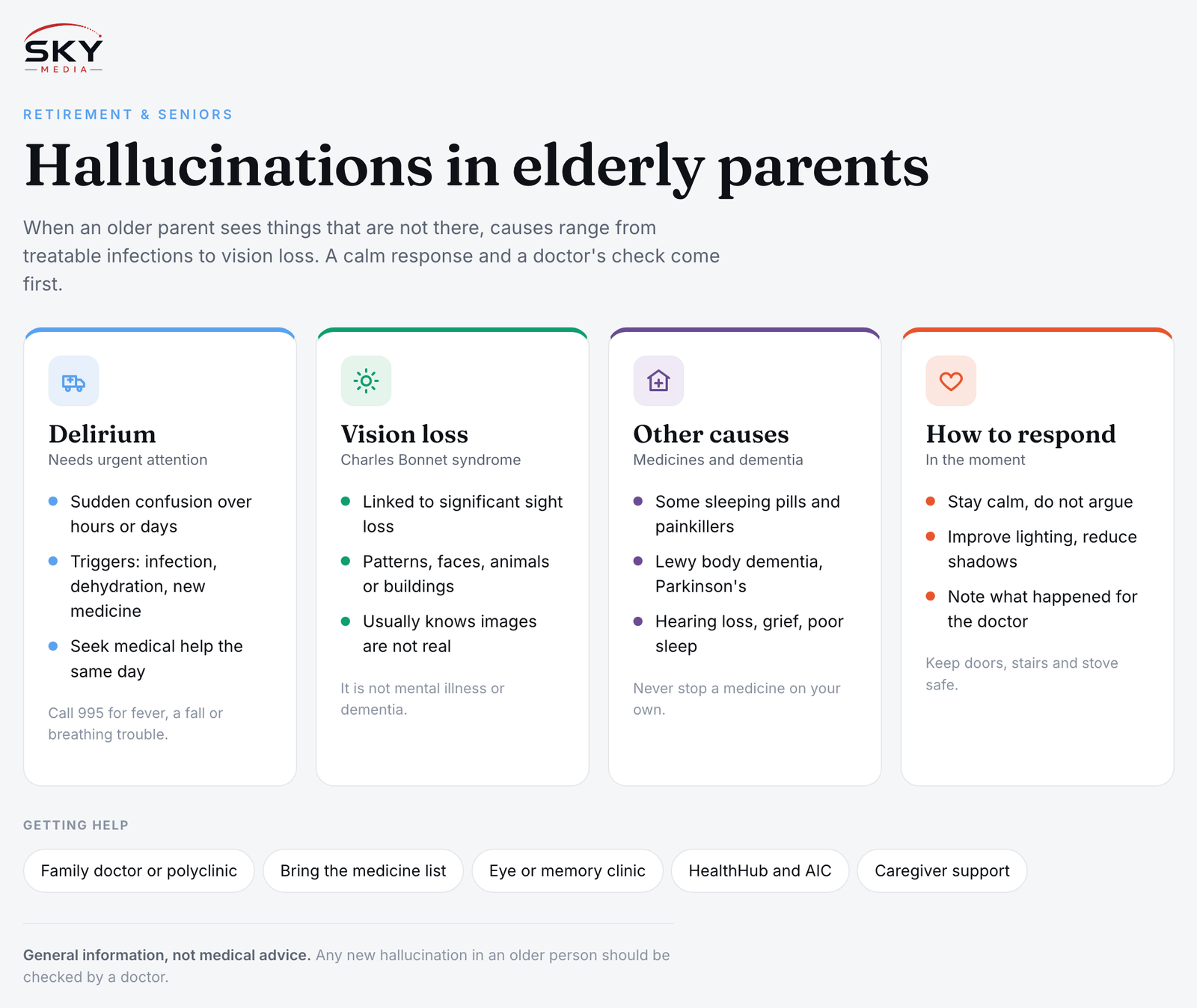
What a Hallucination Is
A hallucination is seeing, hearing, feeling or smelling something that is not there. In older adults, visual hallucinations are the most common. They are different from:
- Illusions, where something real is misread, such as a coat on a chair looking like a person in dim light.
- Delusions, which are fixed false beliefs, such as being convinced someone is stealing from them.
Some older people know what they are seeing is not real. Others are certain it is. Both are worth taking seriously.
Delirium: The Cause That Needs Urgent Attention
Delirium is a sudden change in attention and thinking, usually developing over hours or days. It is common in older people who are unwell, and it can cause vivid hallucinations, confusion, restlessness or unusual sleepiness.
Common triggers include:
- Infections, such as urinary tract infections or chest infections.
- Dehydration, constipation or poor eating.
- A recent fall, surgery or hospital stay.
- New medicines or changes in dose.
- Pain, poor sleep or a sudden change of surroundings.
Delirium is a medical emergency, but it is often treatable once the underlying cause is found. If your parent’s confusion or hallucinations started suddenly, seek medical help the same day. If they also have a high fever, breathing difficulty, chest pain, severe drowsiness or have had a fall, call 995 or go to the nearest emergency department.
Vision Loss and Charles Bonnet Syndrome
Charles Bonnet syndrome happens in some people with significant sight loss, for example from macular degeneration, glaucoma, cataracts or diabetic eye disease. As the eyes send less information to the brain, the brain can fill the gap with its own images.
People may see:
- Patterns, grids or shapes.
- Faces, people, animals or flowers.
- Buildings or landscapes, sometimes in miniature or in costume.
Importantly, the person usually knows the images are not real, and the condition is not a sign of mental illness or dementia. Many people are reluctant to mention it for fear of being thought “crazy”. Simply naming it can be a huge relief.
An eye doctor can confirm the diagnosis and treat underlying eye problems where possible. Some people find the images fade when they blink, move their eyes, change the lighting or get up and move around.
Medicines, Dementia and Other Causes
Medicines. Several types of medicine can cause hallucinations in older adults, especially when taken together. Possible culprits include some sleeping pills, strong painkillers, certain bladder medicines, some Parkinson’s medicines and steroids. Never stop a medicine on your own. Bring all of your parent’s medicines, including supplements and traditional remedies, to the doctor or pharmacist for a review.
Dementia. Hallucinations can occur in several types of dementia, and are particularly common in Lewy body dementia, where well-formed visual hallucinations may be an early feature. They can also appear in later stages of Alzheimer’s disease. Parkinson’s disease can be associated with hallucinations too.
Other causes. Hearing loss can lead to hearing music or voices. Severe depression, bereavement, alcohol withdrawal, very poor sleep and some brain conditions can also play a part. Many older people briefly “see” a late spouse after bereavement, which is generally considered a common grief experience, though it is still worth mentioning to a doctor if it is distressing.
Comparing Common Causes at a Glance
| Possible cause | How it often starts | Usual awareness | What to do |
|---|---|---|---|
| Delirium | Suddenly, over hours or days, with confusion | Often unaware | Seek medical help the same day |
| Charles Bonnet syndrome | Gradually, with known sight loss | Usually knows images are not real | See the doctor and eye specialist |
| Medicine side effect | After a new medicine or dose change | Varies | Ask the doctor or pharmacist for a review |
| Dementia | Gradually, alongside memory or thinking changes | Varies | Arrange a memory assessment |
This table is a rough guide only. Causes can overlap, and only a doctor can assess what is happening.
How Families Should Respond in the Moment
- Stay calm and gentle. Your tone matters more than your words.
- Do not argue. Insisting “there is nothing there” can upset someone who is frightened. Try: “I can’t see it, but I can see it’s worrying you.”
- Acknowledge feelings. Focus on whether they feel scared, then offer reassurance.
- Check the environment. Improve lighting, reduce shadows, close curtains at dusk, and remove patterned items or reflections that could be misread.
- Offer distraction. A drink, a walk to another room, music or a familiar activity can help.
- Keep them safe. If they are trying to get away from something they see, make sure doors, stairs and the stove are secure.
- Note what happened. Write down when it started, what they saw or heard, how long it lasted and anything new, such as a fever, a fall or a new medicine. This helps the doctor greatly.
Getting Help in Singapore
- Start with the family doctor or polyclinic. Describe the hallucinations and any other changes, and bring the medicine list.
- Ask about referrals to an eye specialist, a geriatric or memory clinic, or a psychiatrist where needed.
- Use HealthHub and the Agency for Integrated Care (AIC) for information on dementia care, caregiver training and community support services.
- Look after yourself. Caring for a parent with confusion or hallucinations is tiring. Caregiver support groups and respite services can help, and our guide to caring for an elderly parent in Singapore covers wider support. If your parent resists seeing a doctor, read when an elderly parent refuses help.
Hallucinations in an older parent are a symptom, not a diagnosis. A sudden change calls for prompt medical attention, while gradual ones deserve a thorough check. With a calm response and the right assessment, many causes can be treated or managed, and families can help their parent feel safe again.
Frequently Asked Questions
Should I tell my parent the hallucinations are not real? Arguing rarely helps and can upset a frightened person. Acknowledge the feeling instead, saying you cannot see it but can see it is worrying them, then offer reassurance and a distraction. If they are unaware the images are unreal, stay calm and get medical advice.
When are hallucinations in the elderly an emergency? A sudden onset with confusion, drowsiness or restlessness may point to delirium and needs same-day medical help. Call 995 or go to the nearest emergency department if there is high fever, breathing difficulty, chest pain, severe drowsiness or a fall. Do not wait to see if it passes.
Can hearing loss cause an elderly person to hear voices or music? It can, as the brain may fill in missing sound with its own, so some people with hearing loss hear music or voices that are not there. A hearing test is a sensible step. Mention the symptoms to the doctor, who can look for other causes.
Is it normal to see a late spouse after bereavement? Many people briefly see or sense a late spouse after losing them, and it is generally considered a common part of grief. It is still worth mentioning to a doctor if it is distressing or comes with other changes in thinking or mood.
How can I help my parent who refuses to see a doctor about the hallucinations? Choose a calm moment and frame the visit around a routine check, their eyes or their medicines rather than their mind. Offer to go along and bring the notes you have kept. If they keep refusing and are unsafe or acutely unwell, seek urgent medical help.
Official sources: HealthHub
Further reading: Should You Open a Joint Bank Account With an Elderly Parent? · When an Elderly Parent Becomes Angry or Aggressive · How to Handle an Ageing Parent’s Hoarding at Home