

It can be deeply unsettling when a mother who was always gentle starts shouting, or a father who never raised his hand pushes you away during a shower. If your elderly parent is aggressive or newly irritable, the change is rarely about you, and it is often a signal that something underneath has shifted. This guide looks at the common medical and emotional causes of new anger in older adults, practical ways to calm a tense moment, and when to bring in professional help in Singapore.
This is general information, not medical advice. A doctor, polyclinic or specialist team should assess any sudden or worsening change in behaviour.
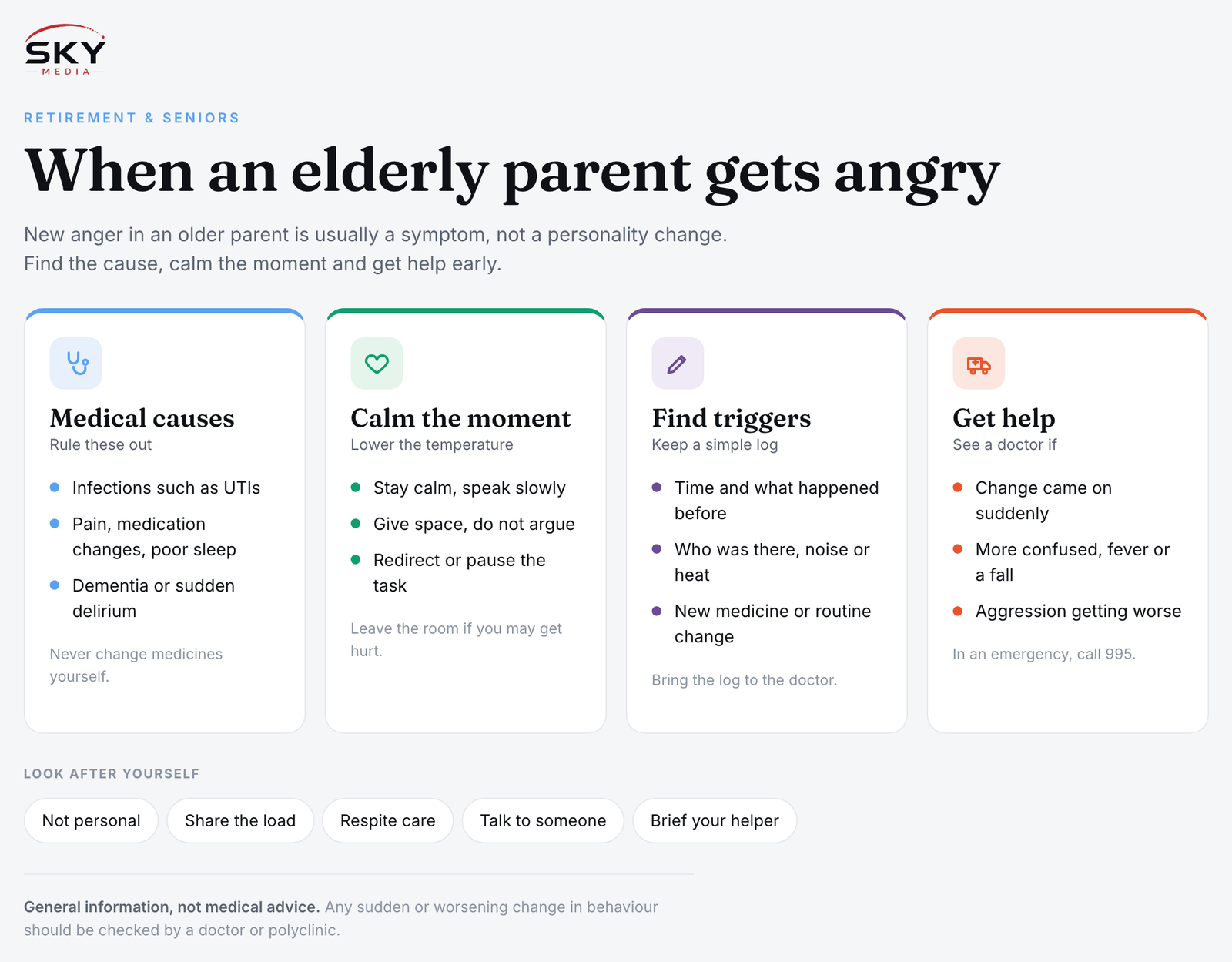
Why a Parent’s Temper Can Change in Later Life
Anger in an older person is usually a symptom rather than a personality change. It helps to think of it as communication: your parent may be expressing pain, fear, confusion or loss of control that they cannot put into words.
Medical causes worth ruling out
- Infections. Urinary tract infections and chest infections can cause sudden confusion, agitation or aggression in older adults, sometimes with few other obvious signs. A doctor can check for this quickly.
- Pain. Arthritis, dental problems, constipation, pressure sores or an undiagnosed fracture can make anyone short-tempered, and many seniors under-report pain.
- Medication effects. New prescriptions, dose changes or interactions between several medicines can affect mood and alertness. Never stop or change a medicine yourself; bring a full list (including supplements and traditional remedies) to the doctor or pharmacist.
- Poor sleep, dehydration and hunger. These are easy to overlook in Singapore’s heat, especially if your parent drinks little water to avoid trips to the toilet.
- Hearing and vision loss. A parent who cannot follow conversations may feel ignored or mocked, and react with irritation.
- Cognitive decline. Dementia can affect the parts of the brain that manage judgement and emotional control. Aggression in dementia often appears during personal care, when a person does not understand what is happening or feels their privacy is invaded. A late-afternoon pattern of restlessness, known as sundowning, is one narrower example.
- Delirium. A sudden, fluctuating state of confusion, often triggered by illness, surgery or medication, needs prompt medical attention.
Emotional and social causes
- Loss of independence. Giving up driving, work, money management or the ability to go out alone can feel humiliating.
- Grief and loneliness. The death of a spouse or friends, or moving in with children, can leave a parent feeling displaced.
- Depression and anxiety. In older adults these often show up as irritability rather than sadness.
- Feeling talked about, not talked to. Being discussed in front of them, or having decisions made over their head, can trigger anger in a parent who is still very aware.
For background on the wider picture of support, see our guide to caring for an elderly parent in Singapore.
How to Calm a Tense Moment
When your parent is already upset, logic and arguments rarely help. The aim is to lower the temperature, keep everyone safe, and revisit the issue later.
- Stay calm and lower your voice. Speak slowly and simply. Your tone matters more than your words.
- Give space. Step back, avoid standing over them, and do not block a doorway. Many outbursts settle on their own when the person does not feel cornered.
- Acknowledge the feeling, not the facts. “You sound really frustrated” works better than “That’s not true, nobody took your wallet.”
- Avoid arguing or correcting. With dementia especially, insisting on facts often escalates things. You do not have to agree with something untrue, but you do not need to win either.
- Redirect. Offer a drink, a familiar snack, a walk to the window, music they love, or a change of room.
- Pause the task. If the trigger is bathing, dressing or taking medicine, stop and try again later, perhaps with a different person or approach.
- Keep yourself safe. If you are at risk of being hurt, leave the room and give them time. Remove items that could be used to cause harm if outbursts are frequent.
Common reactions compared
| Situation | What tends to escalate | What tends to help |
|---|---|---|
| Parent accuses you of stealing | Arguing, showing proof, getting defensive | Staying calm, offering to “help look”, checking usual hiding spots later |
| Refusing a shower | Insisting, rushing, undressing them quickly | Explaining step by step, keeping them covered with a towel, trying another time |
| Shouting during an outing | Scolding in public, pulling them along | Moving to a quieter spot, sitting down, offering water |
| Repeated angry questions | Saying “I already told you” | Answering patiently, writing key information on a whiteboard |
Look for Patterns and Triggers
Once things are calm, a little detective work can prevent future outbursts. Keep a simple log for two or three weeks on your phone or in a notebook:
- Time of day and what was happening just before
- Who was present and how they were speaking
- Pain, hunger, toilet needs, noise or heat at the time
- Any new medicine, illness or change in routine
Patterns often emerge. Outbursts may cluster when your parent is tired, when a domestic helper is giving personal care, when the television is loud, or when a particular relative visits. Small changes, such as moving shower time to the morning or having one consistent caregiver for intimate tasks, can make a real difference.
Routine is also protective. Regular meals, daylight, some gentle movement and a predictable bedtime help many older adults feel more settled. If your parent resists help altogether, our guide on when an elderly parent refuses help offers ways to approach that conversation.
When to Get Medical and Professional Help
Arrange a medical review if:
- The change in behaviour came on suddenly, over hours or days
- Your parent seems more confused than usual, drowsy or unusually agitated
- There is fever, a fall, new incontinence or signs of pain
- The aggression is getting more frequent or more physical
- You suspect depression, or your parent talks about not wanting to live
Start with your parent’s family doctor or polyclinic. They can check for infections and medication issues and refer to specialist services, such as geriatric or memory clinics at public hospitals, where appropriate. Bring your behaviour log, as it gives the doctor concrete information.
In an emergency, where someone is at immediate risk of harm or your parent is suddenly very unwell, call 995 for an ambulance. For non-emergency guidance on eldercare services and caregiver support in Singapore, the Agency for Integrated Care (AIC) is a useful starting point, and community organisations offer caregiver training and support groups. Check their official websites for current programmes.
Looking After Yourself as a Caregiver
Being the target of a parent’s anger is exhausting, and caregivers often feel guilt, resentment and grief at the same time. These feelings are normal.
- Do not take it personally. The illness or distress is speaking, not the parent you know.
- Share the load. Rotate caregiving among siblings, and consider respite care or day care services so you get regular breaks.
- Talk to someone. Caregiver support groups, counsellors and helplines can help you process difficult days.
- Support your helper. If a migrant domestic worker helps with care, make sure she knows the de-escalation steps, has rest, and feels able to tell you about incidents without fear.
- Set boundaries around safety. Love does not mean accepting being hurt. If physical aggression is frequent, a doctor and care team can help you plan safer arrangements.
A parent becoming angry or aggressive is one of the harder parts of eldercare, but it is often manageable once causes are found and routines are adjusted. Patience, a calm approach and early medical input give your parent the best chance of feeling safe again.
Explore more: Settling Your Elderly Parents in Singapore
Frequently Asked Questions
Can a urinary tract infection make an elderly parent suddenly aggressive? Yes, urinary and chest infections can cause sudden confusion, agitation or aggression in older adults, sometimes with few other obvious signs. A sudden change in behaviour over hours or days should be checked by a doctor or polyclinic promptly.
What should I do when my parent accuses me of stealing? Stay calm and avoid arguing or showing proof, which tends to escalate things. Offer to help look for the item and check the usual hiding spots later. Acknowledge the feeling, such as worry about losing things, rather than the facts.
Why does my parent get angry only during showers? Aggression often appears during personal care, when a person does not understand what is happening or feels their privacy is invaded. Explain each step, keep them covered with a towel, and try another time or a different caregiver.
How can I tell if my parent’s anger is depression? In older adults, depression often shows up as irritability rather than sadness. Look out for withdrawal or talk about not wanting to live, and arrange a review with the family doctor or polyclinic, who can refer to specialist services.
How do I cope as a caregiver when my parent lashes out at me? Do not take it personally, since distress or illness is speaking. Share the load with siblings, use respite or day care for breaks, and talk to a counsellor or support group. If physical aggression is frequent, ask the care team about safer arrangements.
Further reading: Hallucinations in Elderly Parents: Causes From Delirium to Charles Bonnet Syndrome · What to Do When an Elderly Parent Wanders From Home · Choosing a GPS Tracker for an Elderly Parent With Dementia