

A child who cares about doing well is a wonderful thing. But sometimes that care tips into something heavier. The eraser rubs a hole through the page. A single wrong answer brings tears. A drawing gets crumpled because it is not good enough. If any of this feels familiar, you may be seeing perfectionism, and you are not alone. In Singapore’s high achieving culture, child perfectionism is something many parents quietly worry about.
The good news is that perfectionism is not a fixed trait, and there is a lot parents can do to help. This guide takes a supportive, realistic view, with practical ideas for daily life and clear pointers on when to bring in extra help.
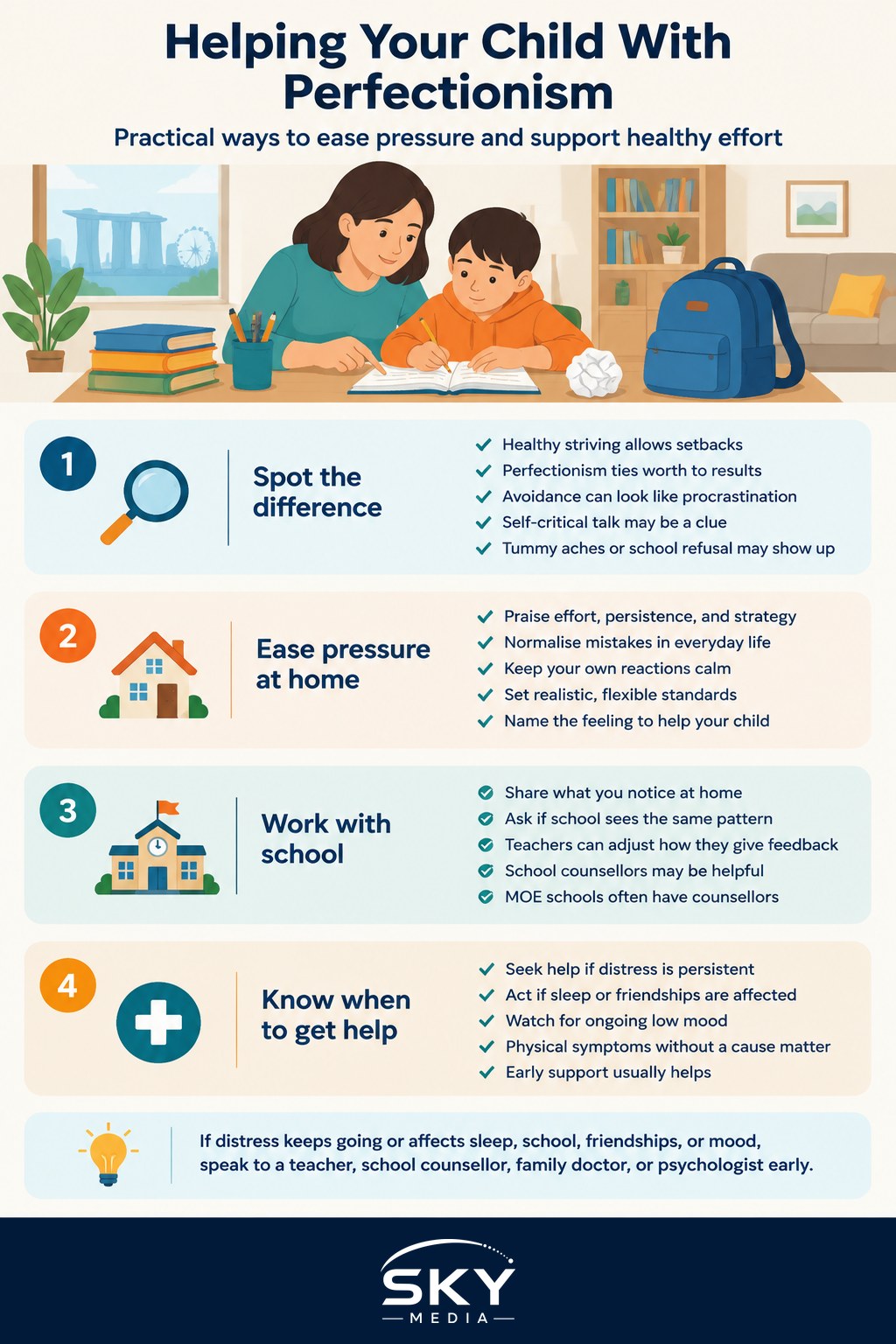
Understanding Perfectionism in Children
It helps to tell apart two things that can look similar. Healthy striving is when a child sets high goals, works hard, and feels satisfied by progress, while still bouncing back from setbacks. Perfectionism is when a child’s sense of worth becomes tied to flawless results, so that anything less than perfect feels like failure. The first energises. The second exhausts.
Perfectionism can show up in different ways. Some children become visibly distressed over small mistakes. Others avoid trying things they might not do perfectly, so they procrastinate, give up quickly, or refuse to start. You might hear a lot of self critical talk, such as I am so stupid or I always get it wrong, over minor slips. There can be physical signs too, like tummy aches before a test, difficulty sleeping, or reluctance to go to school.
Where does it come from? Usually a mix. Temperament plays a part, as some children are simply more intense and detail focused by nature. Environment matters too. In a system with frequent assessments, streaming decisions, and the ever present PSLE, children can absorb the message that mistakes are dangerous. Even loving, well meaning families can accidentally reinforce it, for example by praising only top marks or by reacting strongly to small errors. Noticing this is not about blame, it is simply useful information for making small changes.
Practical Ways to Ease the Pressure
You cannot argue a child out of perfectionism, but you can slowly reshape the emotional climate around effort and mistakes.
Praise the process, not just the outcome. Try noticing effort, persistence, and strategy rather than only results. You stuck with that even when it was hard carries a different message from you are so clever. Over time, this teaches your child that trying and improving are what count.
Normalise mistakes out loud. Let your child see you get things wrong and take it in stride. You might say something like, well, that did not work, let me try another way, in an easy tone. When adults treat errors as ordinary and useful, children slowly borrow that attitude.
Watch your own reactions. If a small mistake on homework triggers a big response from you, a sensitive child will notice. Aim to stay calm and curious about errors, treating them as information rather than disasters. This is often the single most powerful change a parent can make.
Set realistic, flexible standards. Help your child see that good enough is genuinely good enough for many things, and that not every task deserves maximum effort. Deliberately doing some things imperfectly, such as a quick rough sketch or a fast first draft, can be a healthy exercise.
Give feelings words. A perfectionist child often feels overwhelmed without knowing why. Naming it gently, for example, it sounds like you are frustrated because it did not come out the way you pictured, helps them feel understood and less alone with the pressure.
Perfectionism and exam stress often travel together, so you may also find our guide to supporting a child with exam anxiety helpful. Learning to cope with losing and imperfection extends to competition too, which we cover in raising competitive kids and handling losing.
Working With the School and Knowing When to Seek Help
You are not the only adult in your child’s life, and you do not have to manage perfectionism on your own. Your child’s teachers see them in a different setting and can be real partners. It is worth sharing what you notice at home, and asking whether they see similar patterns at school. Teachers can often adjust how they give feedback, reassure a child about mistakes, or flag the school counsellor if that seems useful. Many MOE schools have counsellors who support children with anxiety and perfectionism, and involving them is a sign of good parenting, not a last resort.
It is important to be clear about limits. As a parent, you are not there to diagnose anything, and neither is this article. Your job is to notice, support, and reach out to the right people when needed.
So when should you seek professional help? Consider it if the distress is persistent rather than occasional, if it is interfering with sleep, friendships, or willingness to go to school, or if you see intense self criticism that does not ease with your reassurance. Withdrawal, ongoing low mood, or physical symptoms with no medical cause are also worth acting on. A school counsellor, your family doctor, or a psychologist can assess what is going on and suggest support. Reaching out early tends to make things easier, not harder. For a broader look at this, see our guide to children’s mental health and anxiety.
Finally, be gentle with yourself. There is no single right way to raise a child, and progress here is usually slow and uneven. Every time you respond to a mistake with warmth instead of alarm, you are teaching your child that they are loved for who they are, not only for what they achieve. That message, repeated patiently over the years, is what helps a perfectionist child grow into a resilient one.
Frequently Asked Questions
How can I tell perfectionism from normal high standards in my child? Healthy striving brings satisfaction from progress and a quick recovery from setbacks. Perfectionism ties your child’s sense of worth to flawless results, so small slips cause distress, avoidance or harsh self-talk. If anything less than perfect feels like failure, it is worth gently addressing.
Why does my child refuse to start homework in case it is not perfect? Avoidance is a common form of perfectionism. A child afraid of not doing something perfectly may procrastinate, give up quickly or refuse to begin. Lowering the stakes helps, for example by trying a rough first draft and praising effort rather than polish.
What should I say when my child cries over one wrong answer? Name the feeling first, for example it sounds like you are frustrated because it did not turn out as you pictured. Then stay calm and treat the mistake as information, not a disaster. Responding with warmth teaches your child that errors are ordinary.
Can my own reactions to mistakes make perfectionism worse? Yes, sensitive children notice strong reactions to small errors, and praising only top marks can reinforce the message too. It is not about blame. Staying calm and curious about mistakes, and letting your child see you handle your own, is often the most powerful change.
Which professional should I see if perfectionism affects sleep and school? Start with your child’s teacher or the school counsellor, then your family doctor or a psychologist if needed. Seek help if distress is persistent, disrupts sleep, friendships or school attendance, or comes with low mood or physical symptoms with no medical cause.