
Land hermit crabs are often sold as a cheap, throwaway novelty, scooped from a bin at a holiday stall and sent home in a painted shell. That picture is almost entirely wrong. These are long-lived, surprisingly clever, deeply social little animals that can thrive for years in the right setup, and they suffer badly in the wrong one. Good hermit crab care is not hard, but it does ask you to get a few key things right from the start. This guide walks first-time keepers through the essentials, with a Singapore slant. It is general information, not veterinary advice, so please see a vet familiar with exotic pets if a crab seems unwell.
Meet the Land Hermit Crab
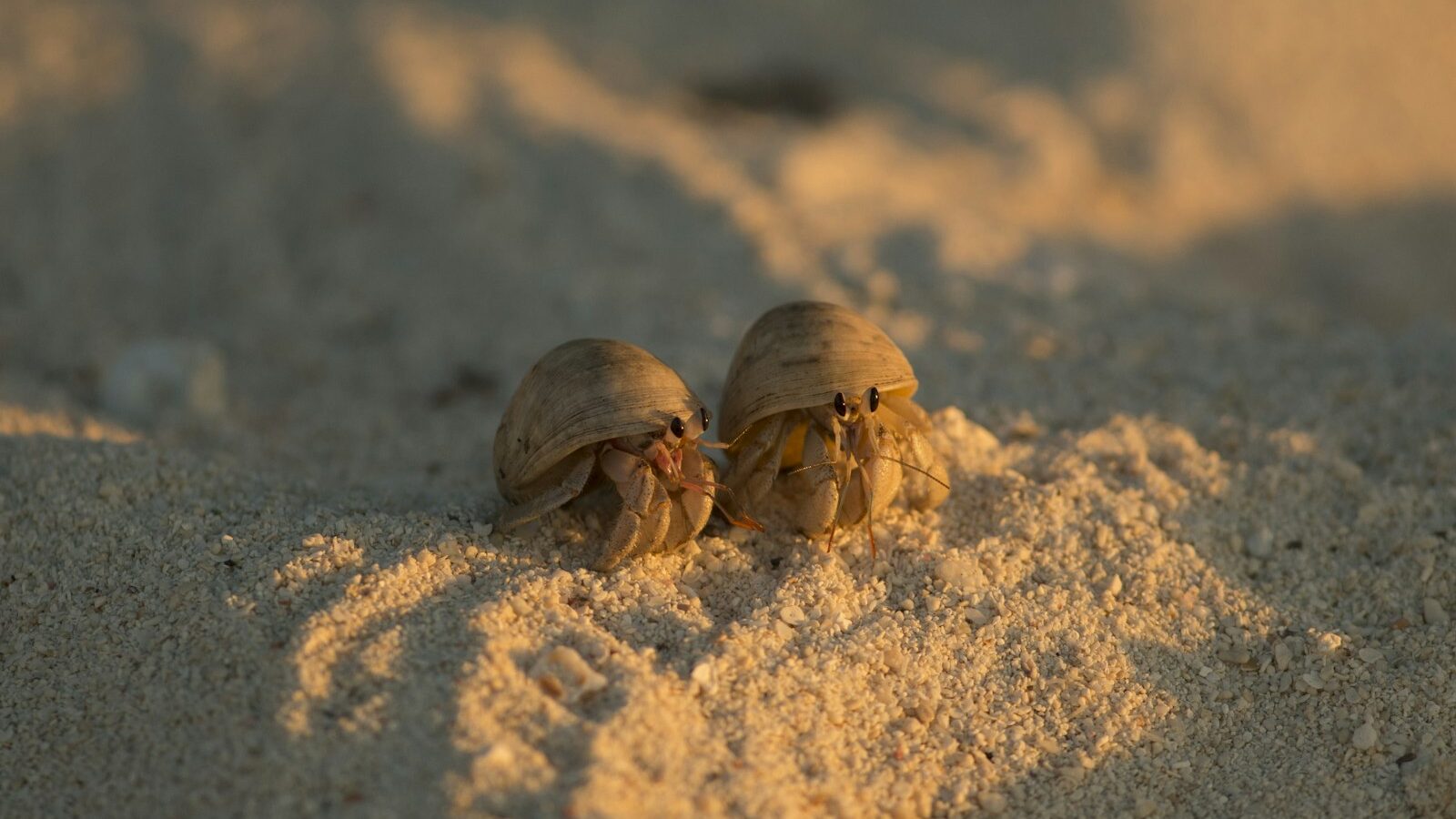
Despite the name, land hermit crabs are not loners. In the wild they live in large groups, pile together to sleep, and gather at shared water and food sources. A single crab kept alone often becomes listless. Keeping two or three together, all of a similar size, suits their nature far better.
They also do not grow a shell of their own. A hermit crab borrows an empty snail shell to protect its soft, curled abdomen, and as it grows it must swap up to a larger one. Getting the right shells is therefore not decoration, it is survival. More on that below.
Before buying, check the current NParks AVS approved-pet list to confirm the species on sale may legally be kept, and buy only from a licensed source rather than an unlicensed stall or an overseas seller. Many exotic animals are illegal to keep in Singapore, so never assume that something offered for sale is permitted. Because our climate is warm and humid all year, Singapore actually suits hermit crabs well, which spares you much of the heating gear keepers in cooler countries fuss over.
Building the Crabitat
Hermit crabs need more room and more depth than the tiny plastic tubs they are often sold in. A sealed glass tank, sometimes called a crabitat, holds heat and humidity far better than a wire or mesh enclosure. Aim for the largest tank you can house, as even small crabs are active climbers and diggers.
The single most important feature is deep substrate. Hermit crabs bury themselves completely to moult, the process of shedding their old exoskeleton to grow, and a shallow floor makes safe moulting impossible. Provide a substrate several times deeper than your largest crab, using a mix that holds a burrow without collapsing.
- Substrate: a deep, damp mix of play sand and coconut fibre that packs firm enough to hold a tunnel.
- Humidity: keep it high and steady so the crabs can breathe; they use modified gills that must stay moist. A simple gauge helps you monitor it.
- Temperature: a warm, stable room suits them; avoid air-conditioned rooms that run cold and dry, and never place the tank in direct sun where it can overheat.
- Two water dishes: one fresh, one salted with proper marine salt mix, both shallow enough to climb out of easily. Tap water should be treated to remove chlorine.
- Climbing and hiding: cork bark, coconut huts, driftwood and sturdy plants give them cover and exercise.
Keep the tank out of the way of curious cats and small children, and secure the lid, as a determined crab can push a loose cover aside.
Shells, Food and Everyday Routine
Because a hermit crab must change shells as it grows, always offer several empty spares in a range of sizes slightly larger than the ones currently worn. Choose natural shells with a rounded opening and avoid painted shells, which can chip, trap the crab or leach unknown coatings. Denying a growing crab a suitable new shell is one of the most common and most harmful mistakes new keepers make.
Feeding is refreshingly simple. Hermit crabs are scavengers and eat a varied diet.
- Offer small amounts of fresh fruit and vegetables such as mango, banana, leafy greens and carrot.
- Add occasional protein like a little cooked egg, unseasoned fish or a purpose-made hermit crab food.
- Provide a source of calcium, such as cuttlebone, to support the exoskeleton.
- Remove uneaten fresh food daily so it does not rot or grow mould in the humid tank.
Avoid anything salty, oily, spiced or seasoned, and skip foods known to be risky for them. If you are unsure whether something is safe, leave it out. Spot-clean waste and leftovers each day, refresh both water dishes, and do a fuller substrate clean only occasionally, since digging up a buried, moulting crab can kill it.
Moulting, Health and When to Get Help
Moulting is the most delicate time in a hermit crab’s life. A crab preparing to moult may eat more, then bury itself and vanish for weeks. This is normal. The golden rule is simple: do not dig it up, do not move it, and do not assume it has died. Disturbing a moulting crab, or a freshly moulted one whose new exoskeleton is still soft, is often fatal.
Signs that something may be wrong, rather than a normal moult, include a crab that leaves its shell and will not return to one, a strong fishy smell of decay, or a crab dragging itself listlessly above ground for a long time. A hermit crab out of its shell is vulnerable and stressed, so offer clean spare shells nearby and reduce disturbance.
The table below sorts common situations into what you can usually manage yourself and what suggests a real problem worth expert help.
| Situation | Usually normal, manage at home | Worth expert help |
|---|---|---|
| Crab buried and still for weeks | Yes, likely moulting, leave undisturbed | Only if a decay smell appears |
| Crab swaps into a new shell | Yes, keep offering spare shells | Not needed |
| Crab out of shell, exploring briefly | Often normal, add shell choices | If it stays out and weak for long |
| Foul fishy odour from the tank | No | Yes, check for a lost crab or death |
| Missing limbs or sluggishness after stress | Sometimes regrows over moults | If it worsens or the crab stops eating |
Exotic pets like hermit crabs are not always easy to treat, but a vet with exotics experience can still advise on husbandry and welfare, and poor conditions are behind most illness. If a crab dies, review your heat, humidity, substrate depth and shell supply before adding more.
A Kinder Way to Keep Them
Hermit crabs reward patient, thoughtful keeping. Give them company of their own kind, a deep and humid home, a generous choice of natural shells, a varied and safe diet, and the peace to moult undisturbed, and they can share your flat for years. Treat them as the sensitive, social creatures they are rather than a disposable souvenir, source them only from licensed sellers of AVS-permitted species, and you will find these small crabs far more engaging than their reputation suggests. When in doubt about a crab’s health or your setup, ask an exotics-savvy vet before problems take hold.