

Being a good mentor is one of the most rewarding roles you can take on at work. You get to help someone grow, pass on hard-won lessons, and often learn a great deal yourself in the process. But good mentoring is a skill, not just goodwill. Plenty of well-meaning people give unhelpful advice, dominate conversations, or quietly steer their mentee toward the mentor’s own choices. The best mentors do something harder and more valuable. They listen, ask good questions, share honestly, and help the other person find their own way forward. In Singapore’s diverse and fast-moving workplaces, that kind of steady support can shape a whole early career.
Understand What a Mentor Actually Does
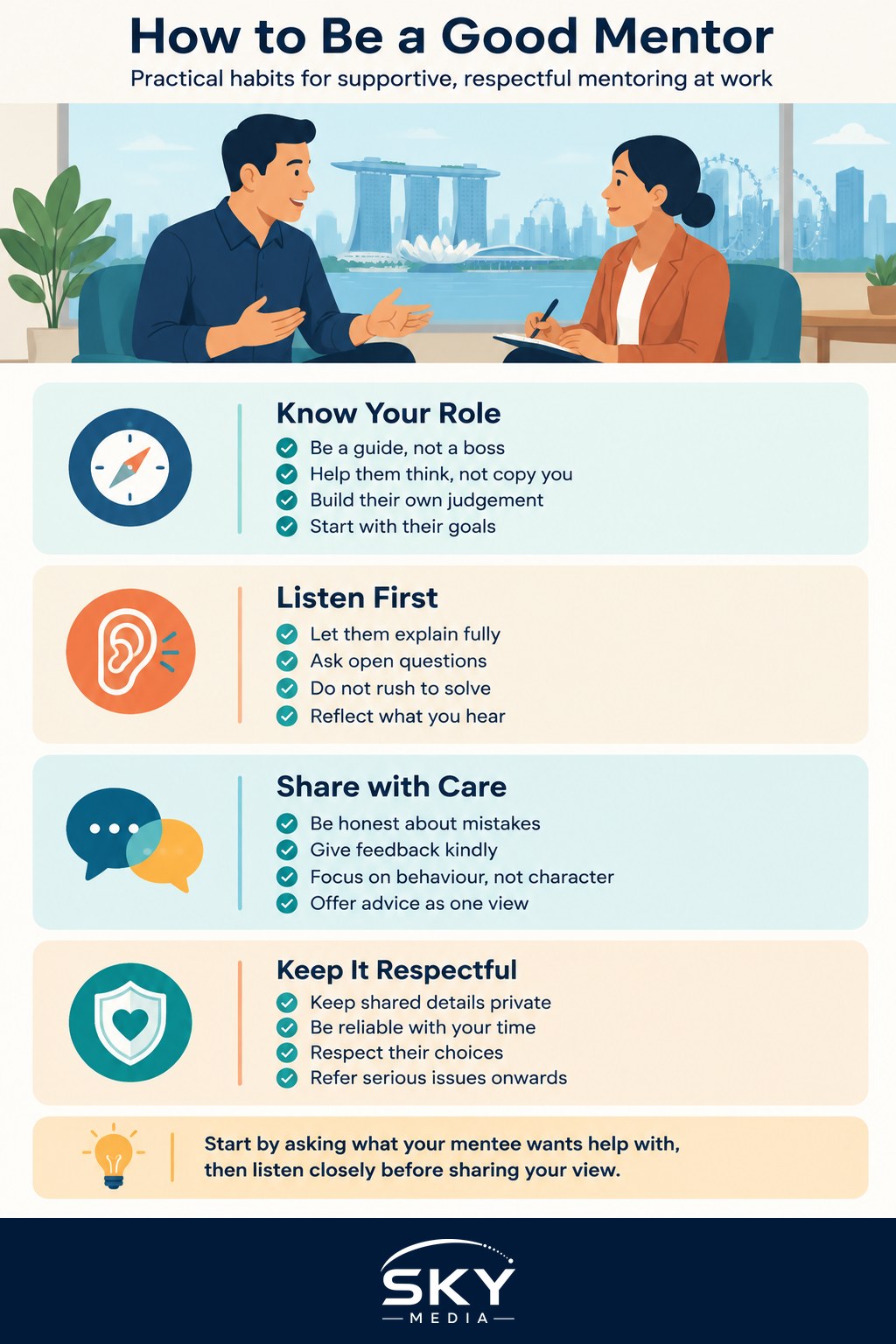
A mentor is not a boss, a teacher, or a fixer. You are a more experienced guide who helps someone think more clearly and grow more confidently. That distinction matters, because it shapes how you show up.
Your job is not to hand over answers or to solve every problem for your mentee. It is to help them build the judgment to solve problems themselves. Sometimes that means sharing what you did in a similar situation. Often it means asking a question that helps them see the situation from a new angle. The measure of good mentoring is not how impressive your advice sounds, it is whether your mentee grows more capable and more independent over time.
It helps to start by getting clear on what the mentee wants. Are they trying to grow into a bigger role, navigate a tricky team, build a specific skill, or simply gain confidence. When you both know what you are working toward, the relationship has direction. If you are on the other side of this and looking for guidance yourself, our piece on how to find a mentor is a useful companion.
Listen More Than You Talk
The single most common mentoring mistake is talking too much. Many mentors, keen to be helpful, launch into stories and solutions before they truly understand the situation. Being a good mentor starts with listening.
Give your mentee room to explain what is going on and how they feel about it. Ask open questions rather than leading ones. Instead of “you should just talk to your manager, right?”, try “what options have you thought about?” or “what feels hardest about this?” Open questions help people reason for themselves, which is the whole point.
Practise genuine attention. Put the phone away, do not rush to fill silences, and reflect back what you hear so they feel understood. Strengthening your active listening at work will make you a noticeably better mentor. When people feel heard, they open up, and only then can you help with the real issue rather than the surface one.
Share Honestly and Give Feedback with Care
Listening does not mean staying silent. A good mentor shares experience openly, including the mistakes and the messy parts. Your stumbles are often more instructive than your successes, because they show that setbacks are survivable and that everyone starts somewhere.
Be honest, including when the truth is uncomfortable. If your mentee has a blind spot or a habit that is holding them back, gently naming it is one of the most valuable things you can do. Frame it kindly and concretely, focused on behaviour rather than character, and always paired with belief in their ability to improve. If honest feedback is new territory for you, our guide to giving constructive feedback at work offers a solid approach you can lean on.
At the same time, offer your view as one perspective, not a command. Say “here is what worked for me, though your situation may differ” rather than “this is what you must do.” Your mentee’s career is theirs. Respect that they may weigh things differently and make a different choice, and support them in it.
Keep the Relationship Respectful and Healthy
Good mentoring rests on trust, and trust rests on respect and clear boundaries. This is worth taking seriously.
Keep what your mentee shares confidential unless they clearly want otherwise. Much of mentoring’s value comes from being a safe place to think out loud, and that safety vanishes the moment something private is repeated. Be reliable too. Show up to the sessions you agree to, and if you cannot commit the time, be honest about that from the start rather than letting the relationship quietly fizzle.
Respect their autonomy and their consent in how the relationship works. Mentoring should never become a tool to pressure someone toward your preferences, to extract favours, or to make them feel they owe you. Never use the relationship to manipulate, to push personal agendas, or to blur professional lines. If there is any imbalance of power, for example if you are senior to your mentee in the same organisation, be especially careful to keep things professional and appropriate.
It is also healthy to acknowledge the limits of your role. If a mentee is dealing with something beyond your experience, such as a serious workplace grievance, harassment, or a mental health struggle, point them kindly toward the right support, whether that is HR, TAFEP and MOM for unfair treatment, or a qualified professional. A good mentor knows when to guide and when to refer.
The Reward of Mentoring Well
Being a good mentor comes down to a few honest habits. Understand your role as a guide rather than a fixer, listen far more than you talk, share your experience truthfully while respecting your mentee’s own choices, and keep the whole relationship respectful and safe. Do that consistently and you will not only help someone grow, you will sharpen your own thinking and leave a quiet mark on their career that lasts long after the formal mentoring ends.