

Property is a national conversation in Singapore, and helping people buy, sell, or rent a home can be a genuinely rewarding career. Becoming a property agent in Singapore is also a regulated, commission driven path that suits self starters more than anyone chasing a steady monthly salary. This guide walks through the licensing route, joining an agency, the costs, and what the job is really like, so you can decide with clear expectations.
An important note up front. A property agent, formally a real estate salesperson, must be registered and must operate under a licensed property agency. This is not a business you simply open. It is a regulated profession with a defined entry path, and the details are set by the authority, not by any individual.
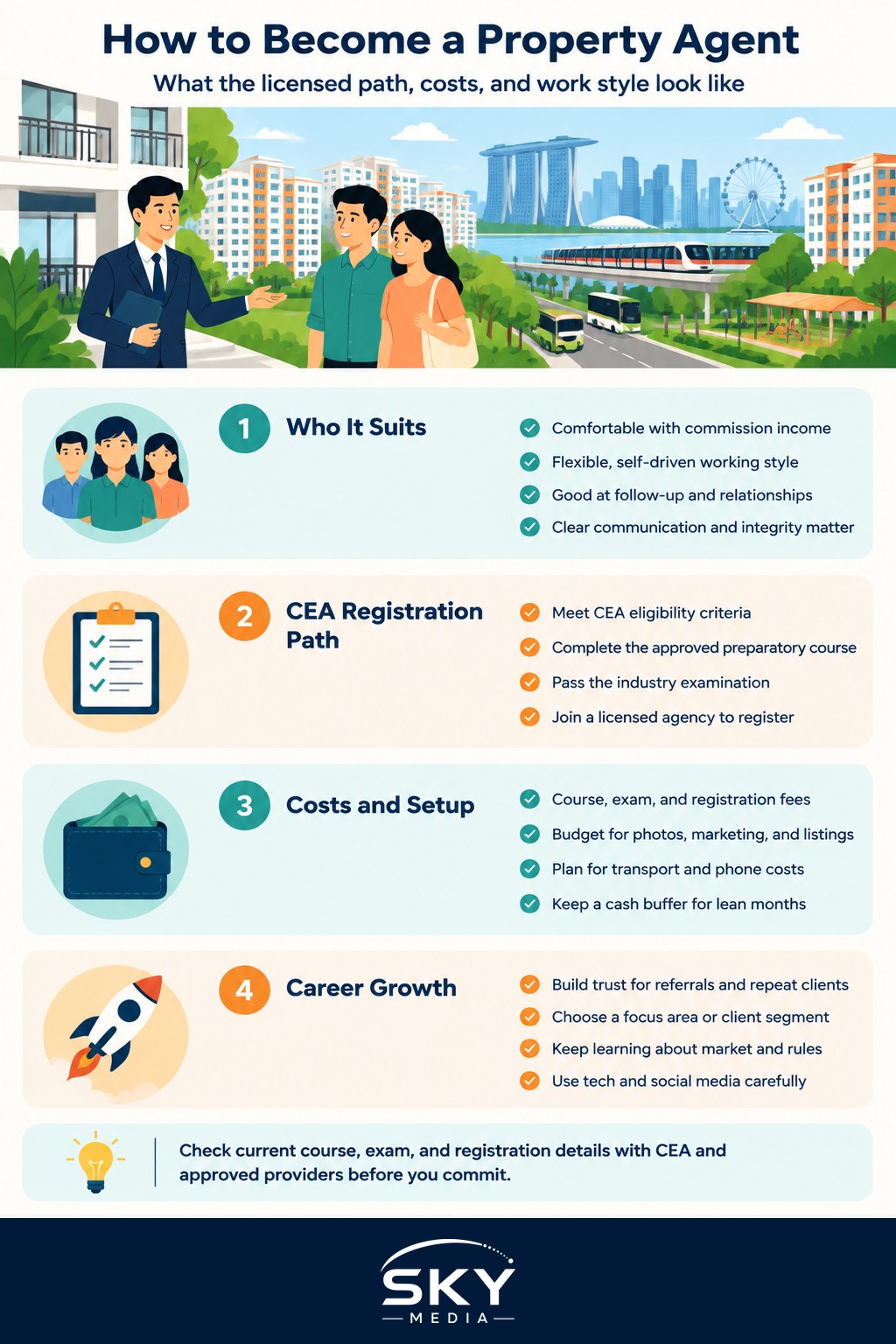
The opportunity and who it suits
The appeal is real. There is no strict income ceiling, your schedule is flexible, and you meet people from every walk of life. But the trade offs are just as real. Income is commission based and can be uneven, especially in your first year. Evenings and weekends are prime working hours because that is when clients view homes. And competition is fierce.
This path tends to suit people who:
- Are comfortable with variable income and can manage cash flow through quiet months.
- Enjoy prospecting, following up, and building relationships over time.
- Are disciplined self managers who do not need a boss to stay productive.
- Communicate clearly and act with integrity, since trust is the whole job.
If you need predictable pay from day one, be honest with yourself about whether you can weather the ramp up period.
The licensing path: CEA registration
Real estate agents in Singapore are regulated by the Council for Estate Agencies, known as CEA. The entry route generally involves completing the required preparatory course, passing the industry examination, and then registering with CEA through a licensed agency. Because the exact course structure, examination format, eligibility criteria, validity periods, and fees are set by CEA and its approved course providers and can change, you should confirm every current detail directly with CEA rather than relying on second hand accounts.
At a high level, the journey looks like this:
- Check that you meet CEA’s eligibility criteria to register as a salesperson.
- Complete the required preparatory course through an approved provider.
- Sit and pass the industry examination.
- Apply to join a licensed property agency, which submits your registration to CEA.
- Once registered, work under that agency and meet ongoing requirements.
Note that a salesperson registers through and operates under one licensed agency at a time. Choosing that agency well is one of the most important early decisions you will make.
The table below compares the two broad ways to work in the industry.
| Aspect | Salesperson under an agency | Setting up your own agency |
|---|---|---|
| Entry difficulty | Defined path via CEA and an agency | Far more demanding, separate licensing |
| Startup cost | Lower, mainly course and marketing | Much higher, business and compliance |
| Support | Training, branding, systems from agency | You build everything yourself |
| Best for | New and most working agents | Experienced operators with a track record |
Do not invent shortcuts. The only reliable source for what the course covers, how the exam works, and what registration requires is CEA and its approved providers.
Costs and getting started
Your upfront costs are modest compared with opening a physical business, but they are real. Budget for the preparatory course, the examination, and CEA registration fees, all of which are set by the relevant parties. Beyond that, the bigger ongoing investment is in yourself and your pipeline: professional photos, marketing and listings, a phone plan, transport to viewings, and the time it takes to build a client base before commissions arrive.
Because you are effectively self employed as a commission earner, treat your finances professionally:
- Keep a cash buffer to cover several lean months at the start.
- Track income and expenses carefully for IRAS, and understand your tax obligations.
- Speak to an accountant about record keeping and, as you grow, GST considerations.
- Reinvest early commissions into marketing rather than spending them all.
Choosing the right agency matters here too. Look at the training they provide, the leaders and culture, the commission structure, and the support systems, not just the brand name.
Building a career and growing
Success in this field is built on reputation and relationships, not luck. The agents who last treat it as a long game. They serve clients honestly, follow up diligently, and stay in touch long after a transaction closes, because referrals and repeat business are where sustainable income comes from.
Practical habits that compound:
- Pick a focus, whether a neighbourhood, a property type, or a client segment, and become known for it.
- Keep learning about the market, financing, and the rules that affect transactions.
- Use technology and social media to stay visible, while always following advertising and industry conduct rules.
- Protect your integrity fiercely, since one breach of trust can undo years of goodwill.
The manpower and market realities of Singapore, from cooling measures to interest rate shifts, mean demand ebbs and flows. Good agents adapt their focus to where the activity is.
Common pitfalls to avoid
The most common mistakes are financial and ethical. Quitting a stable job without a cash buffer leaves many new agents desperate before their first deal closes. Chasing quick commissions at the expense of client interests destroys the trust the whole career depends on. Neglecting to understand the rules and your obligations can lead to serious consequences. And treating it as a casual side gig rather than a real business usually leads nowhere.
This article is general information, not legal, financial, or professional advice. The authoritative source for licensing, courses, examinations, and registration is the Council for Estate Agencies, and rules and fees change, so verify current details with CEA and qualified professionals before you commit.
Explore more
If you prefer a business you fully own rather than working under an agency, compare this with starting a travel agency, another licensed, service driven field. For a relationship led local service, see how a pet care or grooming business builds repeat clients. And if teaching appeals to you, an enrichment centre is a people first path with steady demand.
Frequently Asked Questions
Can I be a property agent part-time while keeping my day job? Some people do, but check your employment contract first, since many employers restrict outside work. You also need time for evenings and weekend viewings. Ask CEA and your prospective agency about any rules for registered salespersons before you enrol.
Can PRs or foreigners become property agents in Singapore? Eligibility is set by CEA, and it may differ for citizens, PRs and foreigners, so do not assume. Check the current criteria on CEA’s website before paying for a course. Work-pass questions for foreigners should be confirmed with MOM.
How do property agents actually get paid? Agents are generally paid commission when a transaction completes, and part of it goes to the agency under your agreement. Ask each agency to explain their commission structure and fees clearly in writing. There is no guaranteed income before a deal closes.
How do new property agents find their first clients? Most start with their own network, then build through referrals, a focus area and visible, honest marketing. Following up diligently and serving each client well matters more than volume. Follow CEA’s advertising and conduct rules when promoting yourself.
How many hours does a property agent really work? Hours are flexible but rarely light. Clients often view properties on evenings and weekends, and follow-ups, paperwork and prospecting fill other times. In the early months, expect to put in unpaid time building your pipeline before commissions arrive.
Official sources: Council for Estate Agencies
Further reading: Becoming a Property Agent: The RES Exam