

Tutoring is one of the most rewarding ways to share what you know. Helping a student finally understand a tricky topic, or watching their confidence grow week by week, is genuinely satisfying. With Singapore’s active learning culture, there is steady demand for patient, capable tutors across many subjects and levels. If you are thinking about becoming a tutor Singapore families would value, this guide walks through how to get started, what to keep in mind, and how to do the job well and responsibly.
Tutoring is not just about knowing your subject. It is about explaining clearly, being reliable, and looking after the young people in your care. This article covers the practical side of starting out, along with the responsibilities that come with teaching, especially when your students are children.
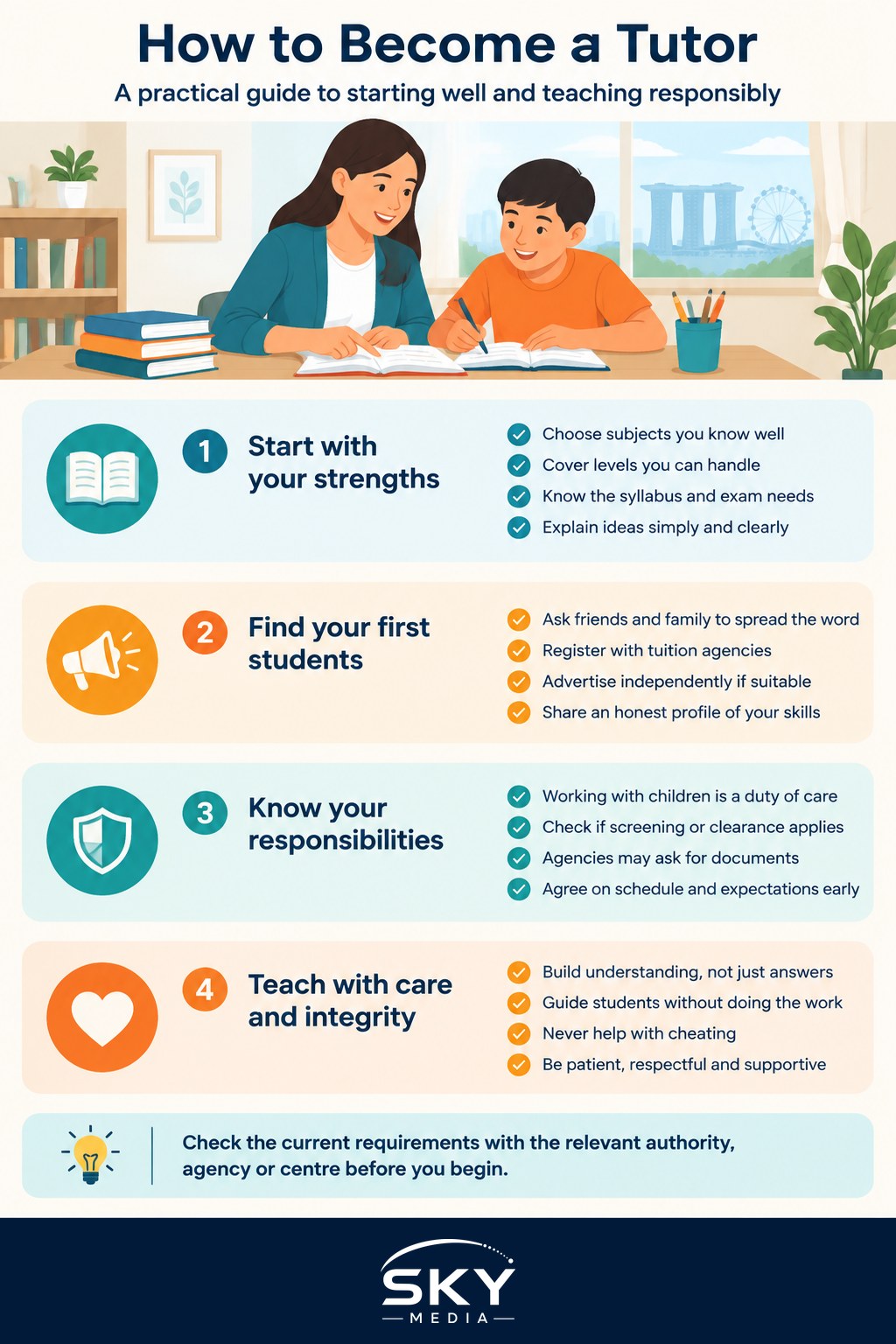
Getting Started as a Tutor
There is no single official route into tutoring, and people come to it from many backgrounds. Students earn extra income tutoring younger pupils, working adults tutor part-time in their area of expertise, and experienced full-time tutors build it into a career. The common thread is solid knowledge of your subject and the patience to help others learn it.
Start by getting clear on what you can offer. Ask yourself:
- Which subjects and levels can you confidently teach, from primary through to A levels or beyond?
- Do you understand the relevant syllabus and exam expectations well?
- Are you comfortable explaining ideas simply and adapting when a student does not get it the first time?
Being honest here matters. It is better to tutor a few subjects really well than to stretch yourself thin. If you want to sharpen your teaching approach, learning how to explain difficult concepts simply is one of the most valuable skills a tutor can build.
Once you know your offering, you can find students in several ways. Word of mouth through friends and family is a common start. Many tutors also register with tuition agencies, which match tutors to families, or advertise independently. Take time to build a simple, honest profile of your qualifications and the subjects you cover.
Important Responsibilities and Requirements
Tutoring young people is a position of trust, so it comes with real responsibilities. Rules and requirements can change and vary by setting, so always check the current official information before you begin, rather than relying on general advice alone.
A few general points worth understanding:
- Working with minors carries a duty of care. Anyone tutoring children should take the student’s safety and wellbeing seriously.
- Certain roles and settings that involve working with children have registration or background screening requirements, which can include police or criminal record clearance. If you plan to tutor, especially through agencies, schools, or centres, check what applies to your situation with the relevant authorities and any organisation you work with.
- If you register with a tuition centre or agency, they will have their own onboarding requirements, which may include documentation of your qualifications and identity.
Because these requirements can differ depending on where and how you tutor, confirm the specifics with the agency, centre, or authority involved. Do not assume the rules are the same for private home tutoring, centre-based teaching, and school settings.
Being professional also means being clear and fair from the outset. Agree on the schedule, subject, and expectations with parents or students before you start, and communicate openly if anything needs to change.
Teaching Well and Responsibly
Getting students is only the beginning. Being a good tutor is what earns you a strong reputation and, more importantly, actually helps your students. The best tutors focus on understanding, not just answers.
Aim to teach in a way that builds independence. Your goal is to help students think for themselves, not to become a crutch they cannot manage without. Encourage them to attempt problems, explain their reasoning, and learn from mistakes. Skills like helping with homework without doing it apply just as much to tutoring, because doing the work for a student robs them of the learning.
Uphold honesty and integrity, too. Never complete assignments or produce work that a student will pass off as their own, as that crosses into cheating and helps no one. Guiding, explaining, and practising together is your job. Finishing their homework for them is not.
Above all, respect your students. Every learner is different, and some will need more patience, encouragement, and different explanations than others. A tutor who is kind, non-judgemental, and never makes a student feel small will achieve far more than one who only pushes for marks. If a student is struggling emotionally or seems to be under heavy stress, be supportive and encourage them and their parents to seek the right help. Your role is educational, and you should always keep the young person’s wellbeing in view.
Growing in the Role
As you gain experience, you will naturally become a better tutor. Reflect on what works with each student, adjust your methods, and keep learning about the subjects and syllabuses you teach. Staying up to date with current exam formats and expectations, which you can verify with official sources, helps you serve your students well.
Managing your time and commitments matters as your student list grows. Reliability, punctuality, and clear communication build the trust that leads to referrals and a steady base. Many tutors also refine their own study and teaching by revisiting resources on things like effective study techniques for students, which you can then pass on.
Becoming a tutor is a genuinely meaningful way to use your knowledge and make a difference. Start by getting clear on what you can teach, check the current requirements for your situation, and commit to teaching honestly, patiently, and with real care for your students. Do that, and you will not only earn a living or extra income, but also play a real part in a young person’s growth. Take it one student at a time, keep learning yourself, and enjoy the quiet reward of watching understanding click into place.
Further reading: Starting a Tutoring Business in Singapore