

Belting is that thrilling, full sound you hear when a singer soars into a chorus with power and warmth. Learning how to belt safely is not about shouting or muscling through, it is about efficient breath, smart resonance and a relaxed throat. Done well, belting feels exciting rather than exhausting, and it keeps your voice healthy for years.
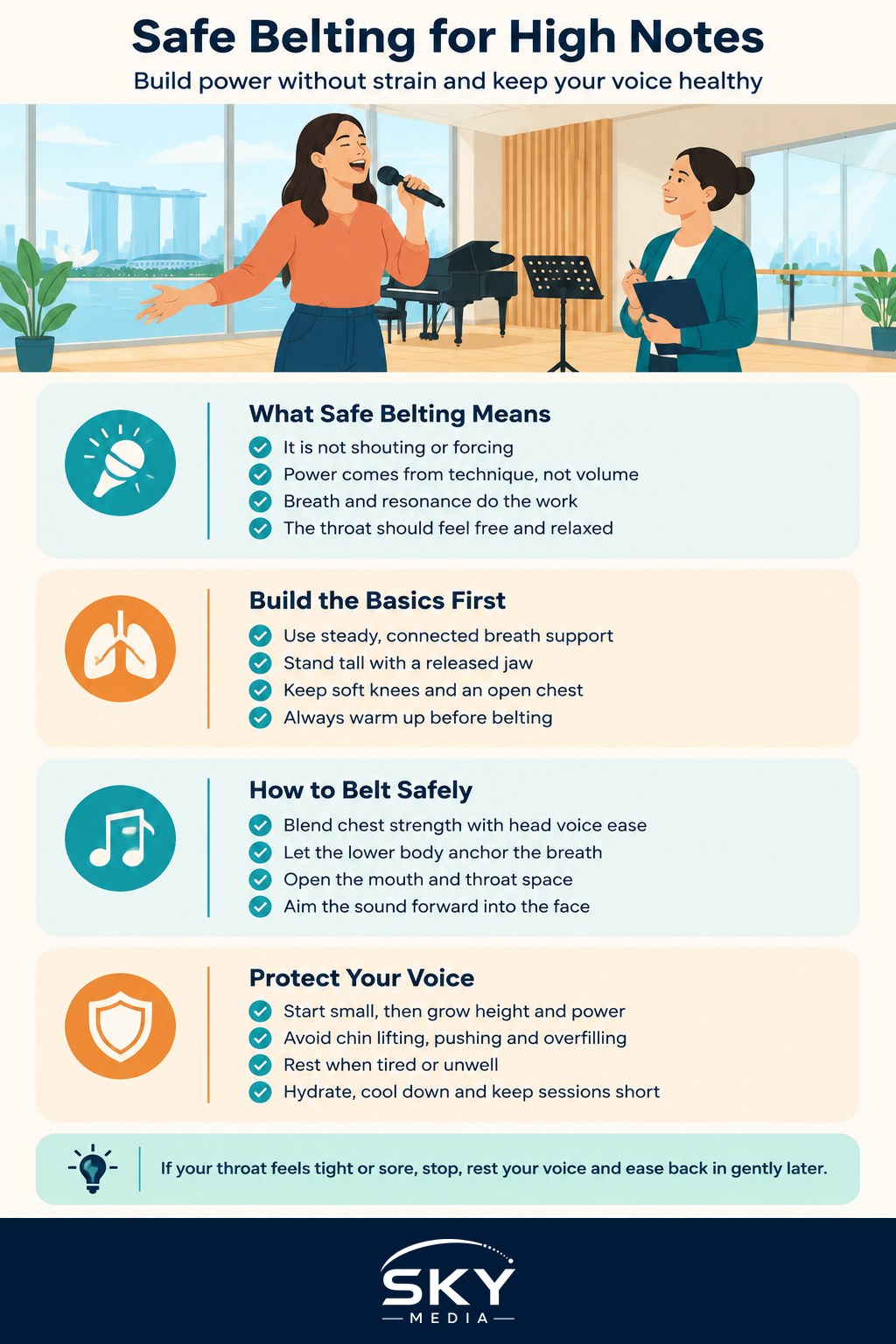
What Belting Really Is
Many singers in Singapore think belting means singing loudly at all costs. It does not. A safe belt is a coordinated sound where you carry a fuller, chest-like quality higher than usual, supported by strong breath and open space in the mouth and throat. The volume is a side effect of good technique, not the goal itself.
If your belt feels like screaming, tightening or pushing, something is off. A healthy belt should feel supported from the body, ringing in the face, and free at the throat. You want power that comes from the ground up, not tension that squeezes from the neck.
Build Your Foundation First
Before you chase big notes, secure the basics. A strong belt sits on top of solid breathing and a well warmed voice.
- Breath support: Learn to send a steady, connected stream of air rather than a hard blast. Good support lets your vocal folds work efficiently.
- Posture: Stand tall with a released jaw, soft knees and an open chest. Slouching collapses your air supply.
- Warm up every time: Never belt from cold. Gentle slides, lip trills and easy scales prepare your voice.
If you are still building these habits, our guide on breathing techniques for singing and a proper set of vocal warm-ups for singers will give you a dependable starting point.
The Safe Belting Process, Step by Step
Work through these stages patiently. Rushing is the fastest route to strain.
1. Find your mix
A safe belt usually lives in mixed voice, a blend of chest strength and head voice ease. Try gently sliding from a spoken tone up into a lighter tone on a word like “hey”. Notice the point where you can keep some fullness without forcing. That blend is your friend.
2. Anchor the breath
As you approach a higher note, engage your lower body gently, as if you are about to laugh from the belly. Keep the air moving. Holding your breath and then shoving creates pressure that harms the folds.
3. Open the space
Lift the soft palate slightly, as though beginning a yawn, and keep the jaw loose. Shape bright, forward vowels. This resonance does much of the work, giving you volume without effort.
4. Aim forward
Imagine the sound spinning into the mask of your face, around the cheekbones and nose. A forward, ringing placement lets a belt carry easily.
5. Start small and grow
Belt at a comfortable pitch and modest volume first. Only add height and power once the coordination feels easy. Think of building a wall brick by brick.
Safe Belting Versus Shouting
The difference between a healthy belt and harmful shouting is worth understanding clearly.
| Feature | Safe Belting | Shouting |
|---|---|---|
| Breath | Steady, supported flow | Pushed, jammed pressure |
| Throat | Open and relaxed | Squeezed and tight |
| Resonance | Forward, ringing | Dull, throaty |
| Sensation | Effortful but free | Painful or scratchy |
| Recovery | Voice feels fine after | Hoarse or sore after |
If your experience matches the right-hand column, stop and reset. No song is worth an injured voice.
Common Mistakes to Avoid
- Reaching with the chin: Tilting your head up to reach high notes tightens the throat. Keep your neck long and level.
- Grabbing more air than you need: Overfilling makes you stiff. A comfortable, low breath is plenty.
- Belting when tired or unwell: A fatigued voice has no cushion. Rest instead.
- Copying a recording exactly: Every voice is built differently. Aim for the feeling of freedom, not an identical sound.
- Skipping warm-ups because you are in a hurry: This is when injuries happen.
Protecting Your Voice for the Long Run
Belting is athletic, so treat your voice like an athlete treats their body. Hydrate well throughout the day, since the folds work best when your whole system is moist. Sleep matters too, because a rested body supports a rested voice.
Practise belting in short, focused bursts rather than long grinding sessions. Ten well supported minutes beat an hour of straining. Always cool down afterwards with gentle hums and easy slides to bring your voice back to a neutral, relaxed state. For everyday habits that keep you in good shape, see our advice on caring for your singing voice.
When to ease off or seek help
Listen to your body. Warning signs include a rough or breathy tone that lingers, pain while singing, a tickly cough, or losing your high notes. If you feel any of these, rest your voice, sip warm water and avoid whispering, which surprisingly adds strain. If hoarseness or discomfort persists beyond a couple of weeks, please see a doctor or an ENT or voice specialist. This article is general guidance and encouragement, not medical advice.
A Realistic Practice Plan
You do not need hours a day. Consistency wins.
- Warm up gently for five to ten minutes.
- Spend a few minutes on mix exercises without pushing.
- Belt short phrases from a song you love, keeping volume moderate at first.
- Rest between attempts and notice how your throat feels.
- Cool down and finish while your voice still feels fresh.
Track your progress over weeks, not single sessions. Some days will feel stronger than others, and that is completely normal.
Keep Going, Gently
Learning how to belt safely is a rewarding journey that rewards patience and kindness towards your own voice. Focus on support, openness and forward resonance, and let power grow naturally from good habits. Celebrate small wins, rest when you need to, and enjoy the thrill of a confident, healthy belt that you can rely on for years to come. You have got this, one supported note at a time.
Explore more: Vocal Warm-Ups for Singers · Breathing Techniques for Singing · Caring for Your Singing Voice
Frequently Asked Questions
Is belting bad for your voice? Not when done with good support and a relaxed throat. A healthy belt feels effortful but free, whereas pushing, squeezing or shouting causes strain. If you feel pain, scratchiness or lasting hoarseness, stop and rest, and see a doctor or voice specialist if it persists.
What is the difference between belting and mixed voice? Mixed voice blends chest and head qualities for a smooth, connected sound at many levels of volume. Belting is a louder, more powerful use of that coordination, carrying a fuller sound higher. Learning a comfortable mix first makes safe belting much easier.
Can anyone learn to belt, or is it a natural gift? Most healthy voices can learn some form of belt with patient training, though range and power differ between people. It is a coordination skill rather than a gift. A teacher can set realistic goals and spot habits that would strain you.
How long should I rest my voice after a session of belting? Rest as long as your voice needs. Stop if you feel tired, then give it quiet time and water before singing again. Short belting bursts with breaks are safer than one long session. If your voice feels rough the next day, ease off further.
Is belting suitable for children and teenagers? Young voices are still developing, so keep singing light, comfortable and well within their range, and avoid pushing for volume. A qualified teacher can advise on suitable repertoire. Teenagers whose voices are changing should be especially gentle.