

Screams, growls, and other distorted vocal sounds are a huge part of rock, metal, hardcore, and heavy music. Done well, they are powerful and expressive. Done wrong, they can hurt and even injure your voice. That is why scream singing safely has to be your top priority from the very first day. The most important thing to understand is this: healthy screaming comes from technique and control, not from forcing, straining, or shredding your throat. If it hurts, you are doing it wrong, and you should stop.
This guide gives you a careful, honest overview. It is general information for hobby singers, not medical or vocal-medical advice, and it is not a replacement for working with a qualified vocal coach who specialises in this. Distorted singing is an advanced skill, and getting real guidance is the single best thing you can do to protect your voice.
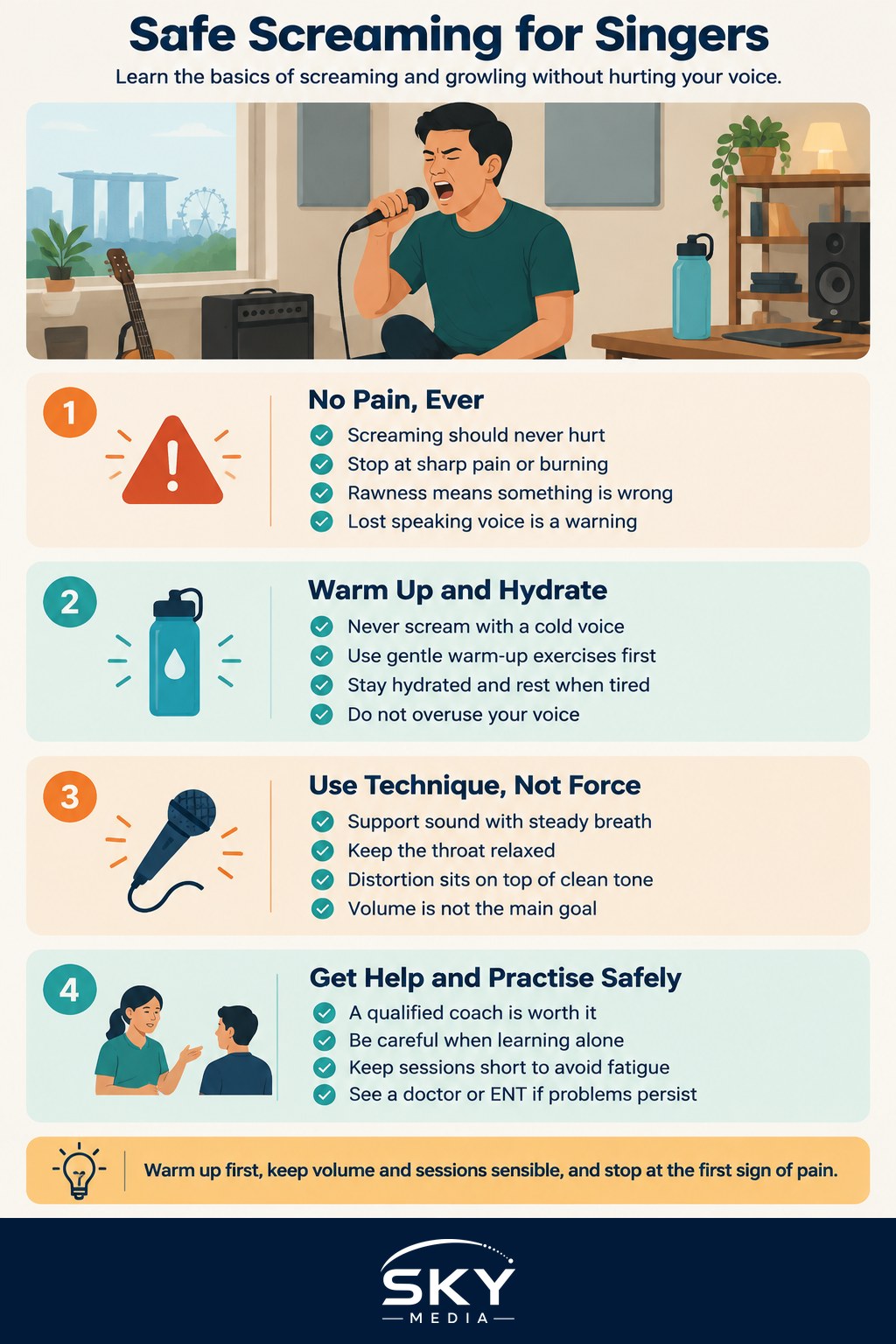
The Golden Rule: No Pain, Ever
Let us start with the rule that matters more than any technique.
Screaming and growling should never be painful. A little unfamiliarity is normal when you try new sounds, but sharp pain, rawness, a burning feeling, or losing your normal speaking voice are all warning signs. If you feel any of those, stop immediately and rest.
Here is why this is so serious. The distorted sound you hear from good vocalists is not made by grinding the vocal cords together. It is created higher up, using controlled airflow and structures around the voice, so that the delicate vocal cords themselves are protected. When people scream by straining and forcing, they put dangerous stress on those cords, and that can cause real, lasting injury. Technique over force is not a slogan. It is the whole game.
Warm Up and Protect the Voice First
You would never sprint without stretching, and you should never scream with a cold voice. A gentle, thorough warm up prepares your voice and lowers the risk of strain. Spend time on easy, relaxed exercises before you attempt any heavy sounds, and treat your clean singing voice as the foundation everything sits on. Our guide to vocal warm ups for singers is a good place to build that habit.
Healthy screaming actually depends on a healthy, well cared for voice. Staying hydrated, resting when tired, and not overusing your voice all matter enormously. Our guide to caring for your singing voice covers the everyday habits that keep your instrument in good shape.
The Basic Idea Behind Safe Distortion
Without a coach guiding you in person, you should be cautious, but it helps to understand the general principles so you know what you are aiming for.
- The power comes from steady, supported breath from your body, not from squeezing your throat.
- The distortion is a controlled texture added on top of a supported sound, not a raw scraping of the cords.
- Your clean voice stays underneath. Many skilled screamers can drop back into normal singing instantly, which is a sign they are not damaging anything.
- Volume is not the goal. A good scream can be produced without being deafening, because it is about texture and control, not brute loudness.
If any technique you try requires you to force, push, or bear down painfully, it is the wrong approach. Back off.
Why a Qualified Coach Is Worth It
Reading about screaming can only take you so far, because you cannot feel what your own throat is doing from a description. This is a skill where a qualified vocal coach, ideally one experienced with distorted or extreme vocals, is genuinely important. A good coach can hear when you are straining, correct you before you hurt yourself, and give you exercises suited to your voice.
If you are looking for guidance, our article on how to approach heavy singing safely pairs well with learning to belt safely, since belting and screaming both rely on support and freedom rather than force. Treat both as skills to build slowly under proper guidance.
Practical Habits for HDB Singers
Practising heavy vocals in an HDB flat brings the extra challenge of noise. Be a considerate neighbour: keep practice to reasonable hours, and consider using a rehearsal studio for louder sessions. Some singers practise quiet, low volume versions of the technique at home, which is also gentler on the voice while you learn.
Keep sessions short. Distorted singing is tiring, and fatigue is when injuries happen. Stop well before you feel worn out, and never try to power through when your voice is tired.
When to Rest and When to See a Professional
Watch for these signs and treat them seriously.
- Persistent hoarseness or a raspy speaking voice that does not recover with rest.
- Pain during or after singing.
- Losing part of your vocal range.
- Any sense that your voice is not returning to normal.
If any of these persist, rest your voice and see a doctor or an ENT specialist. Do not keep pushing. Your voice is not a resource you can replace, and protecting it is what lets you keep singing for years. If you already struggle with tension or tiredness in your voice, our guide to overcoming vocal strain has helpful pointers.
Keep It Safe and Keep Going
Screaming and growling can be an incredible part of your singing, but only when built on safe technique, patience, and respect for your voice. Never chase the sound through pain or force. Warm up, stay within comfortable limits, get real coaching, and stop the moment something hurts. Do it the careful way, and you can enjoy this powerful skill for the long haul.