
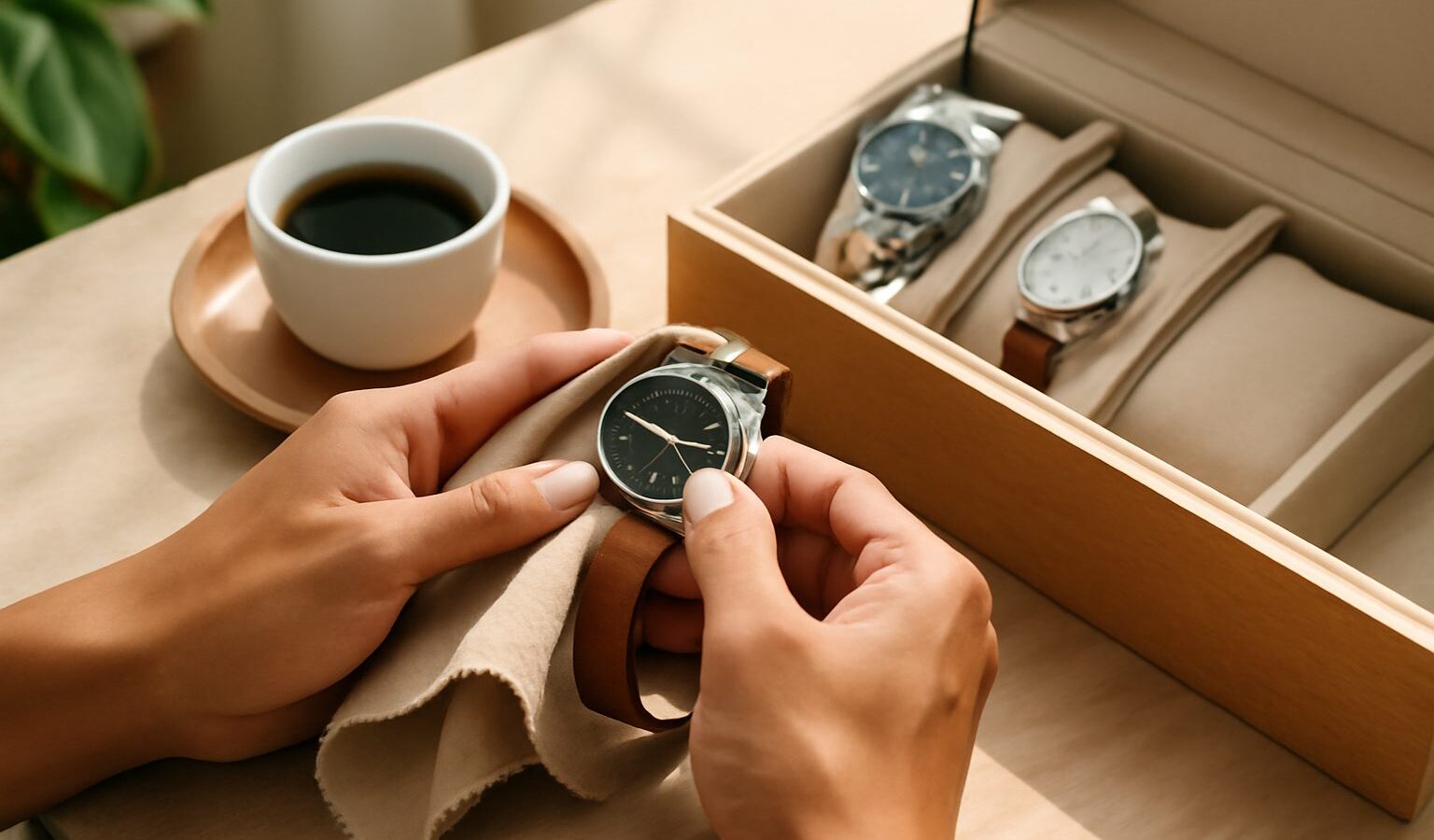
A good watch can last for decades and often becomes something you pass on, but only if you look after it. Caring for watches is not complicated, yet a few sensible habits make an enormous difference to how they look and how long they last. Singapore’s heat and humidity add their own challenges, so this guide covers the everyday care, smart storage and servicing that keep your watches running and looking their best.
Everyday Habits That Protect Your Watch
Most watch wear and tear comes from ordinary daily handling, so small adjustments to your routine go a long way. The goal is to protect the case, the strap and the movement inside.
A few simple habits help:
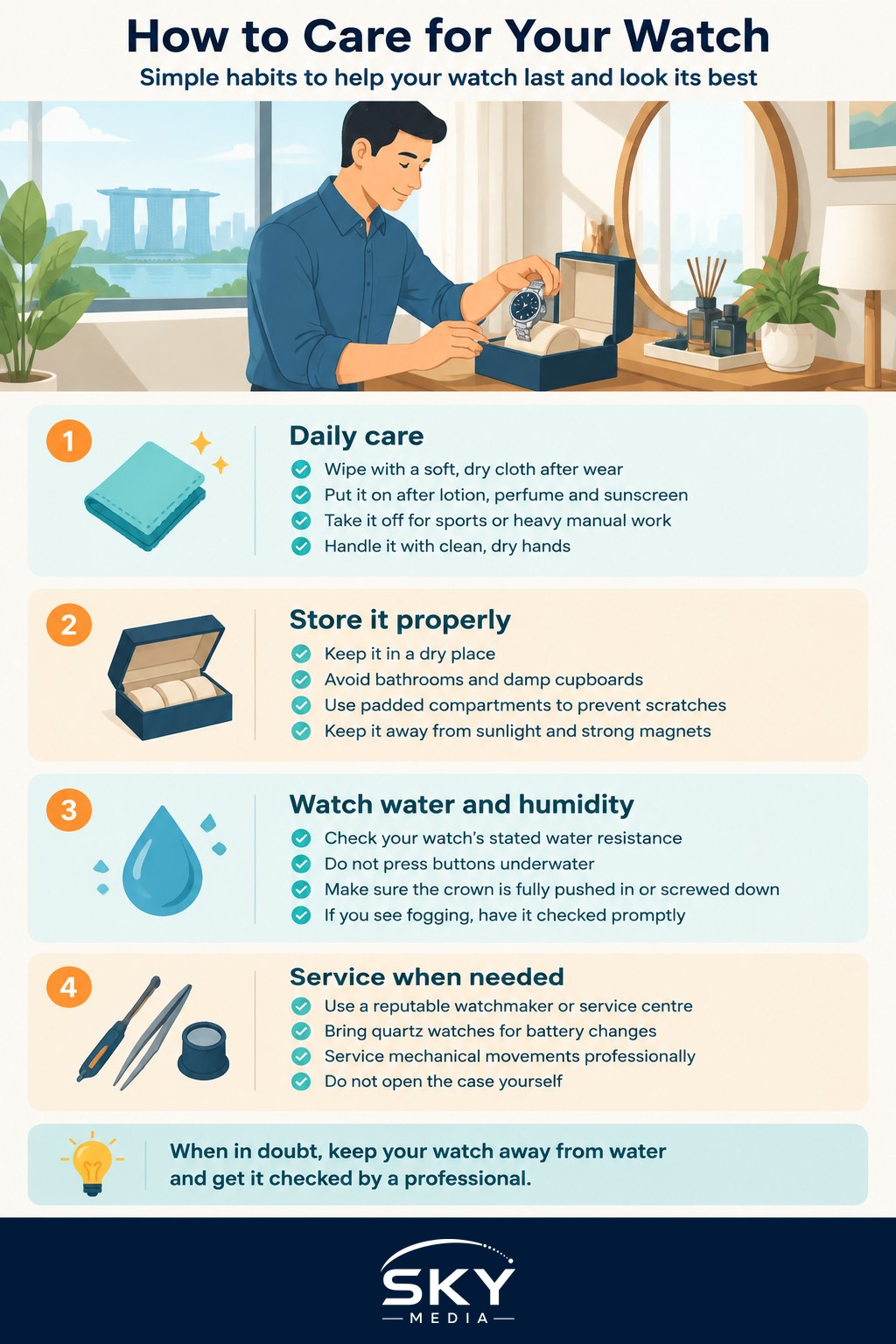
- Wipe your watch with a soft, dry cloth at the end of the day to remove sweat and oils.
- Put your watch on last, after applying lotion, perfume and sunscreen, so it avoids the residue.
- Take it off before contact sports or heavy manual work to avoid knocks and scratches.
- Handle it with clean, dry hands, especially when adjusting the crown or buttons.
Sweat is a particular issue in our climate. Salt and moisture from perspiration can affect straps and, over time, the case, so a quick wipe after a hot day is one of the most useful habits you can build. Leather straps especially dislike constant sweat, so give them a chance to dry out between wears.
Storing Watches Safely
How you store a watch when you are not wearing it matters just as much as how you wear it. The main risks are moisture, scratches and knocks.
Keep watches in a dry place, away from the humidity of a bathroom or a damp cupboard. A watch box with individual, padded compartments prevents pieces from scratching each other. Storing a watch away from direct sunlight and away from strong magnets is also wise, since heat and magnetism can affect some movements. If you own a self-winding mechanical watch and want it to keep running while stored, a watch winder is an option, though it is not essential. As with jewellery, a small sachet of silica gel in your storage box helps absorb moisture in our humid climate. Our guide to how to store and care for your jewellery shares related storage tips that apply here too.
Understanding Water and Humidity
Water resistance is one of the most misunderstood parts of watch care, so it is worth being cautious. A watch described as water resistant is not necessarily built for swimming or diving, and ratings refer to specific conditions rather than everyday guarantees.
Check your watch’s stated water resistance and treat it conservatively. Avoid pressing buttons or adjusting the crown underwater, and make sure the crown is fully pushed in or screwed down before any contact with water. Seals and gaskets wear over time, so water resistance can fade with age even on a capable watch. If you ever see condensation or fogging under the glass, that is a sign moisture has got in, and you should have it checked promptly. When in doubt, keep your watch away from water rather than risk it.
When to Seek Professional Servicing
Watches, especially mechanical ones, benefit from occasional professional servicing, and this is not something to attempt at home. The tiny components inside are precise and easily damaged.
Take your watch to a reputable watchmaker or an authorised service centre for battery changes on quartz watches, for servicing mechanical movements, and for anything involving opening the case. A professional can clean the movement, replace worn seals and restore water resistance properly. Opening a watch yourself can let in dust and moisture and often voids any warranty, so leave it to the experts. If you are newer to watches and still learning the basics, our guide to watches for beginners is a friendly place to start, and our guide to building an accessories collection can help you think about watches alongside your other pieces.
Final Thoughts
Caring for watches comes down to gentle daily habits, dry and thoughtful storage, respecting what your watch can and cannot handle around water, and leaving the delicate internal work to professionals. Look after a good watch this way and it will keep excellent time and look wonderful for many years, ready to become a piece you treasure and perhaps one day pass on.
Frequently Asked Questions
How often does a watch need servicing? It depends on the type and the maker. Mechanical watches benefit from periodic servicing, while quartz watches mainly need battery changes. Follow the manufacturer’s guidance, and ask an authorised service centre or watchmaker what they recommend.
What should I do if my watch gets wet or fogs up inside? Take it off, avoid pressing the buttons, and have it checked promptly. Fogging under the glass means moisture has got in, and delay can damage the movement. Do not try to open it or dry it with heat.
How can I tell if my watch has become magnetised? Signs include the watch suddenly running too fast or too slow. Magnets in phones, bags and speakers can cause this. A watchmaker can demagnetise it quickly, so take it in rather than guessing.
Should I wear the same watch every day? You can, but rotating gives the strap and movement a rest, and lets leather dry out in our humid weather. If you only have one, wipe it down daily and check the strap regularly.
How do I look after a leather watch strap in Singapore? Wipe off sweat, let it dry between wears, and keep it away from water and direct sun. If the strap gets stiff, cracked or smelly, replace it rather than trying to repair it. Rubber or metal straps cope better with sweat.
Further reading: Watch Water Resistance Ratings Explained: 30m, 100m and Dive Watches