

The number printed on your watch dial or caseback, whether it says 30m, 5 ATM or 200 metres, is one of the most misunderstood specs in watches. Many people assume a “30m” watch can go 30 metres underwater. In practice it may not be suitable for swimming at all. Understanding watch water resistance properly saves you from fogged crystals, rusted movements and expensive repairs, especially in Singapore, where pool days, beach trips and sudden downpours are part of life.
This guide explains what the common ratings actually allow, why they are not literal depth limits, and when you should have your watch’s seals checked.
What the Numbers on Your Watch Really Mean
Water resistance ratings are expressed in metres, ATM (atmospheres) or bar. As a rough guide, 1 ATM is about 1 bar, and each is commonly treated as roughly equal to 10 metres of static water pressure. So 3 ATM, 3 bar and 30m all describe the same rating.
The key word is static. Ratings come from pressure tests done in controlled conditions, with the watch still, at a stable temperature, and when it is new. Real life is different:
- Movement adds pressure. Swinging your arm through water during a swimming stroke or diving into a pool creates brief pressure spikes.
- Temperature changes matter. Going from a hot pavement into a cool pool, or from a hot shower into air-conditioning, makes metal and gaskets expand and contract.
- Seals age. Rubber gaskets dry out, compress and crack over time, especially with sweat, sunscreen and chlorine.
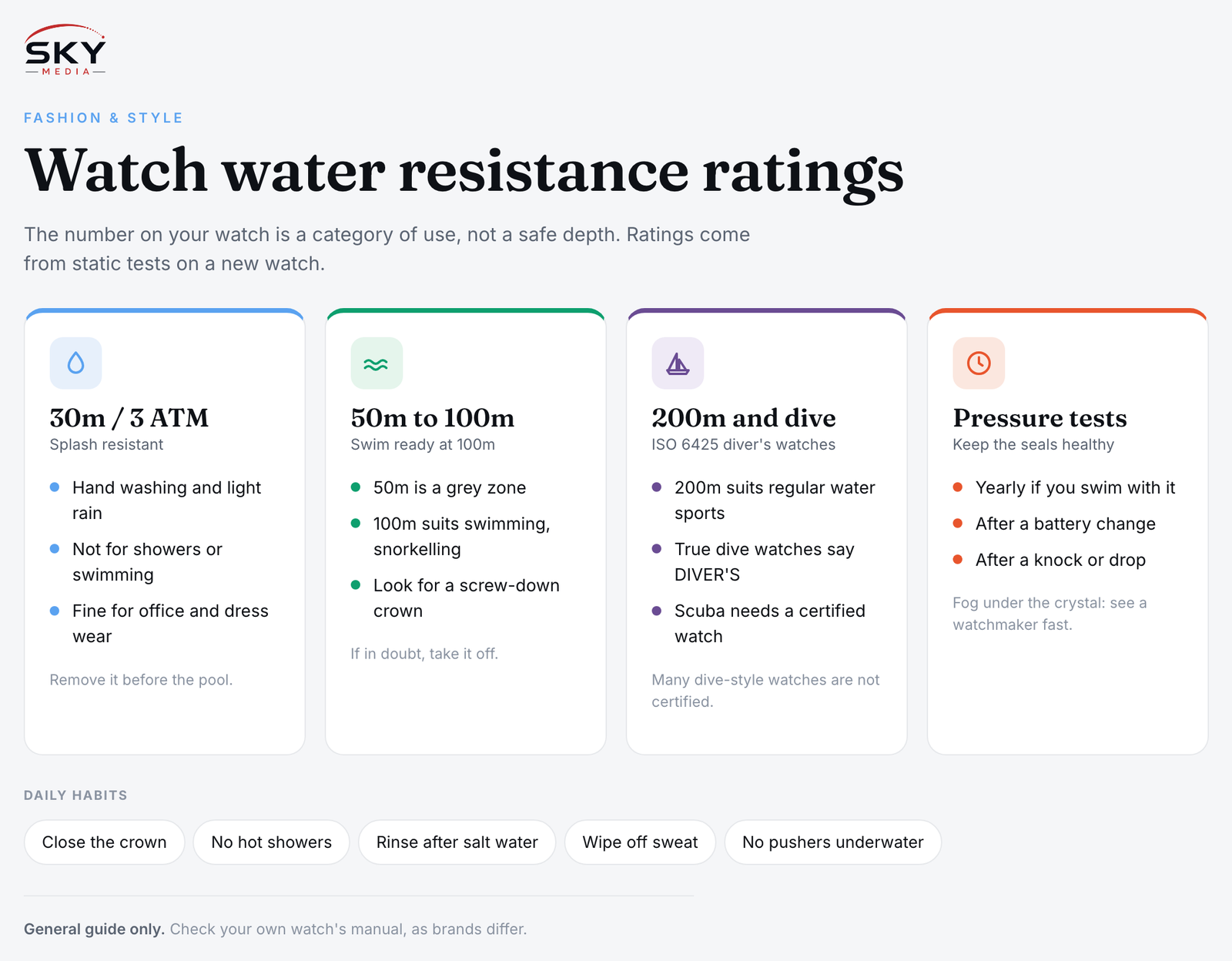
That is why the printed number should be read as a category of use, not a safe depth. Note also that the term “waterproof” is generally avoided by reputable brands because no watch is permanently waterproof.
What Each Rating Allows in Everyday Use
Manufacturers differ slightly, so always check your own watch’s manual. The table below shows the commonly accepted guidance.
| Rating | Commonly safe for | Generally avoid |
|---|---|---|
| 30m / 3 ATM | Splashes, hand washing, light rain | Showering, swimming, pools, sea |
| 50m / 5 ATM | Splashes, rain, brief immersion; some brands allow light surface swimming | Diving, snorkelling, hot showers and saunas |
| 100m / 10 ATM | Swimming, snorkelling, water sports at the surface | Scuba diving, high-impact water sports with an older watch |
| 200m / 20 ATM and up | Swimming, snorkelling, recreational scuba (if the watch is a true dive watch) | Saturation diving unless specifically rated |
| Dive watch (ISO 6425) | Scuba diving within its rated depth, tested to a dive-specific standard | Going beyond the rated depth or skipping servicing |
A few notes on the categories:
- 30m is effectively “splash resistant”. Fine for washing your hands or getting caught in a shower of rain on the way to the MRT, but not for the pool.
- 50m is a grey zone. Many brands consider it acceptable for a quick swim, others do not. If in doubt, take it off.
- 100m is the usual minimum if you want one watch for daily wear plus swimming.
- 200m and above usually indicates a sports or dive-style watch with a screw-down crown and heavier gaskets.
If you are still deciding between movement types, our guide to automatic vs quartz watches covers how each handles daily wear.
Dive Watches and the ISO 6425 Standard
Not every watch marked 200m is a true dive watch. The international standard ISO 6425 sets requirements for watches sold as diver’s watches. Among other things, it covers water resistance testing with a safety margin, a unidirectional bezel to track elapsed dive time, legibility in the dark, and resistance to magnetism and shock. A watch meeting this standard will typically carry the word “DIVER’S” followed by the depth on the dial or caseback.
Many watches look like dive watches but are not certified to the standard. That is fine for swimming and snorkelling, but if you actually scuba dive, use a watch or dive computer suited to that purpose and follow your dive operator’s guidance.
Crowns, Pushers and Other Weak Points
Water usually gets in through openings rather than through the case itself. The main weak points are:
- The crown. This is the knob used to set the time. On many sports watches it screws down against a gasket. If you forget to screw it back in after setting the date, the watch’s rating means very little. Always check the crown is fully closed before getting wet.
- Chronograph pushers. Never press the stopwatch buttons underwater unless the manual specifically allows it. Pressing them can open a path for water.
- The caseback. Screw-down casebacks seal better than snap-on ones. Opening the back at a non-specialist kiosk can damage the gasket.
- The crystal. A cracked or chipped crystal compromises the seal.
Everyday Habits in Singapore That Affect Seals
Our climate and lifestyle create specific risks:
- Hot showers and saunas. Even watches rated 100m or more are often not recommended for hot showers, steam rooms or hot tubs. Heat softens gaskets, and soap and shampoo can degrade them. It is simpler to take the watch off.
- Chlorine and salt water. After swimming in a pool or the sea at East Coast or Sentosa, rinse the watch in fresh tap water and dry it. Salt crystals and chlorine residue can harm gaskets and bracelets.
- Sweat and humidity. Daily sweat during outdoor runs or commutes slowly attacks gaskets and leather straps. Wipe the watch down after workouts.
- Air-conditioning swings. Moving between hot outdoors and cold indoors can cause condensation inside a watch whose seals are already tired.
- Sunscreen and insect repellent. These can affect rubber and some coatings. Wipe them off the watch.
For general routines like storage, winding and cleaning, see How to Care for and Store Your Watches.
When to Get Your Watch Pressure Tested
Water resistance is not permanent. Gaskets degrade even if you never swim. Common guidance is:
- Every year or two if you swim with it regularly. Many watchmakers suggest an annual pressure test for watches used in water.
- After the battery is changed. Opening the caseback disturbs the seal. Ask whether a pressure test is included or available after a battery replacement.
- After any knock or drop. Impact can shift the crystal or crown seals.
- During a full service. Most full services include replacing gaskets and testing water resistance. Intervals vary by brand, so check your manufacturer’s recommendation.
Signs that water may have got in:
- Fog or droplets under the crystal.
- Rust spots on the hands or dial.
- A quartz watch that stops suddenly despite a fresh battery.
If you see condensation, take the watch to a qualified watchmaker or authorised service centre promptly. Do not open it yourself or leave it sitting, as moisture can corrode the movement quickly. Some people try placing it in a warm spot to dry, but this does not remove the cause and can trap moisture inside.
Choosing the Right Rating for Your Lifestyle
Match the rating to how you live, not the most extreme situation you can imagine:
- Office and dress wear only: 30m is fine, as long as you remove it before swimming and showers.
- Daily wear plus the occasional pool session: look for 100m with a screw-down crown.
- Regular swimmer, beach lover or water sports fan: 200m sports watch, rinsed after every session.
- Scuba diver: a watch certified to ISO 6425 or a proper dive computer.
If you are just starting out and building your first collection, A Guide to Watches for Beginners helps you weigh water resistance against other features like size, strap and movement.
Treat the rating as a practical category, keep the crown closed, rinse after salt or chlorine, and have the seals checked periodically. Those habits will do more to protect your watch than any number on the dial.
Further reading: Buying a Pre-Owned Luxury Watch Safely in Singapore · Choosing a Watch Size That Suits Your Wrist