
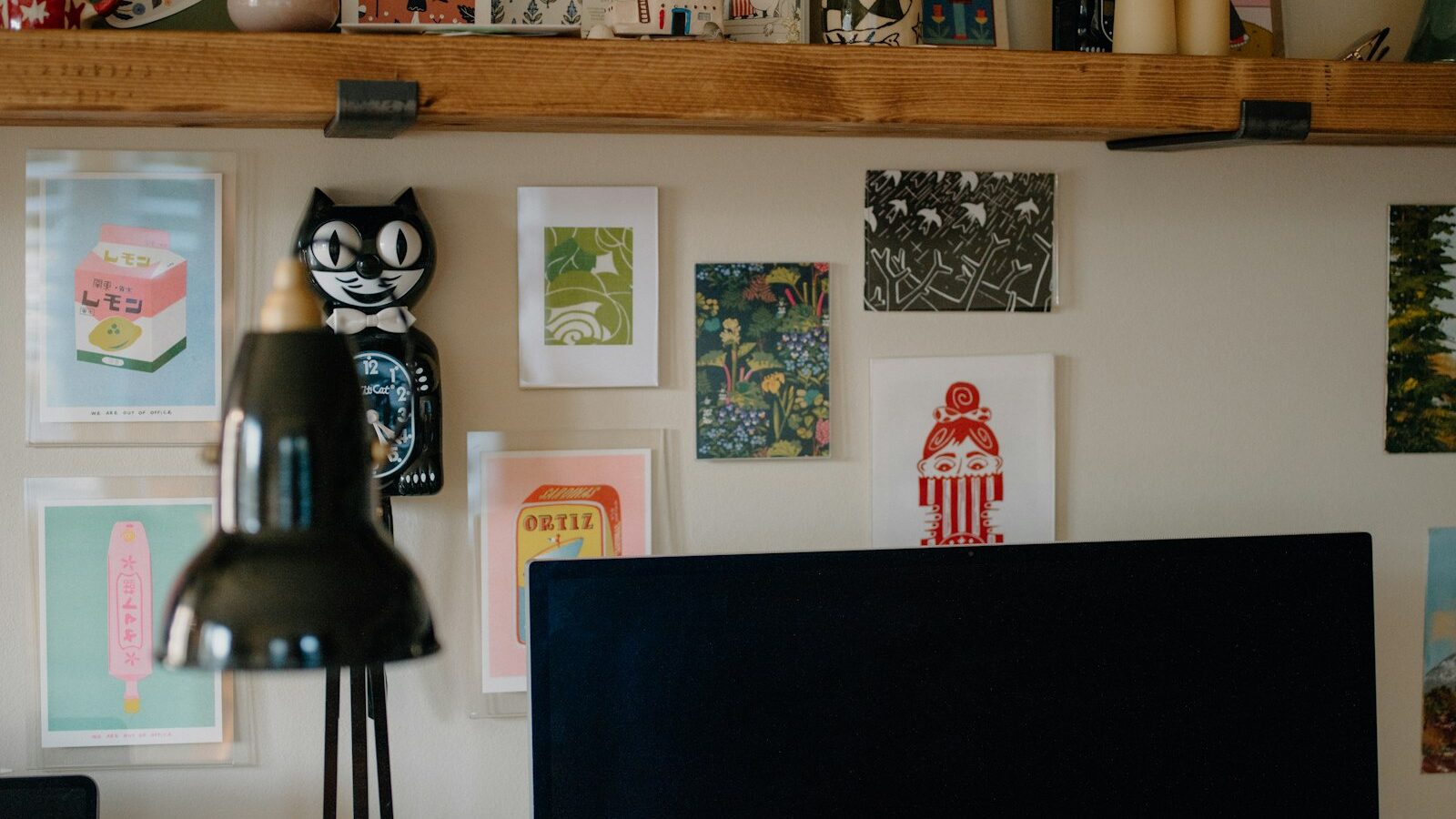
Choosing art for your home can feel oddly intimidating, as if there is a right answer you are supposed to already know. There is not. Art is personal, and the only real rule is that it should be something you enjoy looking at. This guide walks through the practical side, size, placement, framing and cohesion, so you can decorate your walls with confidence rather than leaving them blank for years.
Start with what you like, not what matches
The most common mistake is picking art to match a sofa. Furniture changes; the pieces you love tend to follow you from home to home. So begin with instinct. Notice what you are drawn to, whether that is calm landscapes, bold graphics, black-and-white photography, abstract colour, or something tied to your own travels and memories. A wall full of things you genuinely like will always feel better than a wall that merely coordinates.
That said, a little coherence helps a room feel pulled together. You can honour both by choosing pieces you love and then unifying them through framing or a shared colour thread, which we will come to.
Get the size and scale right
Size is where most homes go wrong. A common error is hanging something far too small on a large wall, so the art looks lost and lonely.
A few practical guides:
- Over furniture, art usually looks best when it spans roughly two-thirds to three-quarters of the width of the sofa, bed or console below it.
- On a large empty wall, go bigger than feels comfortable, or group several pieces to fill the space as one block.
- In tight spots such as a hallway or between windows, smaller pieces or a vertical arrangement suit the proportions.
When in doubt, cut newspaper or kraft paper to size and tape it up. Living with the outline for a day tells you more than any measurement.
Nail the placement height
The classic guideline is to hang art so its centre sits around eye level, often taken as roughly 145 to 150 centimetres from the floor to the middle of the piece. This keeps art at a natural viewing height and stops the common habit of hanging things too high.
Two adjustments for real homes:
- Above furniture, leave a modest gap between the top of the furniture and the bottom of the frame so the two feel connected rather than floating apart.
- In a room where you are usually seated, such as a dining area, you can hang slightly lower to suit the sitting eye line.
Comparison: original art, prints and posters
You do not need expensive originals to have a beautiful home. Understanding the options helps you spend sensibly.
| Option | Cost | Character |
|---|---|---|
| Original artwork | Higher | One of a kind, texture and depth |
| Limited or signed prints | Medium | Collectible feel, still affordable |
| Open-edition prints | Low to medium | Wide choice, easy to replace |
| Posters | Low | Casual, great for a first home |
| Your own photos, framed | Low | Personal and unique to you |
A mix across these tiers is completely normal and often looks the most interesting.
Framing brings it together
Framing can transform even an inexpensive print. It signals care and instantly lifts the piece. You do not need to spend heavily, but a few choices matter.
- Consistency unifies. Using the same frame colour or style across several pieces makes a mixed collection feel intentional.
- Mounts add breathing room. A border of plain mount around a print gives it a gallery-like quality and makes a small image feel more considered.
- Match the mood. Slim black or natural wood frames suit most homes, while ornate frames make a stronger statement.
In Singapore’s humidity, framing behind glass or acrylic also protects paper prints and photos from moisture and dust over time.
Building a gallery wall
A gallery wall is a lovely way to fill a large space, but it rewards a little planning.
- Gather more pieces than you think you need and lay them on the floor first.
- Aim for a consistent gap between frames, often a hand’s width, so the group reads as one.
- Balance the arrangement by weight and colour rather than strict symmetry, spreading larger and darker pieces around the group.
- Start hanging from the centre and work outward.
Mixing sizes and orientations is what gives a gallery wall its energy, so do not feel every frame must match.
Colour, cohesion and restraint
To keep a varied collection from feeling chaotic, run a quiet thread through it. That might be a repeated colour that appears in several pieces, a shared palette of tones, or the consistent framing mentioned above. One of these is usually enough.
Equally, know when to stop. Not every wall needs art. Empty space lets the pieces you do hang breathe, and a single well-chosen work on a clear wall can be more powerful than a crowded display. Good lighting helps too, so position art where daylight or a warm lamp can reach it in the evening.
Just get started
The biggest barrier to choosing art for your home is waiting for perfect certainty that never comes. It will not arrive. Buy the print you keep thinking about, frame it properly, hang it at the right height, and see how the room feels.
Give yourself permission to make mistakes cheaply. This is exactly why open-edition prints and framed personal photos are such a good starting point, since they let you experiment with size, placement and subject without much risk. If a piece does not work where you first hung it, try it in another room before giving up on it, as lighting and surroundings change how art reads completely.
Taste develops by living with things, swapping some out and adding others over time. Your walls are allowed to evolve. Start with one piece you love and let the rest follow.
Explore more: Home Decor and Lighting · How to Bring More Natural Light Into Your Home · Curtains and Blinds